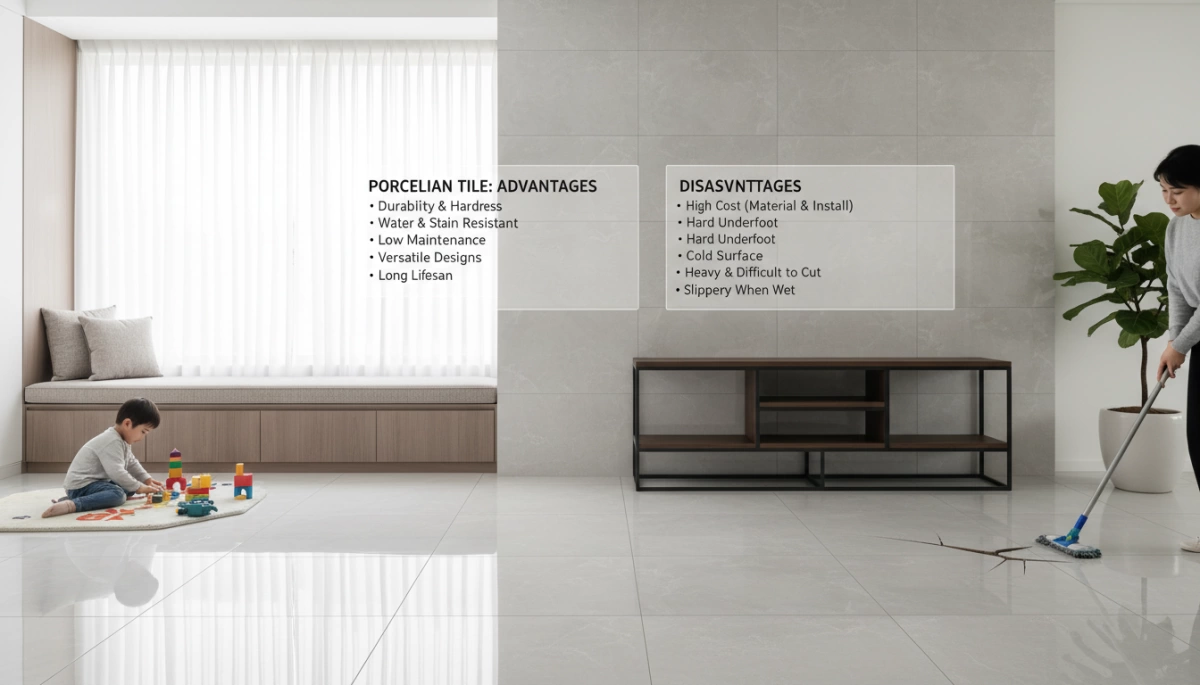
Are you struggling to decide on the perfect flooring for your next renovation?
Choosing the right material can make a massive difference in your home’s long-term durability and aesthetic appeal.
In this post, you’re going to learn exactly what you need to know about Porcelain Tile: Advantages and Disadvantages.
I’ll break down everything from its exceptional water resistance and stunning design options to its higher initial cost and complex installation. Whether you are upgrading a cozy bathroom or a high-traffic commercial space, this guide will help you decide if it’s the right investment for your project.
Let’s dive right in.
What is Porcelain Tile?
Porcelain tile is a premium, highly dense type of ceramic crafted specifically for demanding residential and commercial environments. As a dedicated porcelain tile manufacturer and supplier, we engineer these tiles to deliver unmatched structural integrity. It stands out among modern flooring options due to its exceptional density, heavy weight, and virtually non-porous nature, making it a top-tier architectural material.
How Porcelain Tile is Made
The creation of porcelain tile involves a meticulous, high-heat manufacturing process designed to maximize strength.
- Refined Materials: The base consists of finely ground sand, feldspar, and highly purified white clay.
- Extreme Pressure: This specialized mixture is pressed into its final shape under immense mechanical pressure.
- High-Temperature Firing: The tiles are fired in kilns at extreme temperatures, often exceeding 2,300°F (1,200°C).
This intense vitrification process melts the particles together, resulting in a glass-like, incredibly hard material known for its superior durability and long-lasting performance.
Key Differences from Standard Ceramic
While often grouped into the same category, porcelain and standard ceramic possess distinct structural and performance differences. Porcelain is significantly harder, heavier, and far more impervious to environmental elements.
Porcelain vs. Standard Ceramic Comparison
| Feature | Porcelain Tile | Standard Ceramic |
|---|---|---|
| Water Resistance | ≤ 0.5% absorption rate (Highly impervious) | > 0.5% absorption rate (More porous) |
| Durability | Exceptional; built for heavy foot traffic | Moderate; best for light to medium traffic |
| Density | Extremely dense, solid, and heavy | Less dense, softer, and lighter |
| Scratch Resistance | High; highly resistant to surface abrasions | Moderate; surface glaze is more prone to chipping |
Advantages of Porcelain Tile
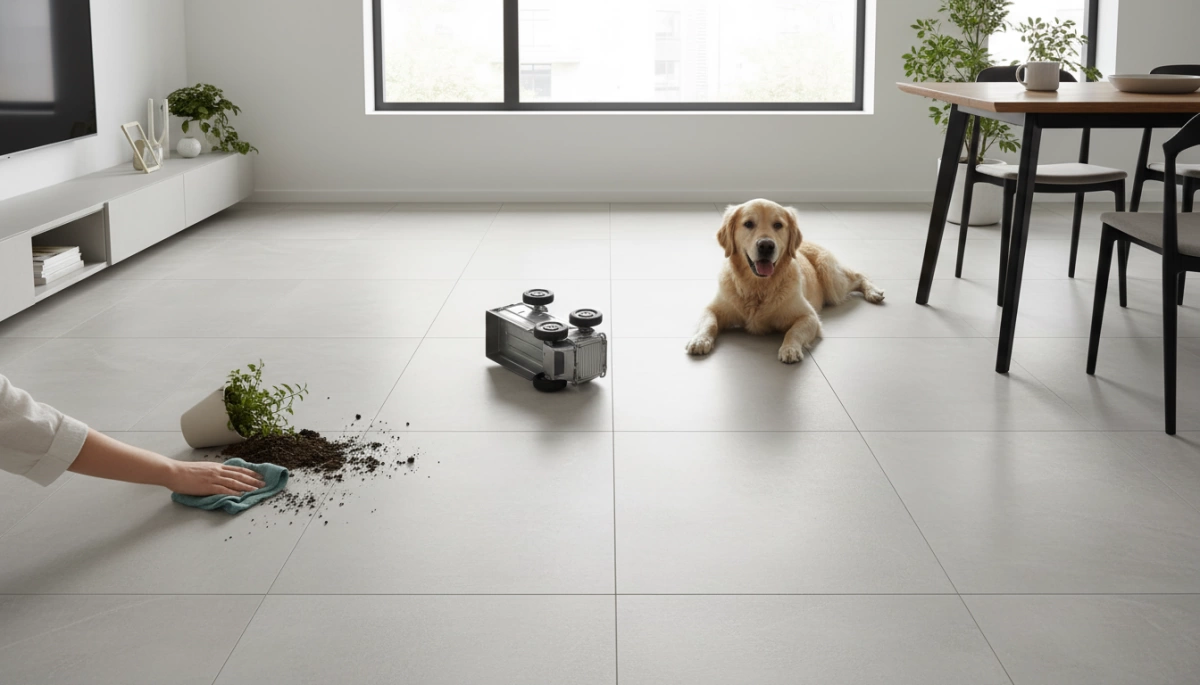
As a porcelain tile manufacture and supplier, we see firsthand why this material dominates the global market. When evaluating porcelain tile advantages and disadvantages, the benefits heavily outweigh the drawbacks for most residential and commercial projects. Here is why it stands out among modern flooring options.
Exceptional Durability and Longevity
Porcelain is built to handle heavy impact. Fired at extremely high temperatures, the clay becomes incredibly dense and hard.
- Scratch resistance: Easily handles pet claws, dragged furniture, and heavy foot traffic.
- Lifespan: Can easily last 50+ years when properly installed.
- Structural integrity: Resists chipping and cracking far better than standard ceramics.
High Water and Stain Resistance
Because of its dense composition, porcelain is virtually impervious to moisture.
- Water resistance: Features a strict water absorption rate of less than 0.5%.
- Stain-proof: Spills stay on the surface and wipe away effortlessly.
- Mold deterrent: Does not harbor bacteria, mildew, or allergens in wet environments.
Low Maintenance Requirements
You do not need expensive cleaners or professional services to maintain these floors.
- Daily care: A simple sweep and a damp mop keep the surface pristine.
- No sealing required: Unlike natural stone, glazed porcelain does not need periodic sealing.
- Chemical resistant: Withstands standard household cleaners without fading or stripping.
Versatile Design and Aesthetic Appeal
Advanced digital printing technology allows porcelain to replicate almost any natural material flawlessly.
- Wood looks: Get the warmth of timber without the risk of water damage or warping.
- Stone finishes: Enjoy the luxury of marble or slate without the high maintenance.
- Endless formats: Available in large-format slabs, long planks, and intricate geometric mosaics.
Quick Advantage
| Feature | Core Benefit |
|---|---|
| Durability | Withstands decades of heavy daily use |
| Moisture Control | Perfect for wet zones like bathrooms and kitchens |
| Upkeep | Saves time and money on long-term cleaning |
| Style | Flawlessly matches any architectural design |
Disadvantages of Porcelain Tile
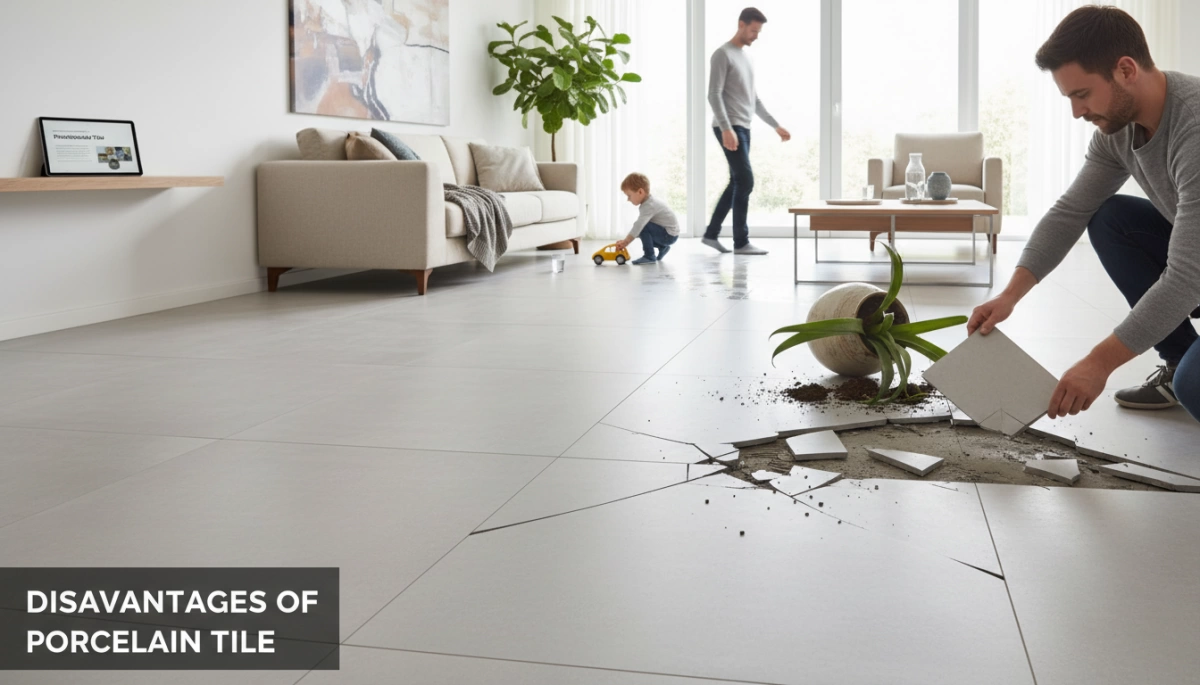
As a porcelain tile manufacturer and supplier, we believe in complete transparency. While this material offers incredible benefits, it is not the perfect fit for every single project. Understanding the drawbacks helps you make the right choice for your space.
Higher Initial Cost
Porcelain is a premium investment. The upfront cost is noticeably higher than standard ceramic or laminate flooring options. The intense heating and refining process that gives the tile its famous durability naturally drives up the manufacturing and retail price.
Heavy Weight and Complex Installation
Porcelain is incredibly dense, making it heavy and notoriously tough to cut.
- Requires specialized tools: Standard tile cutters often fail; diamond-blade wet saws are necessary.
- Labor-intensive: The sheer weight makes handling, moving, and laying the tiles a slow, physically demanding process.
- Professional help needed: DIY installation is highly discouraged. Hiring an experienced professional is required to avoid wasted materials and uneven floors.
Cold and Hard Surface Underfoot
The exact density that provides excellent scratch resistance also makes the surface completely unforgiving.
- Temperature sensitive: The material stays cold to the touch, which can be uncomfortable in winter unless paired with radiant underfloor heating.
- Standing fatigue: The rigid surface can be tough on your feet and joints if you stand on it for long periods.
- Impact damage: Dropping a glass, phone, or plate on this rock-hard surface almost guarantees it will shatter.
Slippery When Wet
Despite its top-tier water resistance, a wet porcelain floor can quickly become a safety hazard.
- High slip risk: Polished and highly glazed finishes become extremely slick the moment water hits them.
- Finish matters: If you are installing these tiles in bathrooms, kitchens, or outdoor areas, you must specifically choose a textured or matte finish to ensure proper foot traction.
Popular Types and Finishes
As a porcelain tile manufacturer and supplier, we know that selecting the right finish is just as crucial as the material itself. The surface treatment dictates both the aesthetic appeal and the practical functionality of your space.
Polished vs. Unpolished Porcelain
When evaluating flooring options, the choice between polished and unpolished surfaces comes down to where the tile will be installed.
- Polished Porcelain: We grind the surface to a high-gloss, mirror-like shine. It reflects light beautifully, making spaces feel larger and more luxurious. However, it can be slippery when wet and tends to show smudges more easily.
- Unpolished Porcelain: Left in its natural state after firing, this tile features a flat, rugged surface. It offers superior scratch resistance and excellent traction, making it the go-to choice for heavy commercial traffic or outdoor use.
Textured and Matte Finishes
For those who want a balance of style and safety, matte and textured finishes deliver exceptional results.
- Matte Finish: A smooth, non-reflective surface that effortlessly hides dust, dirt, and water spots. It provides a contemporary look while keeping daily maintenance to an absolute minimum.
- Textured Finish: Manufactured with a tactile, three-dimensional surface. The added grip significantly boosts slip resistance, making it highly effective for wet environments like shower floors or pool decks.
Wood and Stone Lookalikes
Advanced digital printing technology has completely transformed the tile industry. We can now replicate the exact look of natural materials while maintaining the core benefits of porcelain.
- Wood-Look Tile: Delivers the warmth and visual texture of hardwood planks. Unlike real wood, it provides total water resistance, meaning it will never warp, swell, or rot in damp areas.
- Stone-Look Tile: Captures the luxurious veining of marble, travertine, or slate. You get the high-end aesthetic of natural stone paired with the unmatched durability of porcelain, entirely eliminating the need for regular sealing and intensive upkeep.
Best Uses for Porcelain Flooring
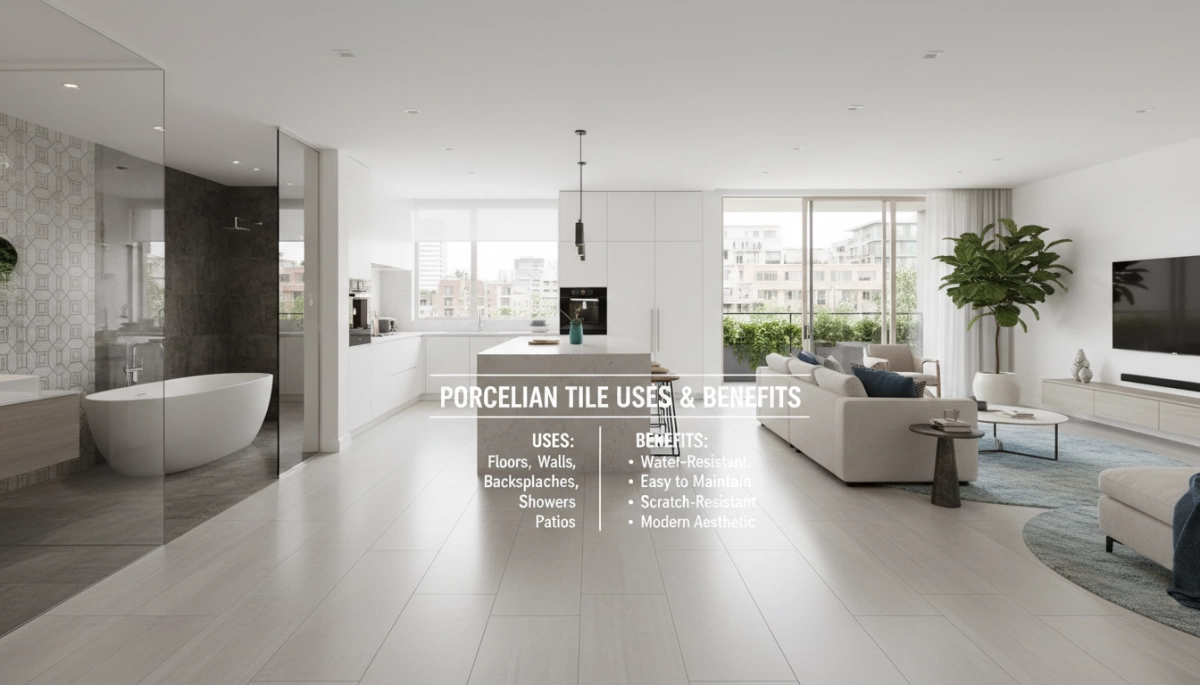
As a porcelain tile manufacturer and supplier, we see firsthand exactly where these materials perform best. Thanks to their unmatched durability and water resistance, porcelain stands out as one of the most versatile flooring options on the market. Here is where this material truly shines.
Kitchens and Bathrooms
These rooms handle the most moisture, spills, and daily messes. Porcelain is practically waterproof, making it the ultimate defense for wet zones.
- Spill-Proof: Exceptional water resistance keeps moisture from seeping into your subfloor.
- Stain Defense: Dropped food, wine, or cosmetics wipe away easily without leaving permanent marks.
- Hygienic Surface: The dense, non-porous nature of the tile prevents mold, mildew, and bacteria buildup.
High-Traffic Commercial and Living Areas
Busy households and commercial spaces demand floors that can take a beating without showing wear. Porcelain handles heavy foot traffic with ease.
- Scratch Resistance: Pet claws, dragged furniture, and constant walking won’t scuff or damage the surface.
- Long-Lasting Looks: The color and finish remain intact for decades, even in demanding environments.
- Top Applications: Perfect for main hallways, expansive living rooms, retail stores, and busy office lobbies.
Outdoor Patios and Walkways
Not all indoor flooring options can survive the outdoors, but porcelain thrives in harsh elements. It bridges the gap between indoor comfort and outdoor resilience.
- Freeze-Thaw Safe: The incredibly low water absorption rate means the tiles will not crack during freezing temperatures.
- UV Protection: Direct sunlight will not fade or alter the color of the tile over time.
- Outdoor Safety: Textured and matte finishes provide excellent grip, making them ideal for pool decks, patios, and garden walkways.
Is Porcelain Tile Right for Your Project?
Choosing the best flooring options comes down to balancing your immediate needs with future benefits. Because we are a porcelain tile manufacture and supplier, we see firsthand how this material transforms residential and commercial spaces. However, you need to make sure it aligns perfectly with your specific project goals and constraints.
Assessing Your Budget
Porcelain tile requires a solid upfront investment. When planning your budget, you must factor in both the cost of the premium tiles and the necessary setting materials. While it costs more initially than standard ceramics or laminate, its unmatched durability and scratch resistance mean you avoid the recurring expense of early repairs and replacements.
DIY vs. Professional Installation
Installing porcelain is rarely a simple weekend DIY project. The dense nature of the material makes it incredibly challenging to work with if you lack experience.
- Heavy Material: The tiles are extremely dense, making them heavy to lift, maneuver, and set.
- Specialized Tools: You need a high-quality wet saw with a diamond blade to make clean cuts without chipping the surface.
- Strict Subfloor Prep: The underlying surface must be perfectly level and rigid to prevent the tiles from cracking under pressure.
Hiring an experienced professional ensures the installation is flawless, maximizing the tile’s inherent water resistance and structural integrity.
Long-Term Value Considerations
The ultimate deciding factor when weighing porcelain tile advantages and disadvantages is the long-term return on investment.
- Decades of Lifespan: It easily withstands heavy daily foot traffic without showing signs of wear.
- Increased Property Value: Premium hard surfaces are highly attractive to future buyers and elevate the overall feel of the property.
- Zero Maintenance Costs: The surface never requires stripping, waxing, or expensive chemical sealers.
Once installed correctly, the initial upfront costs and installation efforts fade, leaving you with a permanent, high-performing surface that stands the test of time.
