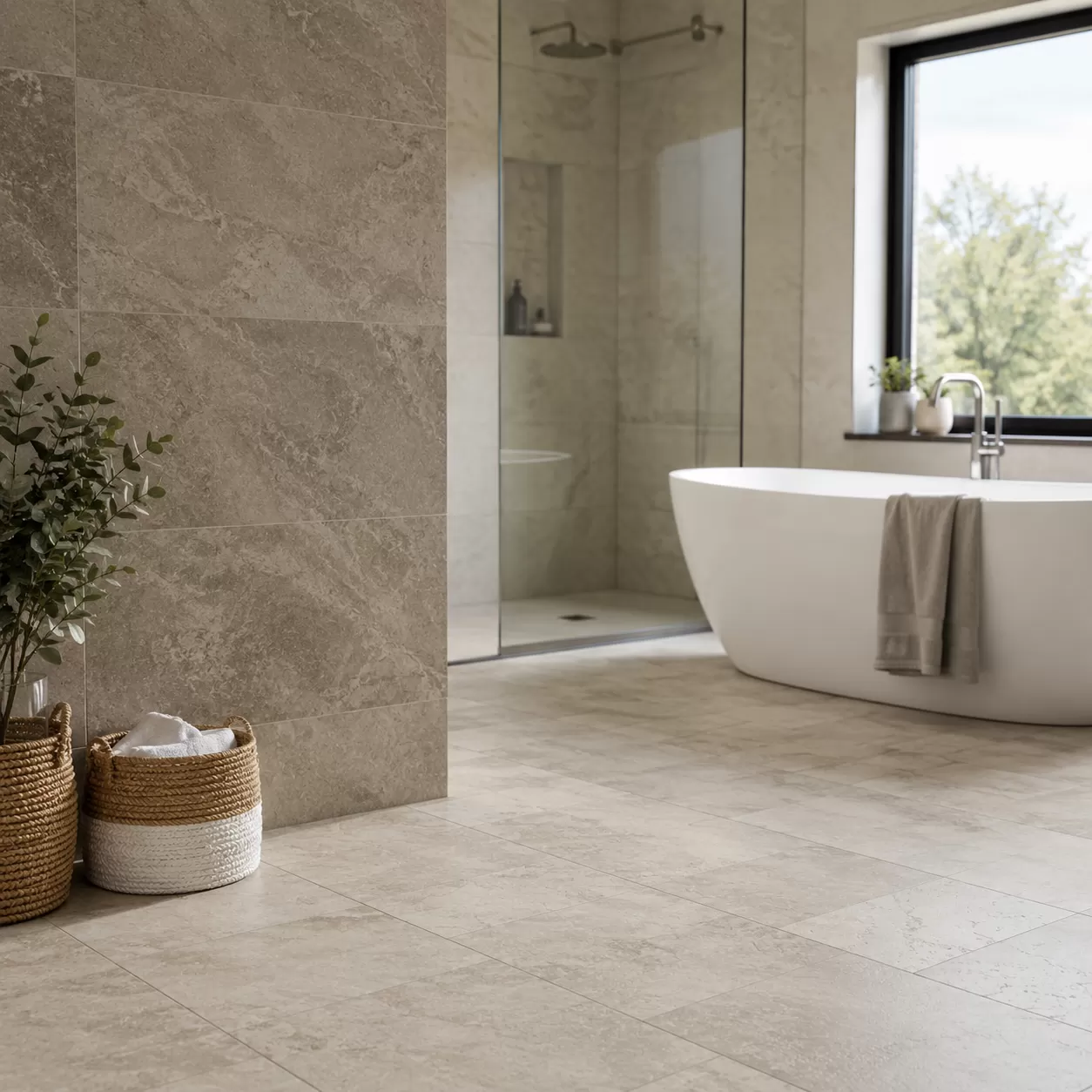
Ever wondered if you can just swap your floor tiles for your walls, or vice versa?
Most people think a tile is just a tile—until they realize they’ve installed a slippery hazard or a material that’s destined to crack under pressure. As someone who has spent years navigating the nuances of interior surfaces, I’ve seen how one wrong choice can turn a dream renovation into a costly mistake.
In this guide, I’m breaking down the PEI ratings, slip resistance, and material composition you need to know. Whether you’re aiming for a seamless monochromatic look or trying to avoid common layout mistakes, you’re about to learn exactly how to choose the right porcelain, ceramic, or natural stone for every room.
Let’s dive in.
Are Wall and Floor Tiles Interchangeable?
When planning a modern space, understanding the distinct roles of surface materials is crucial. While both wall and floor tiles elevate the aesthetics of a room, they are designed with entirely different engineering standards and physical properties.
In short, wall and floor tiles are not universally interchangeable. Utilizing the wrong tile on the wrong surface compromises both safety and structural integrity.
Can You Use Floor Tiles on Walls?
Yes, you can absolutely install floor tiles on walls. Floor tiles are engineered to be exceptionally durable, making them more than capable of handling vertical wall applications. However, certain structural limitations must be considered:
- Weight Factors: Floor tiles are thicker and significantly heavier than standard wall options. Your drywall or substrate must be structurally sound and capable of supporting the extra load.
- Adhesive Strength: Specialized, high-performance thin-set mortars are required to prevent heavy floor tiles from slipping or sagging during installation.
- Aesthetic Appeal: Large-format floor tiles, such as marble look porcelain tile, can create a stunning, seamless, and upscale aesthetic when applied to accent walls or shower enclosures.
Can You Use Wall Tiles on Floors?
No, you should never use standard wall tiles on floors. Wall tiles are manufactured specifically for vertical surfaces and lack the structural composition required to withstand foot traffic, heavy furniture, or impact.
The Risks of Using Wall Tiles on Floors
Ignoring the structural limitations of wall tiles on floors leads to immediate and costly failures. The primary risks include:
| Risk Factor | Consequence |
|---|---|
| Structural Cracking | Wall tiles are thinner and brittle. Under the weight of foot traffic or furniture, they will crack and shatter rapidly. |
| Severe Slip Hazards | Wall tiles typically feature high-gloss, smooth glazes. When walked on—especially in wet areas like bathrooms—they become incredibly slick and dangerous. |
| Rapid Wear and Scratching | The delicate glazes used for wall aesthetics cannot handle the abrasive friction of shoes, pet claws, and dirt, leading to a ruined finish in a matter of weeks. |
Key Differences Between Wall and Floor Tiles
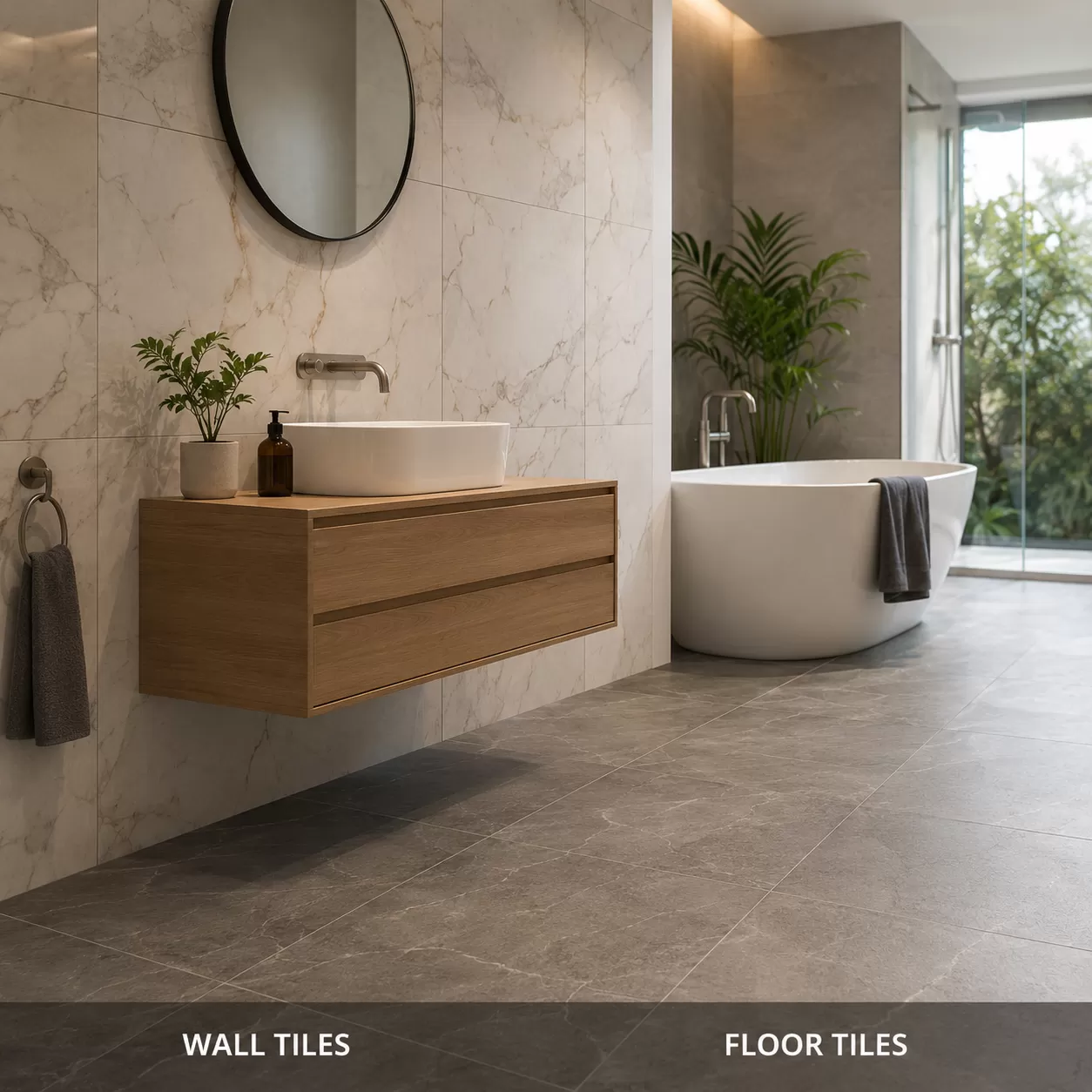
While they might look identical on the surface, wall and floor tiles are engineered for entirely different levels of stress. Using the wrong tile in the wrong place can lead to cracked surfaces, dangerous slips, or structural failure. Here is exactly what sets them apart.
Durability, Hardness, and PEI Ratings
Floor tiles must withstand heavy foot traffic, dropped objects, and moving furniture, while wall tiles only need to support their own weight. To determine durability, we look at the PEI (Porcelain Enamel Institute) rating, which measures a tile’s resistance to abrasion and wear.
| PEI Rating | Durability Level | Best Use Cases |
|---|---|---|
| PEI 1 & 2 | Light Wear | Wall applications only (or very light residential bathroom floors). |
| PEI 3 | Moderate Traffic | All residential floors, countertops, and walls. |
| PEI 4 & 5 | Heavy to Extra Heavy Traffic | Commercial spaces, entryways, and high-traffic home floors. |
As a premier Marble Look Porcelain Tile supplier and manufacture, we always recommend checking the PEI rating before installation to ensure long-term performance.
Slip Resistance and COF Ratings
Safety is the biggest differentiator when comparing floor and wall options. Floor tiles require texture and grip to prevent accidents, especially in wet areas. This is measured by the COF (Coefficient of Friction) rating.
- Floor Tiles: Require a COF rating of 0.50 or higher (0.42 for DCOF) to provide adequate slip resistance.
- Wall Tiles: Often feature high-gloss, ultra-smooth glazes that become incredibly slick when wet. They have no slip resistance requirements.
Thickness, Weight, and Material Composition
The physical build of the tile dictates where it can be safely installed.
- Floor Tiles: These are thicker, denser, and heavier to handle weight loads without cracking. Because they are heavy, installing them on a standard wall requires specialized mortar and a strong, reinforced substrate.
- Wall Tiles: These are intentionally thinner and lighter so they stick to vertical surfaces easily without sliding down during installation.
Porosity and Water Absorption Rates
A tile’s ability to resist moisture determines its lifespan, especially during a bathroom renovation.
- Porcelain: Dense and highly vitrified, porcelain has a water absorption rate of less than 0.5%, making it ideal for both floors and walls in high-moisture zones.
- Ceramic and Glass: Many ceramic wall tiles and decorative glass mosaics are more porous on their backings. While perfect for wiping down on a kitchen backsplash, they will absorb too much moisture or lack the structural integrity needed for a shower floor.
Common Types of Wall and Floor Tiles
Choosing the right material is the first step to a successful project. We manufacture and supply a wide range of products designed to handle specific structural demands while keeping your space looking sharp. Here is a breakdown of the most common options we offer for your home.
Ceramic Tiles
Ceramic tiles are a classic choice, crafted from clay and fired at high temperatures. They are lightweight and easy to cut, making them the absolute best fit for bathroom renovation walls and kitchen backsplashes. However, because they are softer and more porous than other materials, we don’t recommend light-duty ceramics for high-traffic floors. They work beautifully where vertical style matters most.
Porcelain Tiles
If you need pure strength, porcelain tiles are the industry standard. Fired at much higher temperatures than ceramic, they are incredibly dense, highly scratch-resistant, and nearly waterproof. This makes them perfectly interchangeable for both heavy-traffic floors and walls. As a dedicated Marble Look Porcelain Tile supplier and manufacture, we design these to give you the high-end look of real stone with none of the fragile upkeep, making them perfect for seamless, floor-to-ceiling layouts.
Natural Stone Tiles
For unmatched luxury, natural stone tiles like marble, slate, and travertine offer completely unique textures. Because stone is naturally porous, it requires regular sealing to prevent stains, especially in wet areas.
- Best for floors: Harder stones like granite or dense slate.
- Best for walls: Lighter marble or stacked stone to avoid weight issues.
Mosaic and Glass Tiles
Mosaic and glass tiles are all about visual impact. Glass reflects light beautifully, making it a favorite for accents, borders, and feature walls.
- Wall Use: Ideal for backsplashes and shower walls because they resist stains and wipe clean easily.
- Floor Use: Generally too fragile for floors, though small mesh-backed mosaics work great on shower floors because the numerous grout lines offer built-in slip resistance.
Our curated tile collections make it easy to mix and match these materials safely across any surface in your home.
How to Match Floor and Wall Tiles for a Cohesive Look
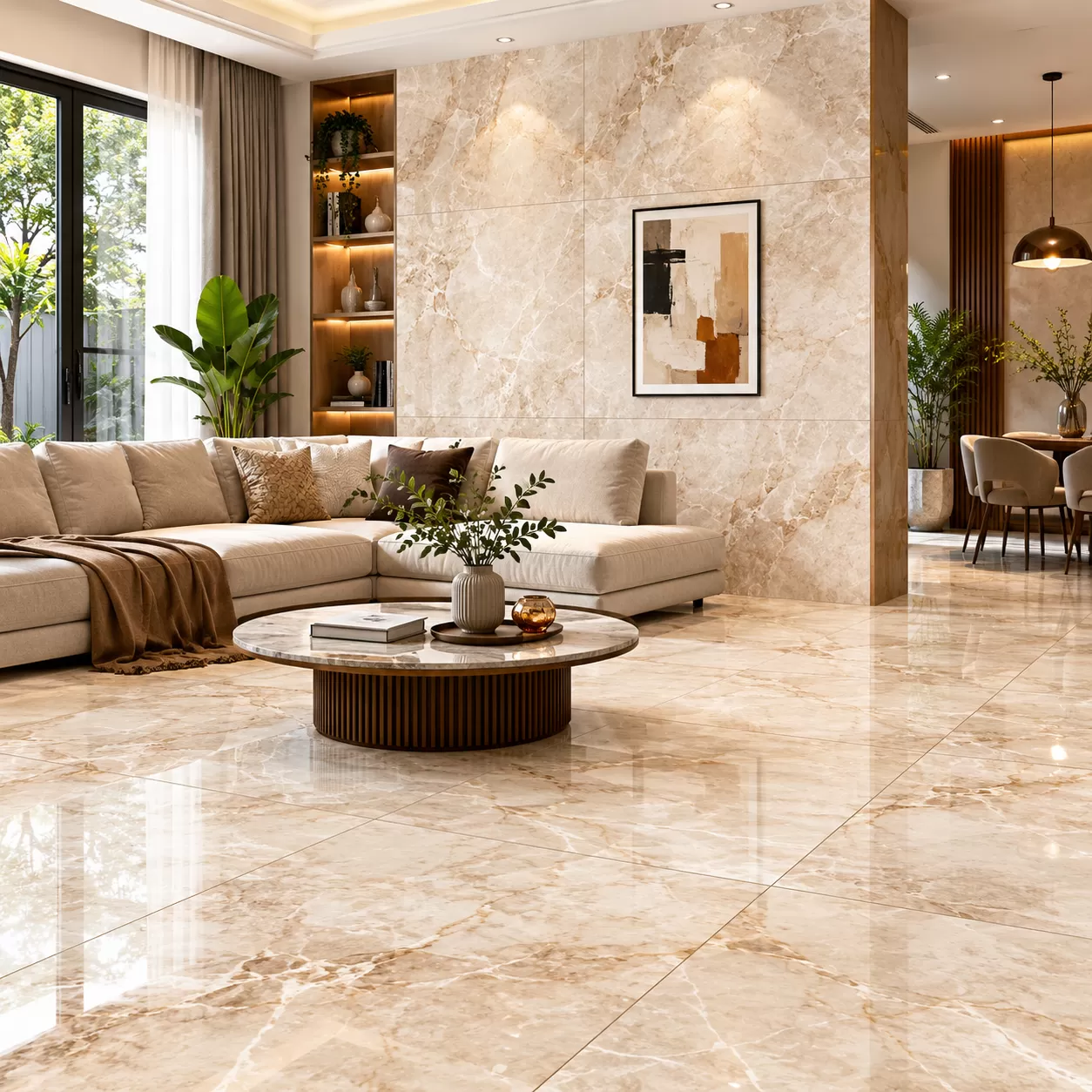
Getting the right mix between your floor and wall surfaces is what separates a basic room from a professionally designed space. When deciding are wall and floor tiles interchangeable, the answer is often no due to safety—but they must always work together visually.
Here is how we help our clients tie a room together seamlessly.
Creating Contrast vs. Monochromatic Looks
You have two main paths when planning your layout: high contrast or a seamless, monochromatic flow.
- The Monochromatic Look: Uses the same color tone across both surfaces. This makes small rooms feel massive. Many homeowners choose a Marble Look Porcelain Tile for both the floor and walls to get that high-end, unbroken luxury hotel vibe.
- The Contrast Look: Pairs light walls with dark floors, or vice versa. It anchors the room and adds instant drama. If you go this route, keep the undertones (warm or cool) the same so the space doesn’t feel disjointed.
Mixing and Balancing Tile Sizes
Using the exact same size tile on both the floor and the wall can look boxy and flat. Instead, play with scale to create visual interest.
- Large Format on Floors, Smaller on Walls: A classic choice. Large floor tiles mean fewer grout lines, while smaller subway or mosaic tiles on the wall add texture.
- The Rule of Proportion: If you use large tiles on both surfaces, change the orientation. Run rectangular tiles horizontally on the floor and vertically on the wall to guide the eye upward.
- Grout Line Alignment: If you use the same size tile on both surfaces, ensure the grout lines line up perfectly from the floor straight up the wall for a clean, architectural finish.
Coordinating Tile Finishes and Textures
Texture is just as important as color, especially in wet areas like bathrooms where safety and style intersect.
| Surface | Recommended Finish | Why It Works |
|---|---|---|
| Floors | Matte, Honed, or Textured | Provides necessary slip resistance and hides footprints. |
| Walls | Glossy, Polished, or Satin | Reflects light, makes the space brighter, and is incredibly easy to wipe clean. |
Design Tip: Don’t mix too many textures. If your floor tile has a heavy, rustic slate texture, keep the wall tiles smoother to avoid visual clutter.
Unifying Your Design with Grout
Grout is the secret weapon of any bathroom renovation. It can either make your tile lines disappear or make them pop as a design feature.
- Matching Grout: Choose a grout color that matches your tiles perfectly for a smooth, unbroken look. This is ideal for a clean Marble Look Porcelain Tile installation.
- Contrasting Grout: Use a dark grout with light tiles (or vice versa) to highlight the shape and pattern of the tile. This works beautifully with geometric shapes or classic subway layouts.
- The Bridge Technique: If your floor and wall tiles are different colors, pick a single grout color that sits right in the middle of both shades to tie the two surfaces together instantly.
Choosing the Right Tile Combinations by Room
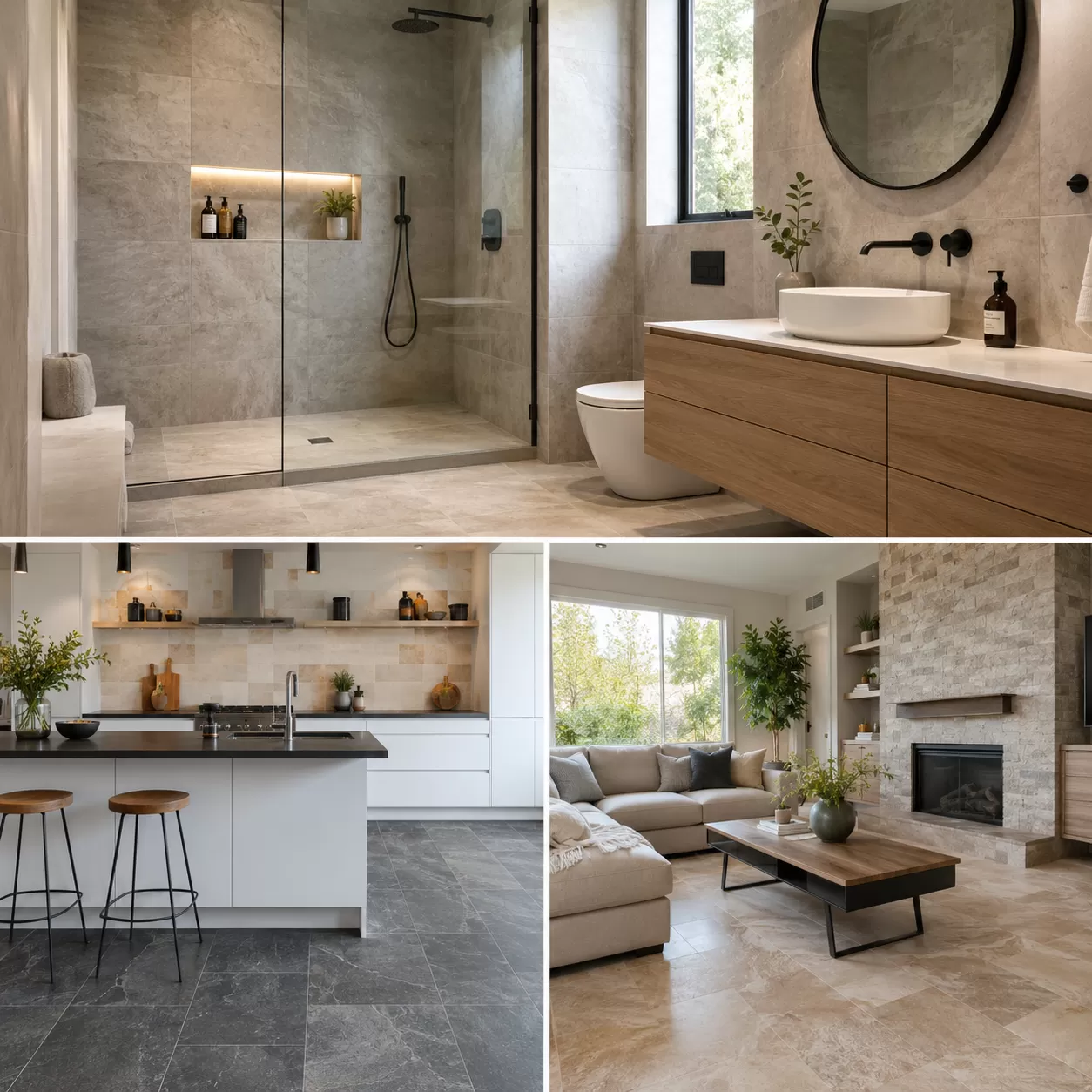
Selecting the right tile combo is all about balancing daily wear and tear with your personal style. Every space has different demands for safety, moisture, and traffic. Here is how we recommend breaking it down room by room.
Bathrooms and Ensuites
Bathrooms are high-moisture zones where safety is the top priority. For flooring, always choose matte or textured porcelain tiles with a high slip-resistance rating to prevent falls in wet areas.
- Floors: Non-slip, low-porosity porcelain or textured natural stone.
- Walls: Shiny glass, classic ceramic, or large-format marble look porcelain tile to create a clean, spacious feel.
- Pro Tip: As a leading marble look porcelain tile supplier and manufacture, we love using matching tile collections. Running the same marble pattern from the floor up onto the walls makes a small bathroom renovation feel like a luxury spa.
Kitchens and Backsplashes
Kitchen floors face heavy foot traffic, dropped utensils, and frequent spills, while walls handle grease and food splatters.
- Floors: Durable, scratch-resistant porcelain tiles that can withstand heavy daily use.
- Walls & Backsplashes: This is where you can get creative. Stain-resistant ceramic, glossy mosaic, or glass tiles work perfectly here because they wipe clean effortlessly.
Living Rooms and Entryways
Entryways and living spaces require materials that handle heavy traffic, muddy shoes, and shifting furniture without scratching.
| Zone | Recommended Tile Type | Key Benefit |
|---|---|---|
| Entryways | High-PEI Porcelain or Natural Stone | Resists dirt, grit, and outdoor moisture. |
| Living Rooms | Large-Format Matte Porcelain | Creates a seamless, expansive, modern look. |
Outdoor and Transitional Spaces
Standard indoor tiles will not cut it outdoors. For patios, walkways, and transitional spaces, you need specialized materials that can brave the elements.
- Weatherproof: Choose thick, frost-resistant porcelain or natural stone that won’t crack during freeze-thaw cycles.
- Texture Matters: Stick to unglazed, highly textured surfaces to ensure grip when it rains.
Common Tile Selection Mistakes to Avoid
Choosing the wrong tile can ruin a beautiful bathroom renovation or kitchen remodel. When you are deciding if wall and floor tiles are interchangeable, avoiding a few critical missteps will save you time, money, and future headaches.
Ignoring Slip Resistance on Floor Surfaces
Safety should always come first. Using a glossy, slick tile on a floor—especially in wet areas like showers or entryways—is an accident waiting to happen. Always check the slip resistance before installing. Save the high-gloss, smooth finishes for your walls or backsplashes, and stick to textured or matte options for underfoot safety.
Using Heavy Floor Tiles on Weak Walls
While you can often use floor tiles on walls, you cannot ignore the weight. Large-format porcelain or heavy natural stone tiles require a sturdy, properly prepared substrate. Hanging heavy floor tiles on standard, unprepared drywall can cause the wall to sag or the tiles to detach entirely. Always verify that your wall structure can handle the load.
Neglecting Layout Planning and Visual Flow
A beautiful tile can look messy if the layout is poorly planned. Before mixing different tile collections, map out your grout lines and visual flow. Failing to plan how wall tiles line up with floor tiles leads to awkward cuts, mismatched patterns, and a cluttered look. Take the time to dry-lay your tiles to ensure a seamless, cohesive transition.
