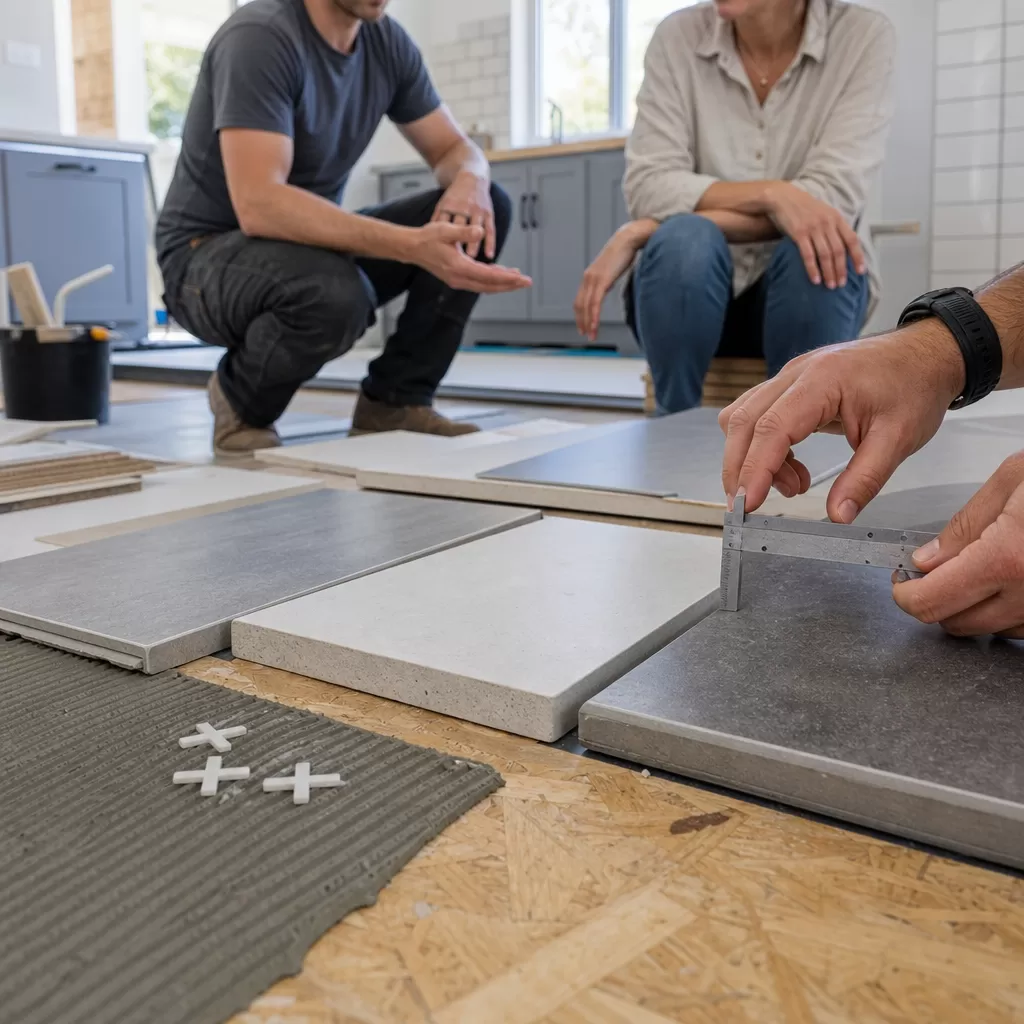
Understanding Standard Porcelain Tile Thickness Options
Selecting the correct porcelain tile thickness is critical for ensuring structural integrity, seamless installation, and long-term performance. Modern manufacturing advancements allow us to produce porcelain stoneware across a diverse spectrum of thicknesses, each engineered for specific global market demands.
The table below provides a quick reference to the standard thickness options available in our manufacturing lineup:
| Tile Category | Thickness Range | Primary Applications | Key Advantage |
|---|---|---|---|
| Ultra-Thin | 3.5text{mm} – 6.5text{mm} | Interior walls, over-tiling, lightweight cladding | Low weight, easy to overlay |
| Standard | 8text{mm} – 10text{mm} | Residential floors, standard commercial walls | Balanced strength and versatility |
| Extra Thick | 12text{mm} – 20text{mm} | Outdoor patios, driveways, heavy commercial floors | High load-bearing capacity |
Ultra-Thin Porcelain Tiles (3.5mm to 6.5mm)
Ultra-thin porcelain slabs represent a major technological leap in porcelain stoneware production. These lightweight profiles are engineered specifically to minimize structural load while maximizing surface coverage.
- Weight Reduction: Significantly lowers the dead load on building structures, making them ideal for high-rise interior walls and facades.
- Renovation Efficiency: Can be applied directly over existing sound flooring or wall covering, eliminating the need for costly and messy demolition.
- Eco-Friendly Logistics: Reduced material volume lowers shipping costs and carbon footprints for global distribution.
Standard Porcelain Tiles (8mm to 10mm)
Standard thickness tiles are the industry benchmark for traditional installations. As a leading manufacturer and supplier, we optimize this specific range to deliver the ultimate balance between tensile strength and ease of handling during installation.
- Versatile Performance: The go-to choice for almost all residential indoor floors, bathrooms, and high-traffic kitchen areas.
- Cutting & Handling: Standard tools easily cut and shape these tiles, minimizing on-site breakage and labor costs.
- Reliable Durability: Offers a time-tested defense against daily foot traffic and impact without requiring specialized ultra-thick subfloors.
Extra Thick Porcelain Tiles (12mm to 20mm)
When project specifications demand maximum flooring durability under extreme stress, extra-thick porcelain tiles are the definitive solution. These robust slabs are engineered to withstand severe weather, heavy static loads, and vehicular traffic.
- Unrivaled Strength: 20text{mm} porcelain tiles offer superior resistance to cracking, frost, and thermal shock.
- Dry Installation Compatible: Ideal for outdoor paving, gravel beds, sand bases, or raised pedestal systems without the need for traditional adhesives.
- Heavy-Duty Applications: Engineered for commercial plazas, public walkways, and residential driveways where structural integrity cannot be compromised.
Why Choosing the Right Porcelain Tile Thickness Matters
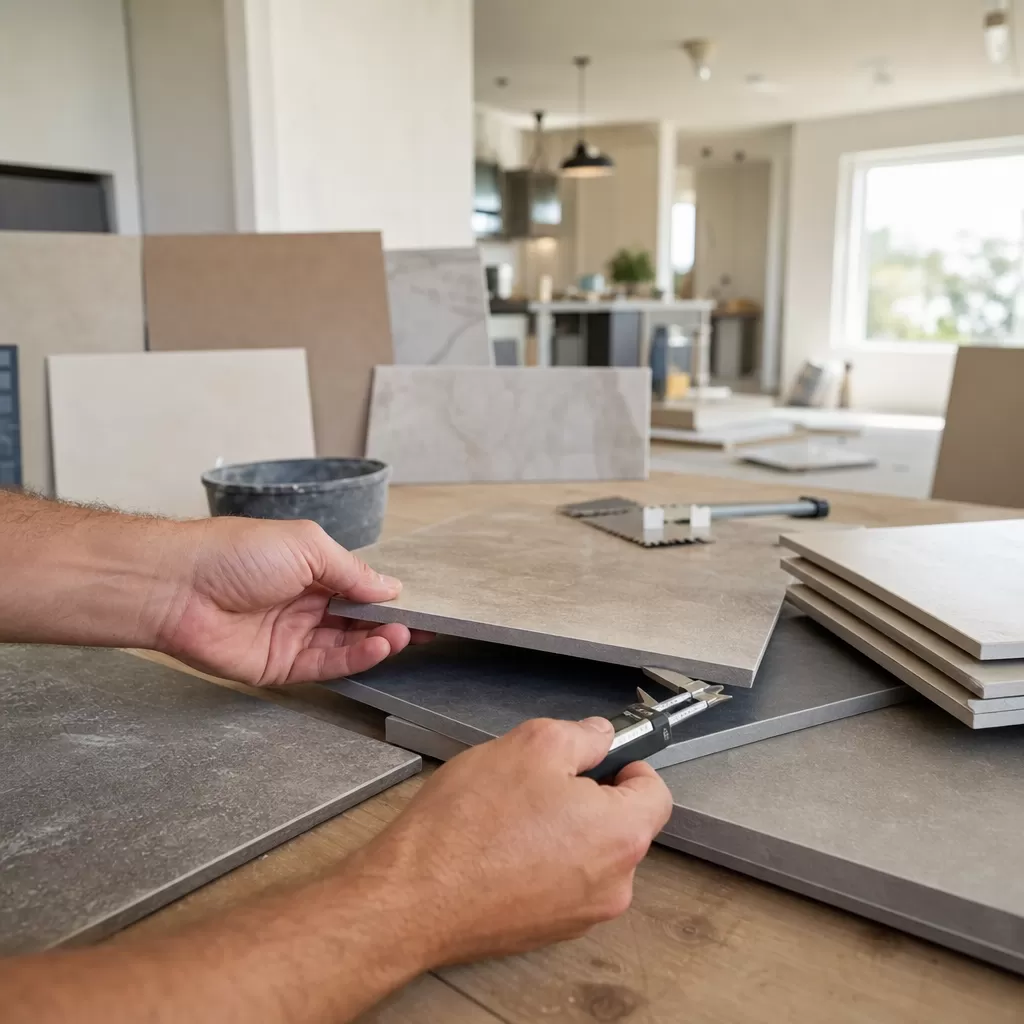
When you are figuring out how to choose the right thickness of porcelain tiles, you are not just picking a look—you are deciding how well your floor or wall covering will perform over time. The thickness you choose directly impacts the structural durability, installation success, and long-term performance of your porcelain stoneware.
Impact on Structural Durability and Strength
Tile thickness determines how much weight and impact your surface can take. Choosing the right thickness prevents cracking under heavy foot traffic or dropped objects, ensuring long-term flooring durability.
- Thin Tiles (3mm – 6mm): Best for interior walls and low-impact areas. They crack easily if used on floors without a perfectly flat subfloor.
- Standard Tiles (8mm – 10mm): The sweet spot for residential flooring durability. They handle everyday foot traffic effortlessly.
- Thick Tiles (12mm – 20mm): Built for extreme loads, commercial spaces, and outdoor driveways.
Influence on Weight and Subfloor Requirements
The thicker the tile, the heavier it gets. You must match the tile weight to your subfloor’s load capacity to avoid structural sagging or installation failure.
| Tile Thickness | Average Weight | Best Subfloor Applications |
|---|---|---|
| Ultra-Thin (3.5mm – 6.5mm) | Lightweight | Existing tiles, drywall, interior walls |
| Standard (8mm – 10mm) | Moderate Weight | Plywood, concrete slabs, standard joists |
| Extra Thick (12mm – 20mm) | Heavyweight | Reinforced concrete, gravel, pedestal systems |
Effects on Sound Insulation and Thermal Performance
Thickness also plays a major role in how your room feels and sounds. As a leading Porcelain White Tile manufacture and supplier, we engineer our tiles to optimize both temperature control and noise reduction.
- Thermal Conductivity: Standard and thick porcelain tiles work exceptionally well with underfloor heating systems. They retain and distribute heat evenly across your living space.
- Acoustic Control: Thicker tiles add mass to the floor, which helps dampen echoing and reduces step noise between floors.
How to Choose Porcelain Tile Thickness by Application
Choosing the right thickness depends entirely on where you are installing the tile. Matching the tile thickness to the specific environment ensures longevity, safety, and a flawless finish. As a leading porcelain tile manufacturer and supplier, we recommend following these application-based guidelines.
| Application Area | Recommended Thickness | Primary Benefit |
|---|---|---|
| Interior Walls | 3.5mm – 6.5mm | Lightweight, easy to install, no structural strain |
| Indoor Residential Floors | 8mm – 10mm | Perfect balance of weight and flooring durability |
| Commercial Floors | 12mm – 14mm | High load capacity, resists heavy foot traffic |
| Outdoor Patios & Walkways | 20mm | Weather-resistant, supports dry installation on gravel/pedestals |
Wall Tile Thickness Requirements
For interior walls, lighter is always better. Using ultra-thin porcelain stoneware (3.5mm to 6.5mm) as a wall covering reduces the weight load on your drywall or backing board.
- Easier installation: Thinner tiles are simpler to cut and drill for plumbing fixtures.
- Seamless look: Ideal for large-format accent walls and kitchen backsplashes with minimal grout lines.
Indoor Residential Floor Tile Thickness
Standard home flooring requires a balance of strength and manageability. The sweet spot for living rooms, kitchens, and hallways is 8mm to 10mm.
- Flooring durability: Thick enough to handle daily foot traffic, dropped objects, and heavy furniture.
- Transition friendly: Aligns perfectly with standard carpet and hardwood transitions without creating tripping hazards.
Commercial and High-Traffic Area Tile Thickness
Commercial spaces like retail stores, hotel lobbies, and office corridors demand extra structural integrity. For these areas, select tiles that are 12mm to 14mm thick.
- Crack resistance: Prevents cracking under heavy rolling loads, such as shopping carts or pallet jacks.
- Long lifespan: Built to sustain constant, high-volume foot traffic without wearing down.
Outdoor Paving and Patio Tile Thickness
Outdoor environments face harsh weather, temperature swings, and heavy loads. For patios, driveways, and pool decks, 20mm (2cm) porcelain slabs are the industry standard.
- Maximum strength: Can be laid directly on grass, gravel, or sand without traditional mortar.
- Weatherproof: Resists frost, thermal shock, and heavy outdoor impacts seamlessly.
Key Factors to Consider When Selecting Tile Thickness
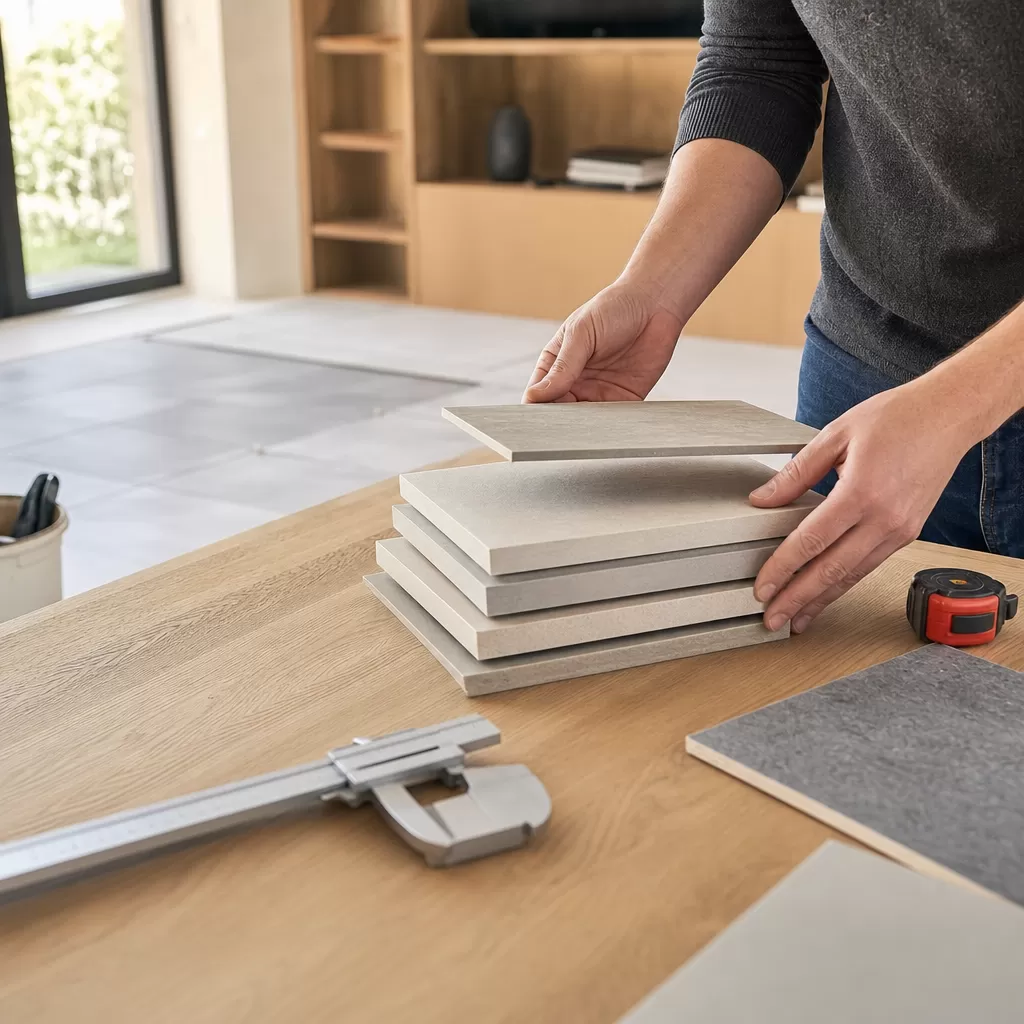
Choosing the right thickness for your project isn’t just about the look; it impacts the longevity of the installation. As a leading porcelain tile manufacturer and supplier, we see firsthand how the wrong choice can lead to cracked surfaces or installation headaches. Here is what you need to evaluate before buying.
Application Area and Foot Traffic Level
The environment dictates how much stress the porcelain stoneware will face. Heavy foot traffic requires a completely different thickness compared to a simple vertical wall covering.
- Low Traffic (Walls): Thinner tiles work perfectly here since there is zero weight load.
- Medium Traffic (Residential Floors): Standard thickness handles daily home life easily.
- High Traffic (Commercial/Outdoor): Requires maximum flooring durability to withstand heavy loads, equipment, or vehicles without cracking.
| Application Area | Traffic Level | Recommended Thickness |
|---|---|---|
| Interior Walls | None | 3.5mm – 6.5mm |
| Residential Living Rooms & Kitchens | Medium | 8mm – 10mm |
| Commercial Lobbies & Retail | High | 10mm – 12mm |
| Outdoor Patios & Driveways | Extreme | 20mm |
Tile Size and Large-Format Slab Constraints
Tile size and thickness go hand in hand. If you are opting for trendy, large-format slabs, thickness becomes a major handling and structural factor.
- Large Surface Area: Big slabs (like 1200x2400mm) need to be thin enough to manage weight but thick enough not to snap during transport.
- Weight Management: Large, thick slabs put immense strain on installers and walls.
- Lippage Risk: Larger tiles are more prone to bowing; choosing the correct thickness helps maintain a perfectly flat surface.
Installation Methods and Adhesive Bed Requirements
How you stick the tile to the substrate changes based on its thickness.
- Thin Tiles: Require a perfectly flat substrate and a thin-set mortar bed. Any air pockets underneath will cause the tile to crack under pressure.
- Standard Tiles: Offer more wiggle room. Standard thin-set mortars easily absorb minor subfloor imperfections.
- Thick Slabs: Often paired with thick-bed mortar or raised pedestal systems for outdoor drainage, eliminating the need for traditional adhesives entirely.
How Thickness Impacts Porcelain Tile Installation
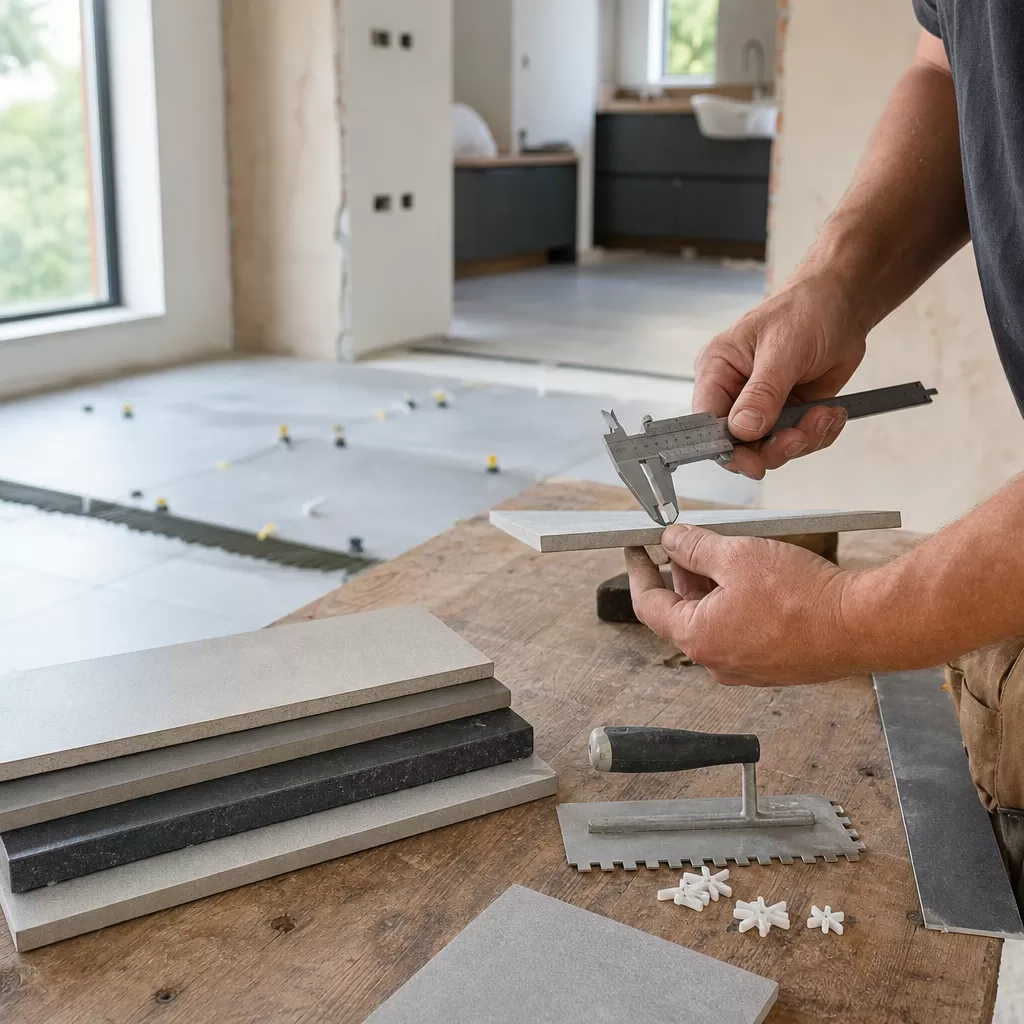
Choosing the right thickness of porcelain tiles changes more than just the look of a space—it completely dictates how we handle and install the material on-site. As a leading porcelain white tile manufacture and supplier, we know that thickness directly affects labor, tools, and long-term success.
Handling and Cutting Thicker vs. Ultra-Thin Slabs
The thickness of porcelain stoneware changes how installers cut and move the material.
- Ultra-Thin Slabs (3.5mm–6.5mm): These large-format slabs require specialized suction frame lifters to prevent snapping during transport. Cutting requires precise scoring rails and diamond hand-pads to smooth out fragile edges. They are ideal for quick installation over existing interior walls or as a lightweight wall covering.
- Thicker Slabs (12mm–20mm): Thick tiles are heavy and physically demanding to maneuver. They require heavy-duty wet saws with diamond blades specifically rated for high-density porcelain to get clean, chip-free cuts.
Installation on Mortar Beds vs. Pedestal Systems
Different thicknesses require entirely different foundation setups to ensure lasting flooring durability.
| Tile Thickness | Recommended Installation Method | Best Application Area |
|---|---|---|
| Thin to Standard (3.5mm – 10mm) | Traditional Mortar Bed: Requires a flat substrate with full adhesive coverage (back-buttering) to eliminate air pockets and prevent cracking under foot traffic. | Indoor floors, residential living spaces, and wall coverings. |
| Extra Thick (20mm) | Dry Laying & Raised Pedestal Systems: Can be laid directly onto gravel, sand, or elevated adjustable pedestals without any adhesive or grout. | Outdoor patios, commercial walkways, and rooftops. |
Repair, Replacement, and Maintenance Considerations
The thickness you choose today affects how you maintain your space down the road.
- Standard and Thick Tiles: Exceptional impact resistance. If a heavy object drops, these tiles rarely crack. If damage does happen, replacing a single tile on a mortar bed requires grinding out the old grout and chiseling the tile away carefully.
- Ultra-Thin Tiles: While highly durable once fully bonded to a flat wall or floor, they are more susceptible to impact damage if the adhesive bed underneath has any hollow spots. However, because they are thin, they can often be tiled directly over during future renovations, saving massive demolition costs.
Frequently Asked Questions About Porcelain Tile Thickness
When figuring out how to choose the right thickness of porcelain tiles, a few common questions always pop up. Since we are a Porcelain White Tile manufacture and supplier, we help global clients navigate these exact concerns every single day.
What is the most common thickness for indoor porcelain floor tiles?
For standard residential and light commercial spaces, the industry standard sits right between 8mm and 10mm.
- Perfect Balance: This range offers optimal flooring durability without adding unnecessary weight to your subfloor.
- Reliable Performance: It handles daily foot traffic effortlessly and works perfectly with standard mortar beds.
Can you use thin porcelain tiles on floors?
Yes, but with strict conditions. Ultra-thin porcelain stoneware (around 3.5mm to 6.5mm) is primarily designed as a sleek wall covering for interior walls.
- When to use on floors: You can use them for flooring only when installing directly over an existing, perfectly level hard surface, like an old tile floor.
- When to avoid: Never use thin tiles on uneven subfloors or in heavy commercial zones. They simply lack the impact resistance needed to survive heavy drops or structural shifting.
Is a thicker porcelain tile always more durable?
Not necessarily. True flooring durability comes from matching the tile to its specific environment rather than just maximizing the depth.
- Application is Key: A 20mm tile is built to handle heavy outdoor vehicles and frost, making it complete overkill for an indoor living room.
- Installation Matters: A properly installed 9mm standard tile will easily outlast a poorly supported 15mm tile. Always select your thickness based on actual foot traffic and load requirements, not just the assumption that thicker is superior.
