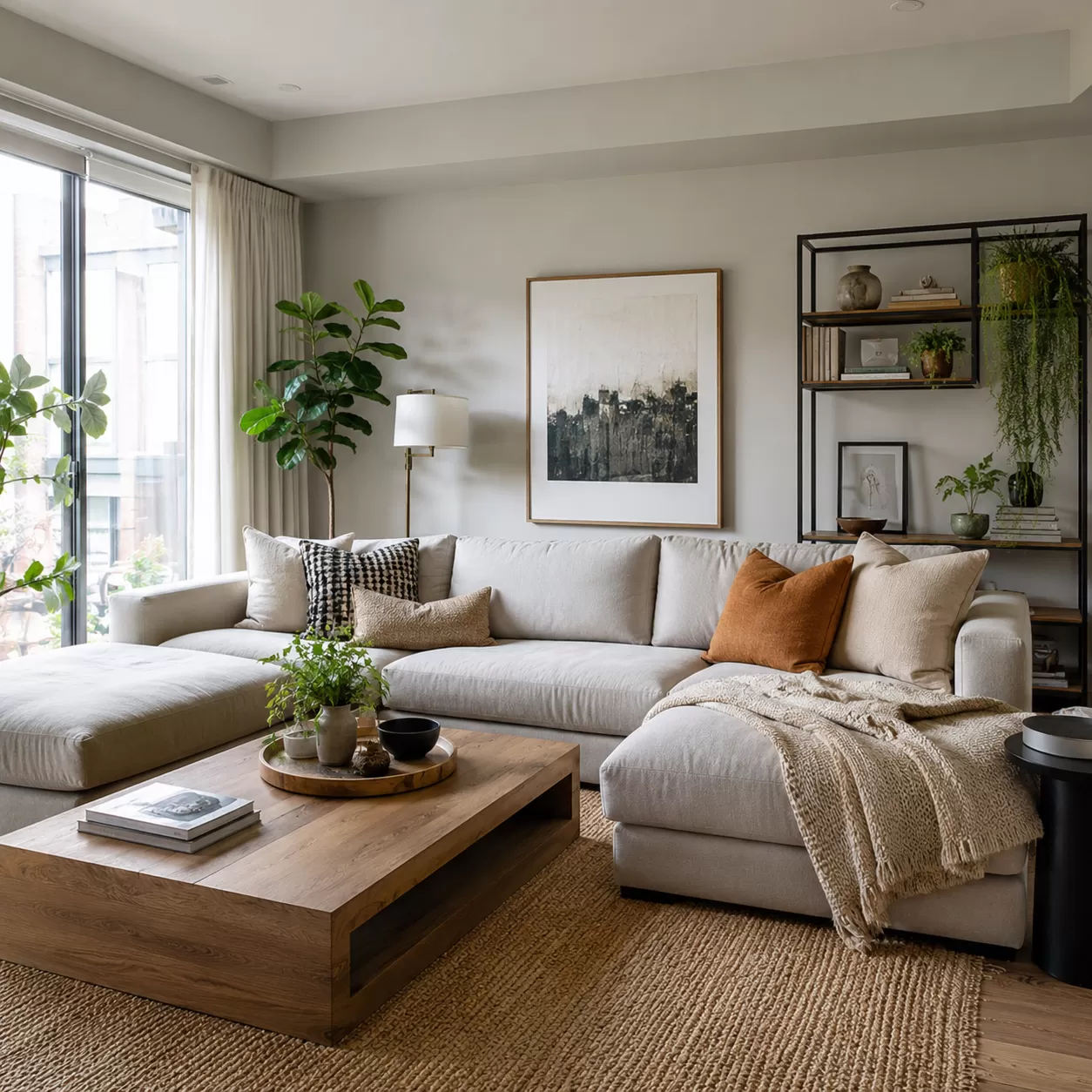
Is Tile Appropriate for a Living Room? Understanding the Basics
Tile is no longer reserved just for kitchens and bathrooms. Modern interior design has embraced tile as a sophisticated, highly functional flooring choice for the main living area. When selecting the right foundation for your home, tile stands out as a premium option that balances structural integrity with high-end aesthetics. It offers a clean, polished look that elevates the overall design narrative of any modern household.
Why Tile Is Gaining Popularity in Living Spaces
Homeowners and designers worldwide are shifting toward tile flooring in living rooms for several compelling reasons:
- Unmatched Longevity: Unlike carpet that stains or hardwood that scratches, high-quality tile withstands heavy foot traffic, pets, and daily wear without losing its luster.
- Climate Adaptation: Tile naturally stays cool, making it an energy-efficient choice for warmer climates and open-concept layouts.
- Aesthetic Freedom: Advanced manufacturing allows tile to mimic premium materials like natural stone, marble, and even hardwood, offering luxury looks with far less maintenance.
- Global Design Trends: Seamless indoor-outdoor living transitions rely heavily on continuous tile flooring to expand the visual footprint of the home.
Core Factors to Consider Before Tiling Your Living Room
Before committing to a tiled living room floor, assess these vital structural and lifestyle factors to ensure it aligns with your space:
- Subfloor Preparation: Tile requires a completely level, rigid subfloor. Any flex or unevenness can lead to cracked tiles or shifting grout lines over time.
- Acoustics and Sound Reflection: Hard surfaces reflect sound waves. Large living rooms with high ceilings may require strategic placement of area rugs or acoustic panels to maintain a cozy, quiet atmosphere.
- Daily Lifestyle and Comfort: Consider how your family uses the space. If you have toddlers or spend a lot of time standing, the firmness of the surface is an important variable to balance with soft textiles.
- Long-Term Home Value: Investing in premium tile finishes permanently upgrades the property, offering a sustainable flooring solution that appeals to future buyers.
The Pros of Installing Tile Flooring in the Living Room
Exceptional Durability and Longevity
Living rooms see a lot of foot traffic, dropped remotes, and moving furniture. Tile is tough enough to handle all of it without denting or scratching. When you choose high-quality flooring, you are investing in a surface that lasts for decades. As a direct supplier, we see firsthand how well our premium collections stand up to daily wear and tear compared to softer materials like wood or vinyl. It keeps its original look for years, making it a smart choice for busy households.
Low Maintenance and Easy Cleaning
Keeping a living space clean shouldn’t feel like a second job. Tile flooring requires very little effort to stay looking brand new.
- Quick cleanups: Spills, mud, and pet accidents wipe away instantly.
- Simple routine: Regular sweeping and an occasional damp mop are all it takes.
- Stain resistance: Unlike carpet, tile won’t absorb liquids or trap odors.
Allergy-Friendly and Hypoallergenic Properties
If anyone in your home suffers from asthma or seasonal allergies, tile flooring is a game-changer for your indoor air quality.
| Flooring Type | Allergen Retention | Cleaning Ease |
|---|---|---|
| Tile | Does not harbor dust, pollen, or pet dander | Extremely Easy |
| Carpet | Traps deep dust, mites, and pet hair | Difficult / Requires Deep Steam |
Because tile has a hard, solid surface, there is nowhere for dust mites or pollen to hide, making your living room a much healthier environment.
Design Versatility and Modern Aesthetics
Tile opens up endless interior design possibilities for your main living space. As a dedicated porcelain tile supplier and manufacturer, we design options that fit any home style, from sleek modern minimalism to warm rustic charm. You can choose large-format tiles to make a small living room feel spacious, or pick intricate patterns to create a custom look. It also pairs beautifully with an accent wall to tie the whole room together, boosting both your home value and its visual appeal.
The Cons and Challenges of Living Room Tiles
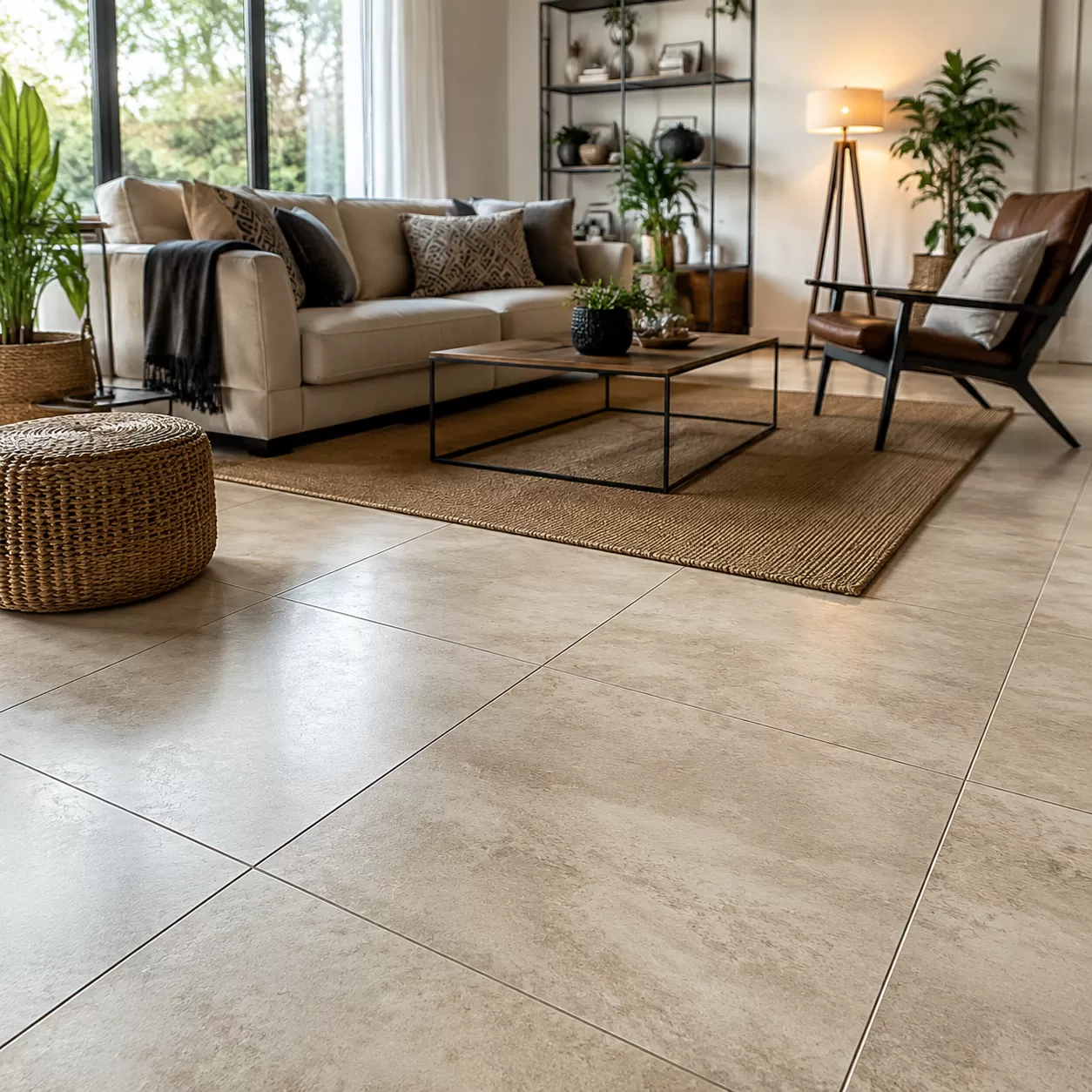
While tile is an exceptional choice for modern living spaces, it does come with a few drawbacks. We always advise homeowners to look at the practical downsides before making a final decision.
Cold and Hard Underfoot Feeling
The most common complaint about living room tiles is the temperature and lack of give.
- Temperature Sensitivity: Tile retains cold, which can feel uninviting in winter months if you live in a cooler climate.
- Physical Hardness: Standing on tile for long periods can fatigue your feet and joints.
- Safety for Kids and Pets: Dropped objects will shatter instantly, and the slick surface offers less traction.
Grout Maintenance and Discoloration Risks
The longevity of your floor depends heavily on how you care for the grout lines.
- Stain Magnet: Grout is naturally porous. It absorbs dirt, spilled coffee, and pet accidents easily.
- Discoloration: High-traffic pathways in your living room will darken over time, requiring deep scrubbing or professional resealing.
- Maintenance Needs: Unlike the tile itself, grout requires regular sealing to stay clean and water-resistant.
Complex and Costly Professional Installation
Tile is not a forgiving DIY project. To get a flawless finish that lasts for decades, you need to budget for professional labor.
| Installation Challenge | Impact on Your Project |
|---|---|
| Subfloor Preparation | The floor must be perfectly flat. Any unevenness causes tiles to crack under pressure. |
| Specialized Tools | Wet saws, specific mortars, and spacers are required for clean cuts and straight lines. |
| Higher Upfront Labor Cost | Professional tiling costs more per square foot to install compared to laminate or carpet. |
Best Types of Tiles for Living Room Floors
Selecting the right material is the most critical step when updating your space. As a direct porcelain tile supplier and manufacturer, we see firsthand how the right choice transforms a home. Different materials serve different lifestyles, budgets, and design goals.
Porcelain Tiles for High-Traffic Durability
For busy living rooms, porcelain tile is the ultimate choice. It is denser and less porous than other options, making it highly resistant to scratches, stains, and heavy foot traffic.
- Massive Durability: Perfect for homes with pets, kids, and high activity.
- Low Moisture Absorption: Spills won’t damage the structure or cause warping.
- Long-Term Value: Boosts overall home value due to its near-indestructible nature.
Ceramic Tiles for Budget-Friendly Style
If you want a stylish look without breaking the bank, ceramic options are ideal. They offer incredible flexibility in interior design at a lower price point.
- Cost-Effective: High-end look at a fraction of the cost.
- Easy to Cut and Install: Speeds up the renovation process.
- Endless Designs: Available in countless colors and glazed finishes.
Natural Stone Tiles for Unique Luxury
For a high-end, premium aesthetic, natural stone like marble, travertine, or slate brings unmatched character to a living room floor.
- One-of-a-Kind Beauty: No two stone tiles look exactly alike.
- Upscale Appeal: Instantly elevates the luxury feel of the property.
- Naturally Cool: Excellent for warmer climates.
Wood-Effect Tiles for a Warm, Natural Appearance
You can enjoy the cozy look of hardwood with all the practical benefits of tile. Wood-look plank tiles give you the best of both worlds.
| Feature | Wood-Effect Tile | Traditional Hardwood |
|---|---|---|
| Scratch Resistance | Extremely High | Low to Medium |
| Water Resistance | 100% Waterproof | Vulnerable to Moisture |
| Maintenance | Simple sweeping and mopping | Requires sanding and resealing |
| Underfloor Heating | Fully Compatible | Limited Compatibility |
Creative Living Room Wall Tile and Feature Ideas
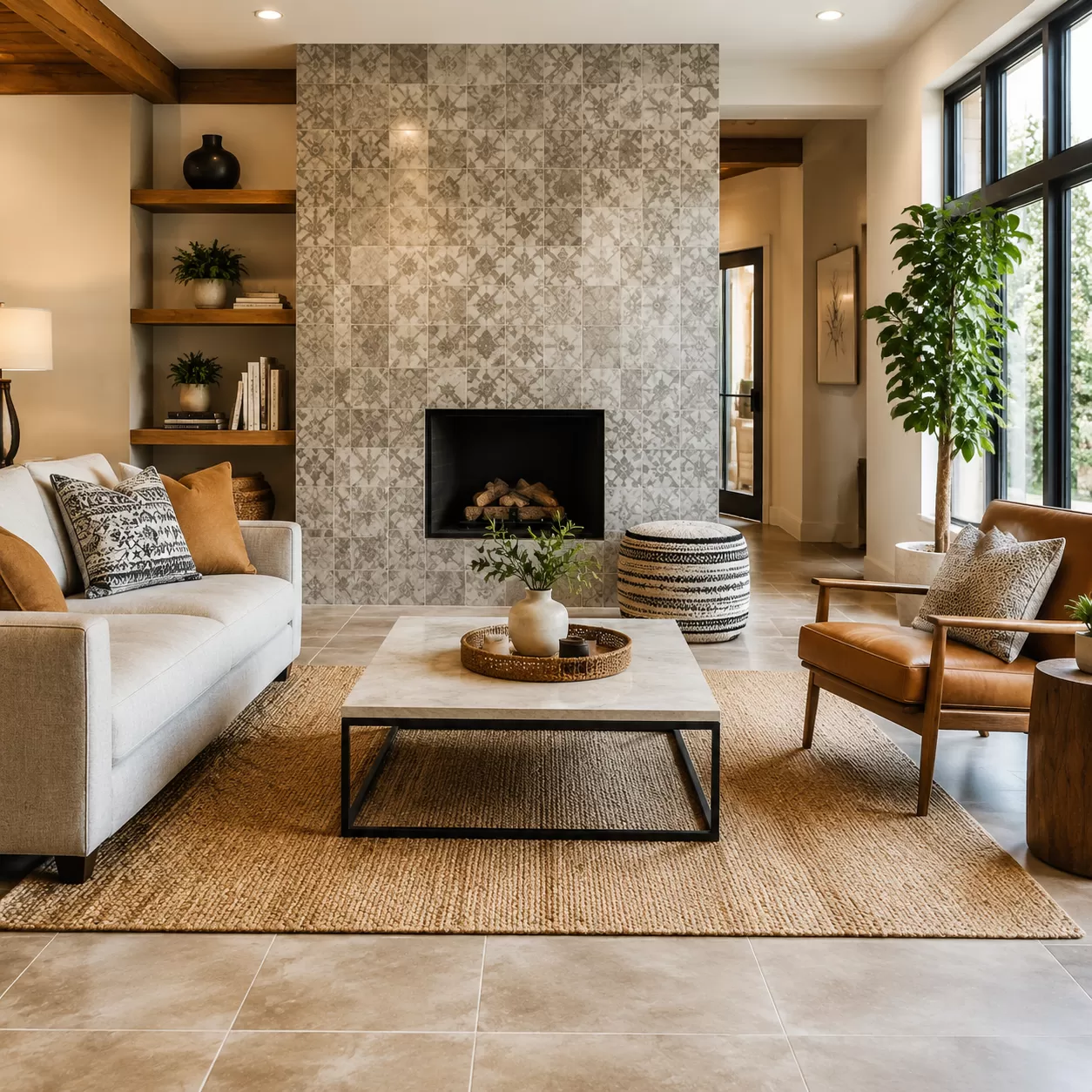
Tiles are no longer just for floors. Bringing tile up onto your walls is one of the easiest ways to elevate your interior design and create a striking focal point in the main living space. As a direct porcelain tile supplier and manufacturer, we see firsthand how global homeowners are shifting toward bold, vertical tile applications to add texture and value to their homes.
Tiled Accent Walls and Fireplace Surrounds
A tiled accent wall completely transforms a standard living room layout. Using large-format porcelain slabs or intricate mosaics around a fireplace creates a stunning, heat-resistant centerpiece that anchors the entire room.
- Fireplace Surrounds: Porcelain tile handles high temperatures perfectly without cracking or fading.
- Tv Backdrops: Darker, textured tiles behind a wall-mounted screen reduce glare and hide messy cables.
- Feature Walls: Instead of paint or wallpaper, a floor-to-ceiling tile installation adds permanent luxury and boosts overall home value.
Textural Finishes with Terracotta and Zellige Tiles
If you want a cozy, organic feel, look beyond perfectly smooth surfaces. Natural, irregular tiles bring unmatched character to living room walls.
| Tile Type | Best Visual Effect | Vibe |
|---|---|---|
| Terracotta | Warm earthy tones, rustic matte finish | Mediterranean / Southwestern |
| Zellige | Hand-molded look, glossy uneven glaze | North African / Eclectic Boho |
| Textured Porcelain | Fabric, concrete, or 3D geometric patterns | Modern Minimalist |
These textured finishes catch the light beautifully throughout the day, ensuring your living room walls never look flat or boring.
Seamless Floor-to-Wall Tile Transitions
For a clean, ultra-modern aesthetic, extend your flooring material straight up the wall. This continuous design trick tricks the eye, making the room feel significantly larger and more cohesive.
Using the same porcelain tile for both the floor and a primary accent wall erases harsh visual boundaries. This setup works exceptionally well in open-concept spaces, establishing a sleek, high-end look that is incredibly easy to clean and maintain.
Comparing Tile to Other Living Room Flooring Options
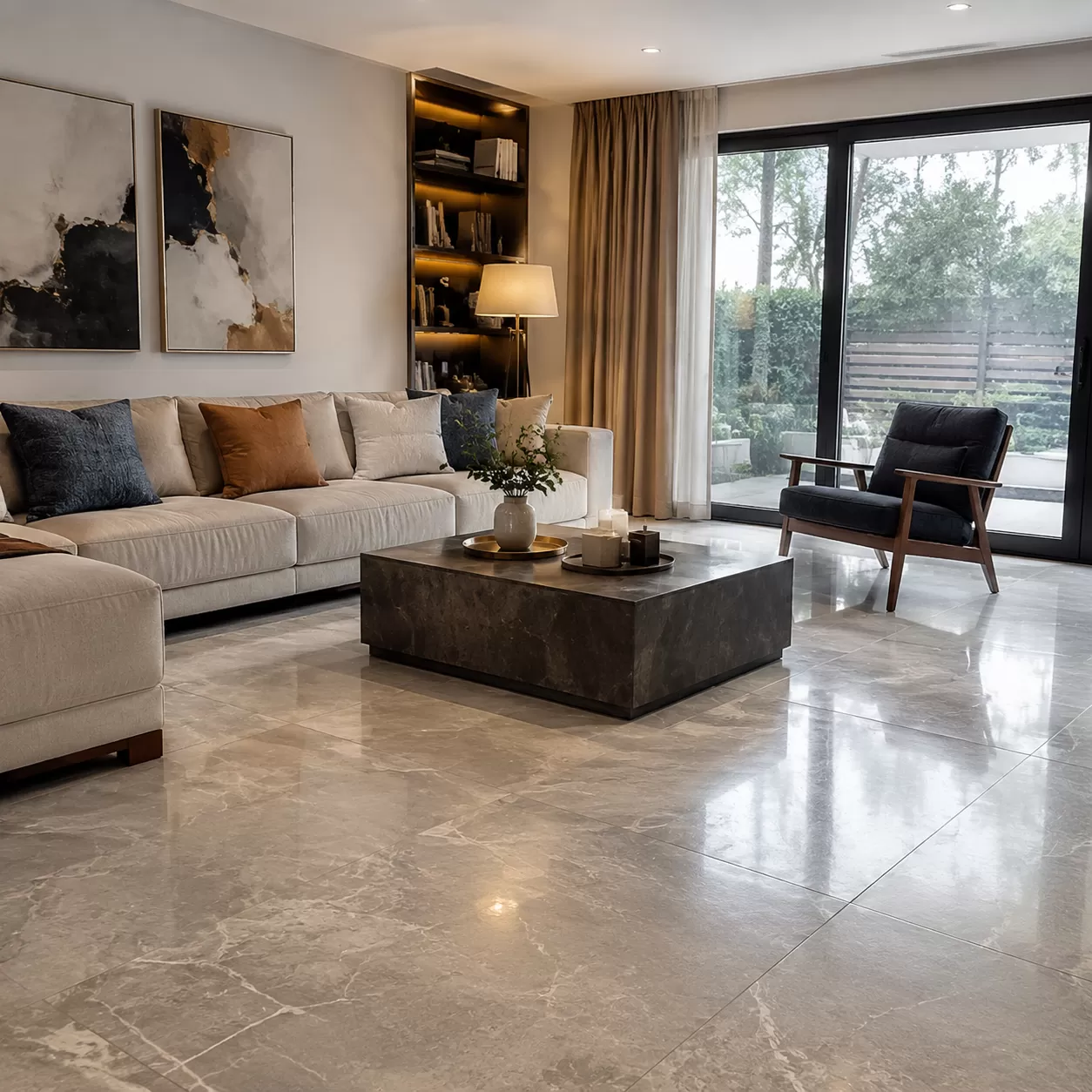
Choosing the right flooring for your main living area comes down to balancing daily durability with long-term maintenance. While traditional materials have their place, tile offers distinct structural advantages over alternative options.
Tile vs. Hardwood and Laminate
Hardwood and laminate bring classic appeal, but they struggle under heavy daily wear. As a premium porcelain tile supplier and manufacture, we design products to withstand the vulnerabilities that cause wood and laminate to fail over time.
| Feature | Porcelain & Ceramic Tile | Hardwood | Laminate |
|---|---|---|---|
| Moisture Resistance | 100% Waterproof | High risk of warping | Prone to swelling at seams |
| Scratch & Dent Resistance | Extremely high | Easy to scratch and dent | Moderate; cannot be repaired |
| Lifespan | 50+ years | 20 to 100 years (requires refinishing) | 15 to 25 years |
| Maintenance | Sweep and damp mop | Special cleaners; avoid excess water | Avoid wet mopping entirely |
Wood and laminate easily scratch from pet claws, high heels, and moving furniture. They are also highly sensitive to humidity changes and liquid spills. Tile eliminates these concerns completely, locking in permanent protection against scratches, dents, and water damage.
Tile vs. Carpet
Carpet provides initial softness underfoot, but it lags far behind tile when it comes to longevity, cleanliness, and overall home value.
- Hygiene and Allergens: Carpet fibers act like a magnet for dust mites, pet dander, pollen, and bacteria. Tile features a solid, non-porous surface that doesn’t trap particles, making it the ideal choice for an allergy-friendly interior design plan.
- Stain and Odor Retention: Spills, muddy footprints, and pet accidents lead to permanent stains and deep-seated odors in carpet padding. Tile wipes clean instantly without absorbing liquids or smells.
- Wear and Tear: High-traffic walkways in carpeted living rooms quickly become matted, frayed, and visibly worn out within a few years. Tile maintains its original texture and appearance for decades without showing traffic paths.
How to Overcome Common Tiling Drawbacks
While tile is appropriate for a living room, some homeowners worry about it feeling too cold or hard. Fortunately, you can easily neutralize these downsides with the right design choices. We always recommend two smart solutions to keep your living space cozy and inviting.
Compatibility with Radiant Underfloor Heating
The absolute best way to eliminate the coldness of tile is by pairing it with underfloor heating. Tile is an incredible conductor of heat, making it the perfect partner for radiant systems.
- Efficient Warmth: Tile heats up quickly and retains that warmth much longer than carpet or wood.
- Energy Savings: Radiant heating distributes temperature evenly from the ground up, which can lower your overall energy bills.
- Year-Round Comfort: You get the sleek look of modern tile without ever stepping onto a freezing floor in the winter.
Using Area Rugs for Added Warmth and Texture
If installing a heating system isn’t in your budget, you can easily soften the room using strategic interior design elements like area rugs.
- Zoned Comfort: Place large, plush rugs in main seating areas—under the sofa and coffee table—where your feet rest the most.
- Visual Balance: Rugs break up a large tiled floor, adding layers of texture, color, and acoustic dampening to the room.
- Flexibility: You can swap rugs out seasonally, keeping the space cozy in the winter and crisp and cool during the summer.
How to Select the Right Tiles for Your Living Room
Choosing the perfect flooring requires balancing daily functionality with your personal design vision. As a direct porcelain tile supplier and manufacturer, we know that the right selection transforms a space from basic to breathtaking. Here is how to narrow down your choices for a flawless finish.
Choosing Complementary Colors and Textures
The right palette and finish set the foundation for your entire interior design.
- Room Size Matters: Use large-format, light-colored tiles (like soft beige, cream, or light gray) to make smaller living rooms feel expansive and airy. Darker charcoal or chocolate tones bring cozy intimacy to large, open-concept spaces.
- Texture and Safety: Matte and honed finishes offer a sleek, contemporary look while providing better slip resistance for busy households.
- Visual Warmth: If you love the look of natural timber but want the durability of engineered surfaces, wood-effect planks offer the perfect compromise, blending organic textures with high-performance wear.
Planning for Transition Areas to Other Rooms
A seamless transition prevents your home from looking fragmented. When moving from the living room to hallways, kitchens, or bedrooms, keep these layout strategies in mind:
| Transition Type | Best Approach | Visual Effect |
|---|---|---|
| Tile to Carpet | Use slim, low-profile transition strips | Clean, trip-free boundary |
| Tile to Hardwood | Match the grout color to the wood tone | Subtle, high-end integration |
| Open-Plan Continuity | Run the same porcelain tile throughout | Maximum spaciousness and flow |
Determining if Tile Is Right for Your Home Lifestyle
Tile is an incredible investment, but it needs to align with how you actually use your living space. It is the ultimate choice if your lifestyle prioritizes the following demands:
- Pets and Kids: High-quality porcelain resists scratches from claws, muddy paws, toy drops, and accidental spills.
- Long-Term Home Value: Professionally installed premium tiling is a permanent upgrade that boosts overall property appraisal.
- Climate Control: If you live in a warm climate, tile keeps the home naturally cool. For colder regions, it pairs perfectly with underfloor heating to create an energy-efficient, cozy environment.
