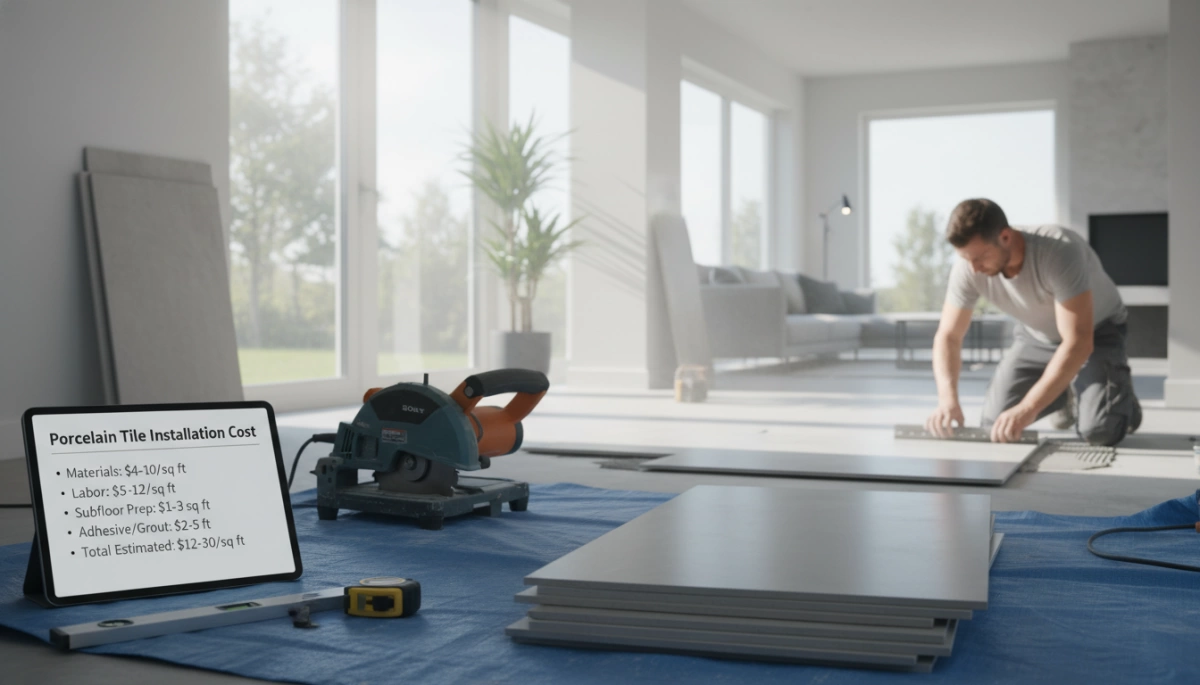
Average Porcelain Tile Flooring Installation Cost
Porcelain tile is a premier flooring solution valued for its extreme durability, water resistance, and aesthetic versatility. When calculating the average cost to install this material, homeowners must account for both the premium nature of the product and the specialized tools required for a successful setup. Because porcelain is denser and harder than standard ceramic, the porcelain tile flooring installation cost typically reflects the additional labor and precision needed for cutting and setting the tiles.
Estimated Total Project Cost
The total project price for porcelain tile installation varies significantly based on the square footage and the specific requirements of the room. Most residential projects fall within a predictable range:
- Small Projects (50–100 sq. ft.): $600 – $2,000 (Ideal for powder rooms or entryways).
- Medium Projects (150–250 sq. ft.): $1,800 – $5,000 (Standard kitchens or primary bathrooms).
- Large Projects (500+ sq. ft.): $6,000 – $12,000+ (Open-concept living areas or full-floor renovations).
Porcelain Tile Cost per Square Foot
Budgeting by the square foot is the most accurate way to manage project materials and labor costs. While high-end designer tiles can increase these figures, the following represents the standard market rates:
| Expense Category | Cost Per Square Foot |
|---|---|
| Porcelain Tile Materials | $3 – $12 |
| Professional Labor Fees | $5 – $15 |
| Total Installed Cost | $8 – $27 |
Investing in professional porcelain tile installation ensures that the subfloor is properly leveled and the tiles are spaced with expert precision, protecting your long-term investment.
Breakdown: Material Prices vs. Labor Rates
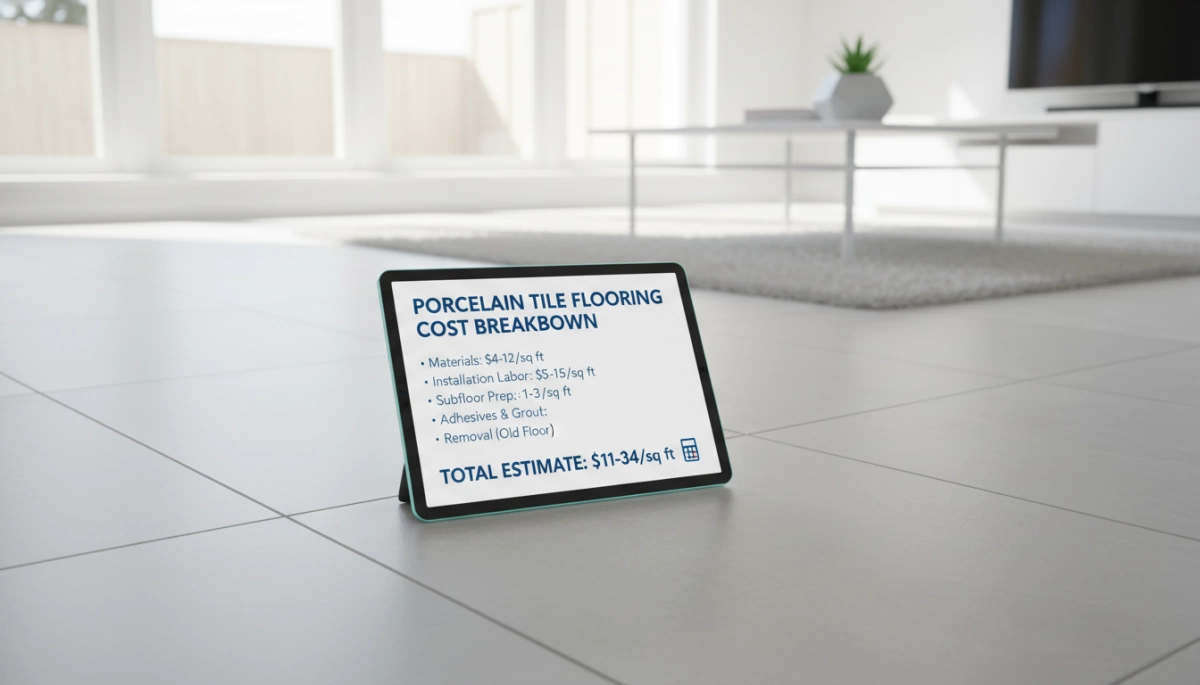
Understanding your total project price means looking closely at the two main expenses: the tiles themselves and the people laying them down. We always recommend splitting your budget to account for both accurately so there are no surprises.
Cost of Porcelain Tile Materials
When budgeting for your project materials, porcelain is highly durable but comes with varying price tags. The final material cost depends heavily on the specific product you choose.
- Standard Grade: Basic, solid-color tiles keep your material expenses on the lower end.
- Premium Grade: Wood-look planks, large-format tiles, and high-gloss polished finishes will increase the price per square foot.
- Wastage Buffer: Always purchase 10% to 15% extra material to cover necessary cuts, accidental breaks, and future repairs.
Professional Labor and Installation Fees
Labor costs often make up half or more of your porcelain tile flooring installation cost. Investing in professional porcelain tile installation ensures the heavy, dense tiles are cut and set correctly, preventing expensive fixes down the line.
- Contractor Rates: Installers generally charge by the square foot, though some may bill hourly for complex custom work.
- Prep Work: If your concrete or wood subfloor needs leveling, patching, or extensive preparation, expect labor fees to rise accordingly.
- Layout Complexity: Intricate designs like herringbone, staggered joints, or diagonal layouts require more time and precision, which naturally drives up the average cost to install.
Key Factors Affecting Porcelain Tile Installation Costs
When calculating your porcelain tile flooring installation cost, it is important to understand that every space is unique. The total project price rarely comes down to just a flat square-foot rate. Instead, the average cost to install these floors shifts based on a few crucial variables that directly impact both your project materials and labor costs.
Tile Size, Grade, and Finish
The physical characteristics of the tile you choose play a massive role in the final bill.
Size: Large-format tiles require specialized handling and a perfectly flat subfloor, which can drive up labor costs. On the flip side, very small tiles or intricate mosaics take significantly more time to set and grout.
Grade: High-density, commercial-grade porcelain is tougher to cut than standard residential grades, requiring professional-grade wet saws and more time per cut.
Finish: Polished, glazed, or specialized slip-resistant finishes will increase the upfront cost of your project materials.
Room Dimensions and Layout Complexity
The shape and size of your room dictate how fast the job gets done.
Simple Layouts: Wide-open, perfectly square rooms allow for straightforward work, keeping labor fees on the lower end.
Complex Spaces:Bathrooms with multiple plumbing fixtures, kitchens with heavy cabinetry islands, or hallways with awkward angles require intricate, time-consuming cuts. More cutting means more labor hours, which naturally increases the total project price.
Custom Patterns and Designs
How we lay the tile completely changes the workload. A standard grid or straight-lay pattern is always the most cost-effective approach for professional porcelain tile installation. If you want a more custom look, expect an adjustment in pricing.
Advanced Patterns:Herringbone, chevron, or diagonal layouts require precise mathematical measurements and result in more material waste due to the complex angled cuts.
Borders and Inlays: Mixing different tile sizes, adding decorative borders, or creating custom focal points slows down the installation process and increases the expertise required from the installer.
Additional Project Costs to Consider
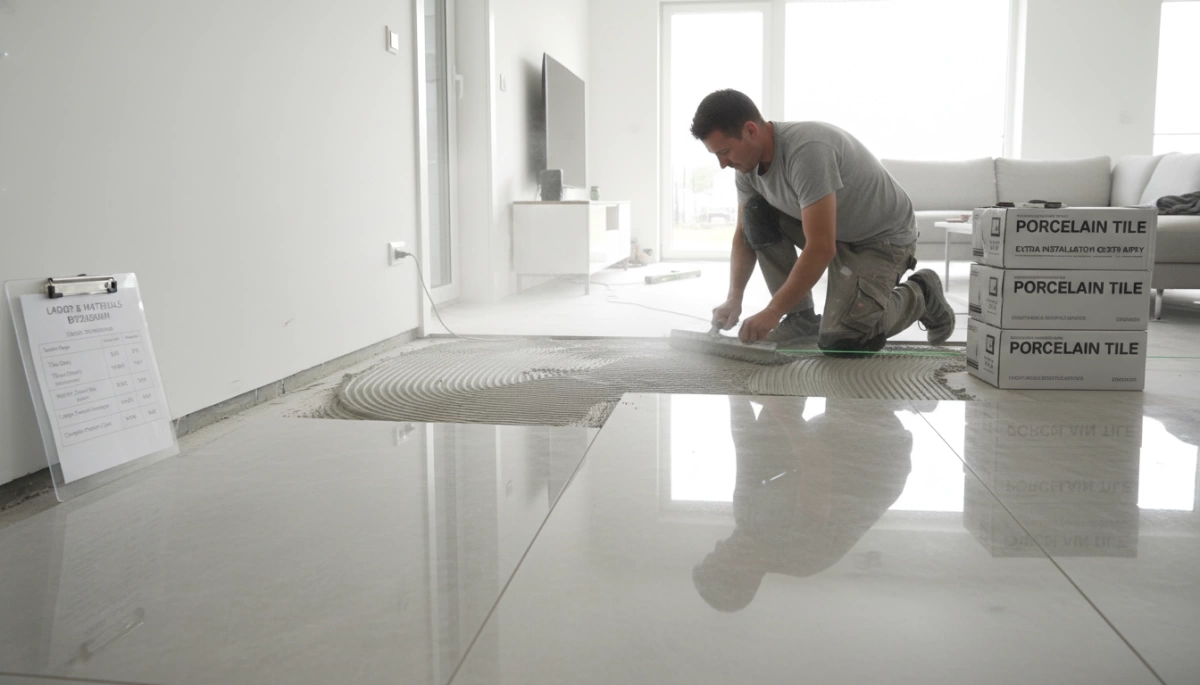
When calculating your porcelain tile flooring installation cost, the price of the tile and the basic labor are only part of the equation. To get an accurate total project price, you must account for the essential site work and finishing materials that ensure a long-lasting floor.
Removing Old Flooring
Before the new tile goes down, the old surface has to go. Demolition is a labor-intensive process that adds to the overall labor costs. Ripping up old carpet is generally affordable, but removing existing hardwood or glued-down tile requires specialized tools and more time. On average, expect to pay for both the physical removal and the disposal fees to haul the debris away.
Subfloor Preparation and Repairs
A flawless porcelain finish depends entirely on what is underneath. Porcelain is a rigid material; if the subfloor is uneven or bouncy, the tiles will eventually crack.
- Leveling: We often use self-leveling compounds to fix dips in concrete.
- Patching: Filling cracks or holes to create a smooth surface.
- Reinforcement: Adding extra layers of plywood to stiffen a wooden subfloor to handle the weight of the tile.
Underlayment, Grout, and Sealer
These project materials are non-negotiable for a professional-grade result.
- Underlayment: We recommend using cement backer boards or uncoupling membranes to prevent moisture damage and tile shifting.
- Grout: You can choose between standard cement grout or high-performance epoxy grout. Epoxy is more expensive but offers superior stain resistance and durability.
- Sealer: While porcelain tiles are typically non-porous, the grout lines are not. Applying a high-quality sealer is a small extra cost that protects your investment from deep stains and mold.
Cost Comparison: Porcelain vs. Alternative Tiles
When planning a flooring upgrade, understanding how the porcelain tile flooring installation cost compares to other materials is crucial. I always advise looking at both the project materials and the labor costs to get a realistic view of the total project price. Here is how porcelain stacks up against other popular flooring choices.
Porcelain vs. Ceramic Tile
Porcelain and ceramic belong to the same family, but porcelain is fired at higher temperatures, making it denser and highly water-resistant.
- Material Cost: Because of its enhanced durability, porcelain project materials typically carry a slightly higher price tag than standard ceramic.
- Labor Costs: While the installation process is similar, porcelain’s tough density makes it harder to cut. This extra effort can slightly bump up the average cost to install compared to softer ceramic tiles.
- Durability: Porcelain wins in high-traffic and moisture-prone areas, offering better long-term value.
Porcelain vs. Natural Stone
If you are chasing a luxury aesthetic, you might be weighing porcelain against natural stone options like marble, travertine, or slate.
- Material Cost: Natural stone is a premium product and is significantly more expensive to source than porcelain.
- Installation Complexity: Stone is heavy, porous, and often fragile before it is set. While professional porcelain tile installation requires skill, laying natural stone demands specialized expertise, driving up labor fees.
- Total Project Price: Porcelain easily mimics the high-end look of natural stone but keeps the total project price much lower. Plus, porcelain does not require the ongoing, expensive sealing that natural stone demands.
Quick Cost Comparison Table
| Material Type | Material Cost Level | Labor Cost Level | Maintenance Needs |
|---|---|---|---|
| Ceramic | Low | Low to Medium | Low |
| Porcelain | Medium | Medium | Low |
| Natural Stone | High | High | High (Requires regular sealing) |
DIY vs. Hiring a Professional Tile Installer
Deciding whether to tackle the job yourself or hire a pro is a major factor in your total porcelain tile flooring installation cost. While doing it yourself saves on labor costs, the technical nature of porcelain—which is harder and more brittle than ceramic—often makes professional help the smarter investment for a long-lasting floor.
Hidden Costs of DIY Tile Installation
Many homeowners overlook the specialized tools and materials required for a successful professional porcelain tile installation. If you don’t already own these items, your “savings” quickly disappear into equipment rentals and wasted supplies.
- Specialized Tools: You will need a high-quality wet saw with a diamond blade to cut porcelain without cracking it.
- Material Waste: Beginners often have a higher breakage rate, requiring you to buy 15-20% extra tile instead of the standard 10%.
- Setting Materials: Using the wrong thin-set or failing to level the subfloor can lead to “lippage” (uneven tile edges) or tiles popping loose.
- Time Investment: What takes a pro two days might take an amateur two weeks, leading to significant home disruption.
Benefits of Hiring a Flooring Pro
Hiring an expert ensures the total project price reflects a high-quality finish that adds value to your home. Professionals understand the nuances of substrate preparation and moisture barriers that prevent future repairs.
| Feature | DIY Installation | Professional Installation |
|---|---|---|
| Precision | High risk of crooked lines | Laser-leveled and perfectly spaced |
| Equipment | Rental fees for saws/mixers | Included in the service |
| Warranty | None (you pay for mistakes) | Often includes a labor guarantee |
| Durability | Variable based on skill | Maximum lifespan and bond strength |
By paying the average cost to install through a contractor, you gain peace of mind. I always recommend professional help for large-format tiles or complex layouts, as these require specific handling techniques to avoid structural failure. Investing in expert labor upfront protects your investment in high-quality project materials.
Tips to Save Money on Porcelain Tile Flooring
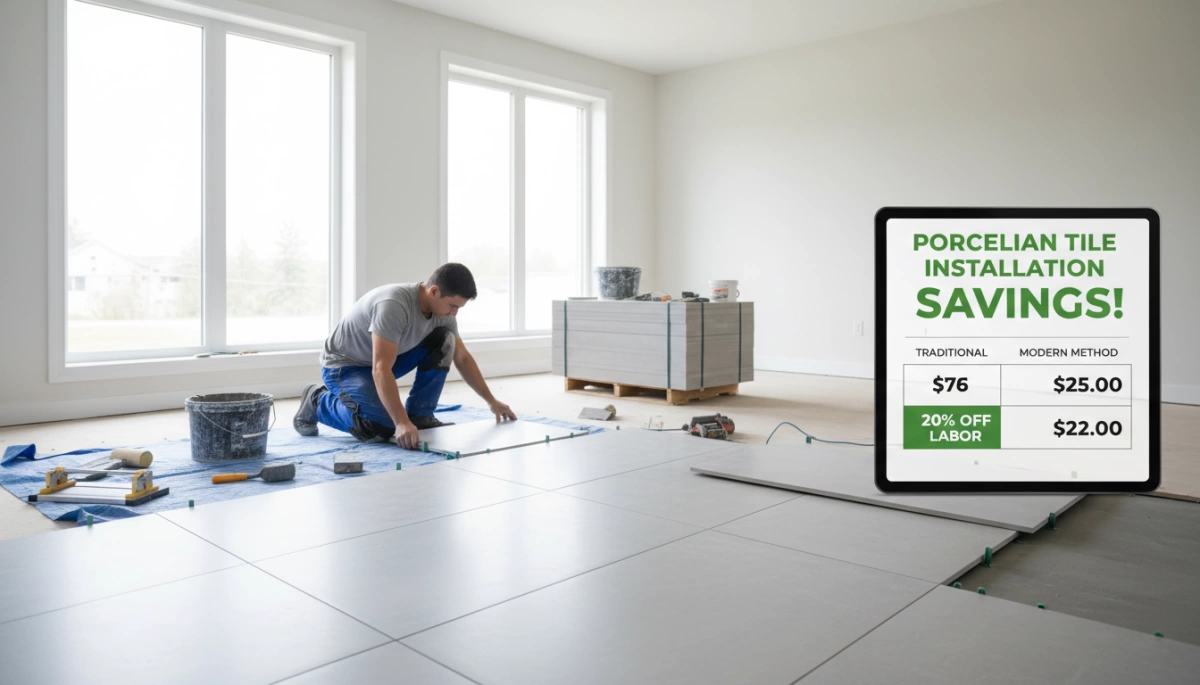
Reducing the porcelain tile flooring installation cost doesn’t mean you have to settle for low-quality results. By being strategic about how you source your project materials and how much labor you outsource, you can significantly lower the total project price.
Sourcing Discounted Materials
The cost of the tile itself is a major variable. I recommend looking for high-quality porcelain through alternative channels to keep expenses down:
- Clearance and Overstock: Check local flooring outlets or online liquidators for “end-of-lot” sales. You can often find premium tiles at a fraction of the retail price if you only need a specific amount.
- Bulk Purchasing: If you are tiling a large area or multiple rooms, always ask for a volume discount. Most suppliers are willing to shave off a percentage for large orders.
- Discontinued Lines: Manufacturers frequently cycle out designs. Buying a discontinued style can save you 30% to 50% on material costs.
Handling Your Own Demo and Prep Work
Professional labor costs often include the time spent tearing out old floors and preparing the site. You can lower the average cost to install by handling the manual labor yourself before the installers arrive:
- Remove Old Flooring: Pulling up old carpet, laminate, or vinyl is a straightforward task that requires more sweat than specialized skill. Doing this yourself prevents contractors from charging you disposal and demolition fees.
- Baseboard Removal: Carefully remove your own baseboards and trim. This saves the installer time and protects your trim from damage during the process.
- Site Clearing: Ensure the subfloor is completely clear of debris, nails, and staples. A clean, ready-to-go workspace allows the pro to start laying tile immediately, reducing the billable hours spent on prep.
Frequently Asked Questions
How long does porcelain tile take to install?
For a standard-sized room, I usually tell my clients to plan for a 2 to 4-day timeline. While the actual laying of the tile might only take a day, the process cannot be rushed.
- Preparation: Cleaning and leveling the subfloor.
- Setting: Laying the tile and allowing the mortar to cure for at least 24 hours.
- Grouting: Filling the joints and wiping down the haze.
- Curing: Waiting for the grout to fully set before moving furniture back in.
Is porcelain more expensive to install than ceramic?
Yes, the porcelain tile flooring installation cost is generally higher than ceramic. Porcelain is a much denser and harder material, which makes it more durable but also harder to work with.
I have to use specialized diamond-rimmed blades and high-end drill bits to make precise cuts without cracking the tile. Because it takes more time and specialized equipment, professional porcelain tile installation labor rates are typically higher than those for softer ceramic options. While the total project price might be more upfront, the longevity of porcelain often makes it a better long-term investment.
