Flexible stone
Revolutionary flexible stone technology that transforms architectural possibilities. Our advanced manufacturing process creates ultra-light weight panels that bend to 60° while maintaining authentic stone textures, enabling installations impossible with traditional materials. As a professional flexible stone manufacturer and global supplier, YASIQI provides OEM customization, project-based solutions, wholesale supply, and reliable export services for architects, contractors, developers, distributors, and building material brands worldwide. Whether you are seeking lightweight stone veneer for a commercial facade or a premium interior wall solution, YASIQI Flexible Stone offers a durable, sustainable, and cost-effective alternative to traditional stone.
Showing 32 products
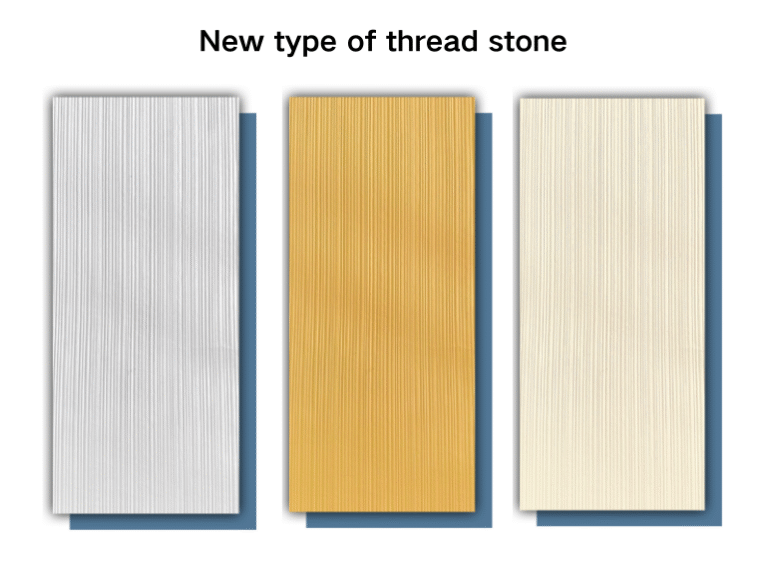
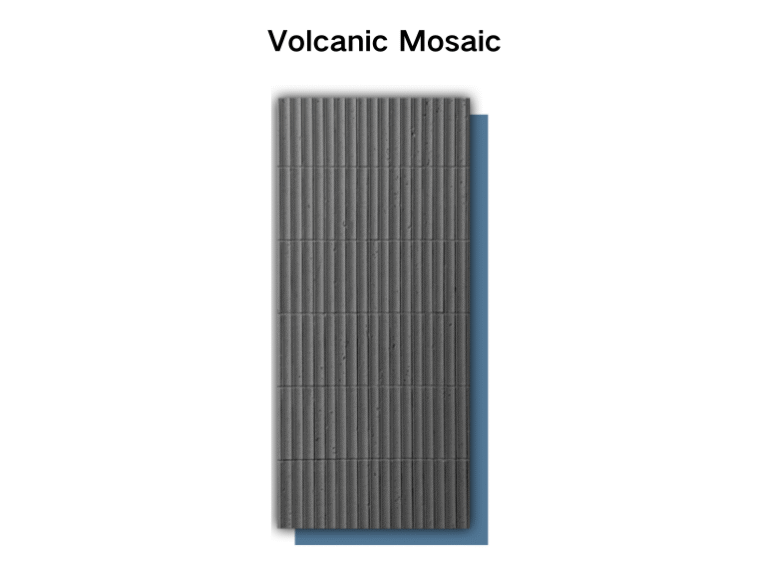
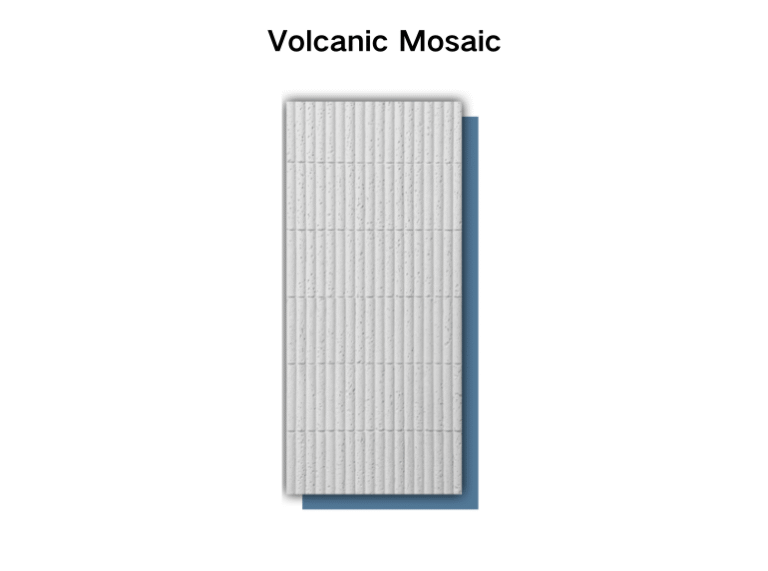
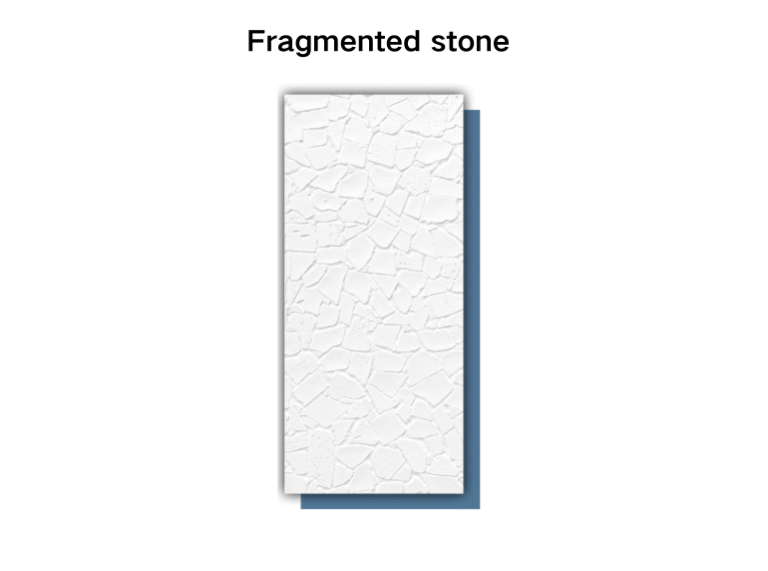
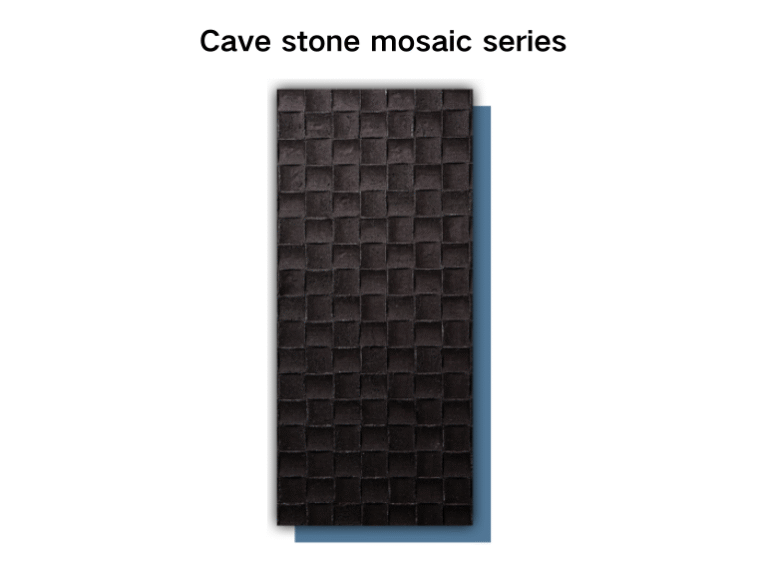
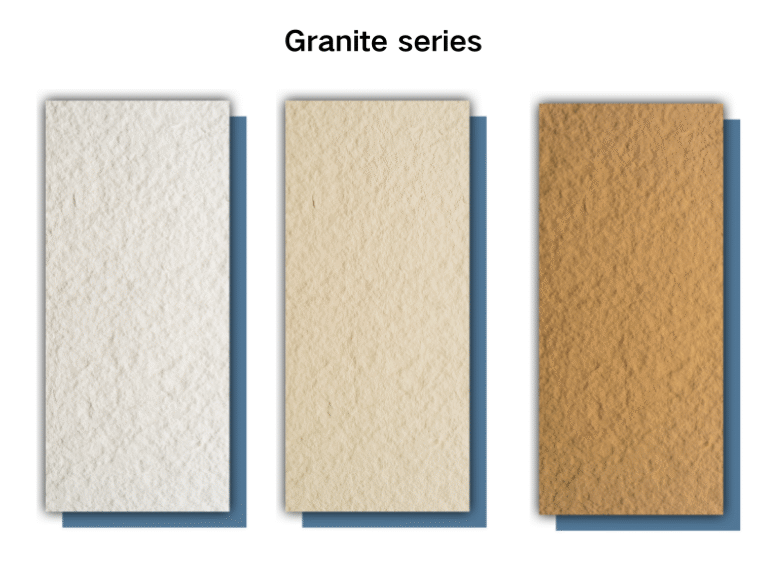
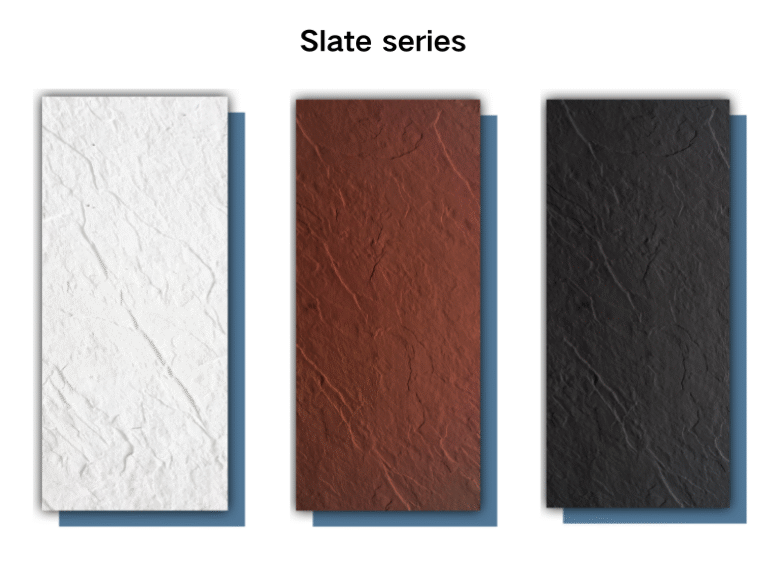
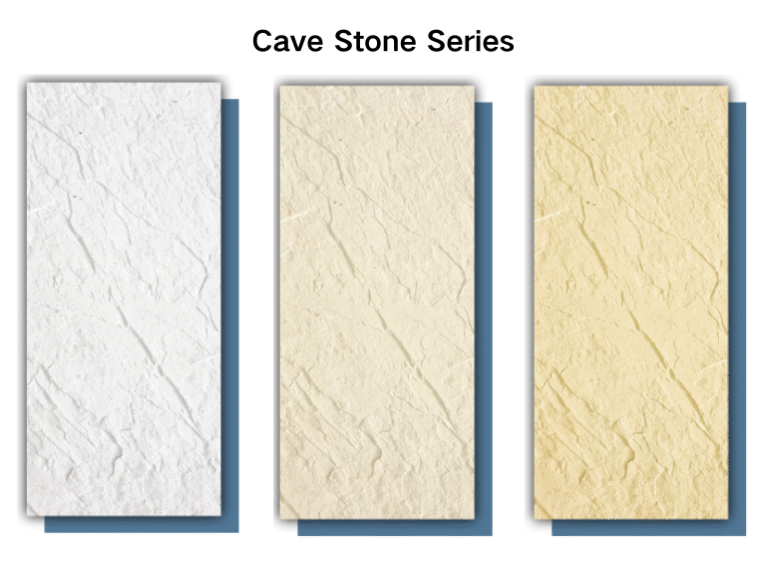
About Flexible stone
Maximize Modern Building Decoration with Flexible Stone Veneer
Struggling with the weight, cost, and rigidity of traditional stone? These limitations can kill creative designs and inflate project budgets, forcing you to compromise on your architectural vision.
Flexible stone is a game-changing surface material made from natural stone powder and polymers. It’s incredibly lightweight, thin, and bendable, offering the beauty of real stone without the installation headaches or structural reinforcement costs. It’s the ideal solution for modern, creative construction.
You’ve probably seen impressive buildings with stunning, curved stone facades and wondered how they achieved it without breaking the bank. The secret is often not traditional stone at all. As a flexible stone manufacturer and supplier, I’ve seen firsthand how this innovative material is revolutionizing what’s possible in design. It opens up a world of possibilities that were once too complex or expensive. Let’s explore how you can use this material to your advantage.
What Is Flexible Stone (Flexible Stone Veneer)?
Are you looking for a material that has the look of stone but is easier to handle? Traditional stone is beautiful but also heavy, brittle, and hard to work with.
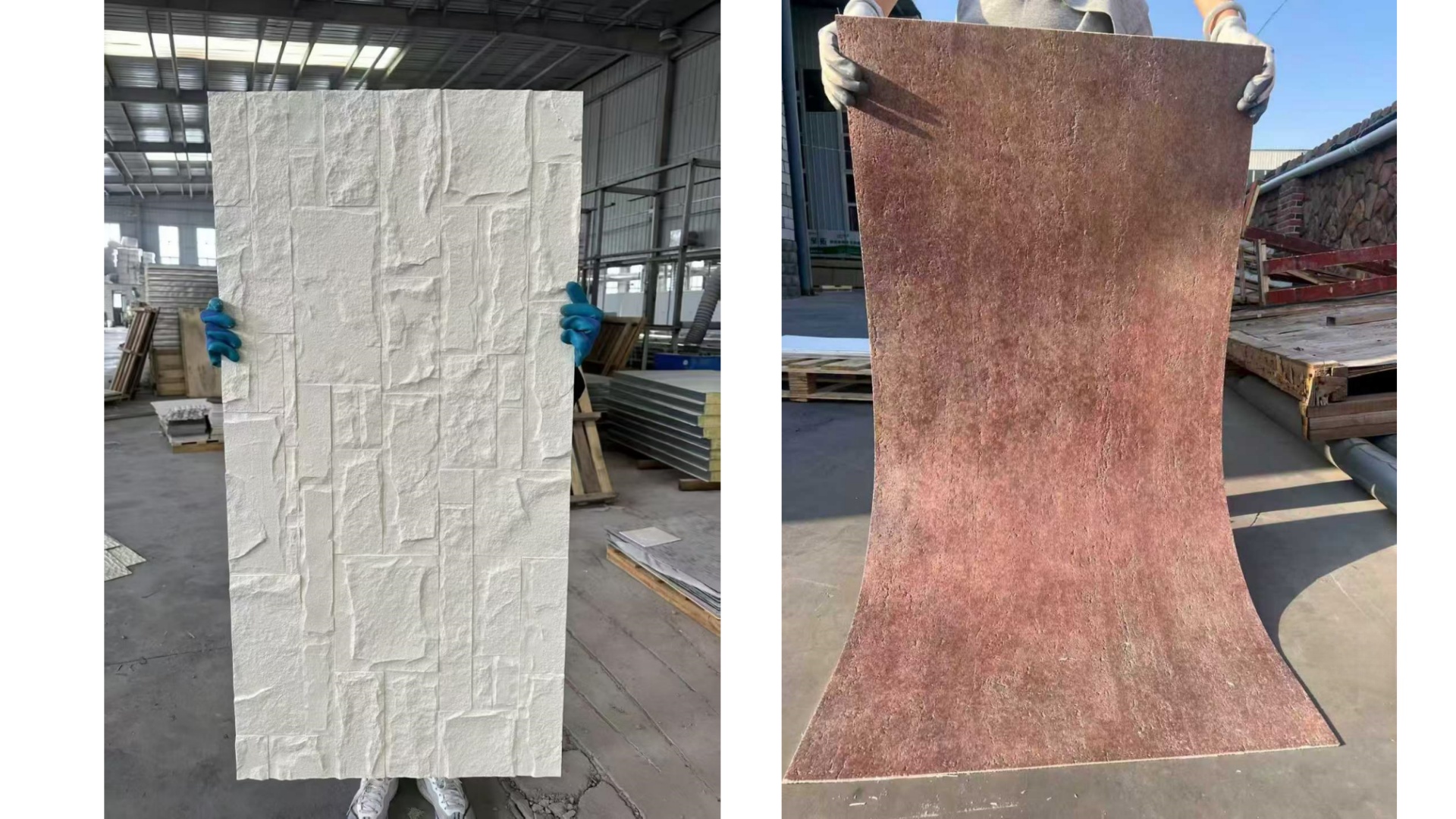
Flexible stone veneer is a new type of eco-friendly building material. It is made from a composite of natural stone powder and a special polymer binder. This gives it the authentic texture of natural stone while making it flexible, lightweight, and simple to install on nearly any surface.
From my experience in manufacturing, the real magic of flexible stone is how it combines two worlds. We take natural, inorganic mineral powders—the very essence of stone—and bond them with a high-performance polymer.
The result is a sheet that is incredibly thin, often just 3-9mm thick. It weighs over 70% less than a traditional stone slab of the same size. This means you get the timeless, natural look of stone, from its unique grain to its textured feel.
But you also get a modern material that can be cut with a utility knife, bent around corners, and applied to curved walls. This completely changes the rules for architects and designers, expanding where and how stone can be used in a project. It truly bridges the gap between natural aesthetics and modern construction efficiency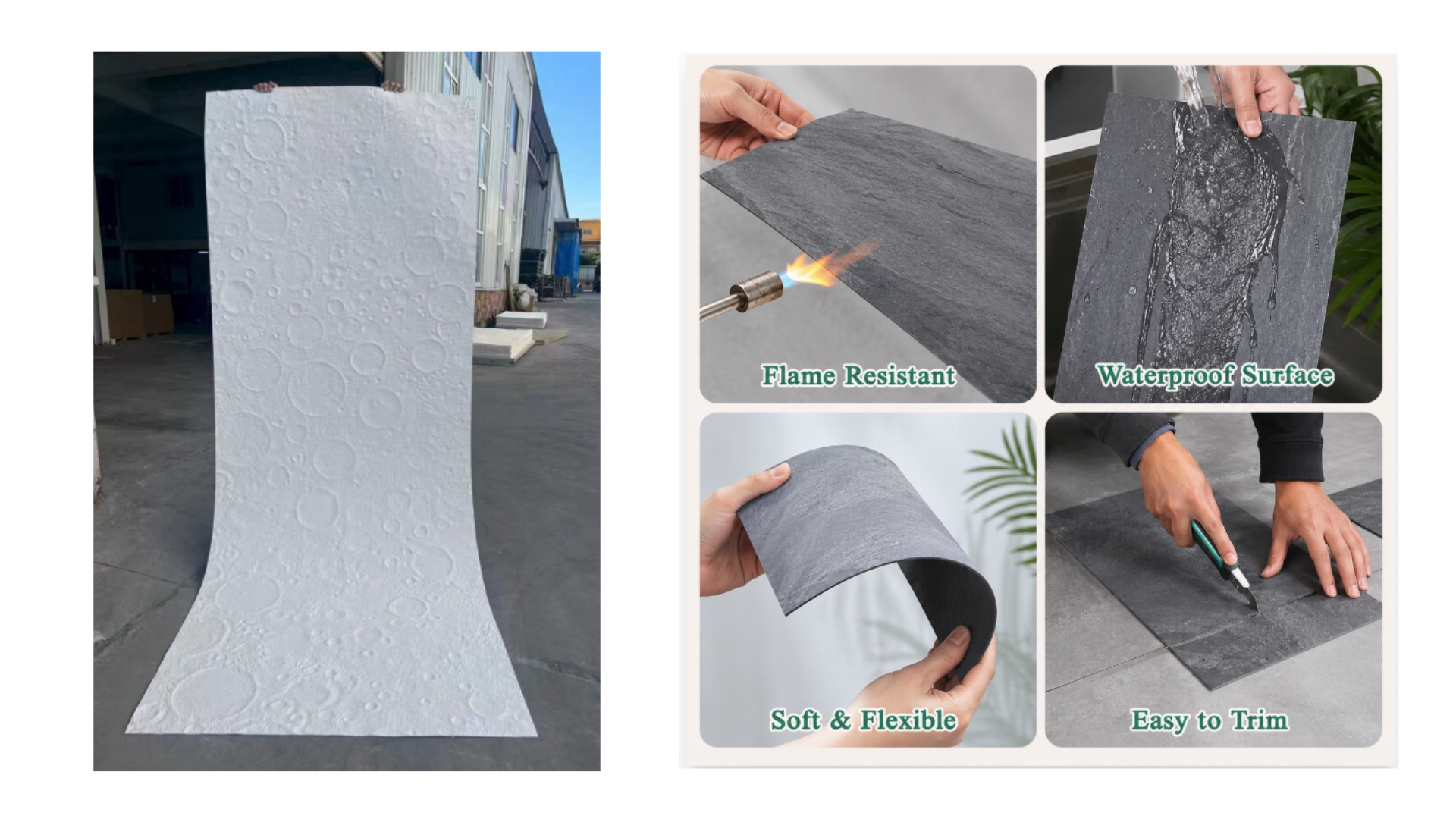 How Does Flexible Stone Work?
Wondering how a stone-like material can be bent around a column? Solid stone cracks under pressure, making curved designs a nightmare of cutting, fitting, and grouting many small pieces.
Flexible stone solves this with its unique composition. The polymer binder gives the material incredible flexibility, allowing it to bend around tight curves, sometimes with a radius of less than 100mm. This lets you wrap columns, arches, and other irregular shapes seamlessly, without ugly joints.
Let’s dive deeper into its functional benefits. The flexibility is the most obvious feature. Imagine trying to clad a spiral staircase wall with marble. You’d need to cut countless small tiles, leading to high costs and a busy, grout-filled finish.
With flexible stone, we can apply large sheets directly to the curved surface, creating a smooth, monolithic look. But there’s another key feature: breathability. The material has a microporous structure. This means it’s waterproof from the outside but allows water vapor from inside the wall to escape.
This “breathing” prevents moisture buildup, which can lead to mold and damage the building’s insulation, especially in humid climates. It’s a feature we saw put to great use in a museum project, where the stable humidity helped protect sensitive artifacts.
What Are The Types Of Flexible Stone Tiles?
Do you think a flexible material limits your design choices? Many people assume a composite material can’t match the variety of natural stone, forcing you to settle for just one look.
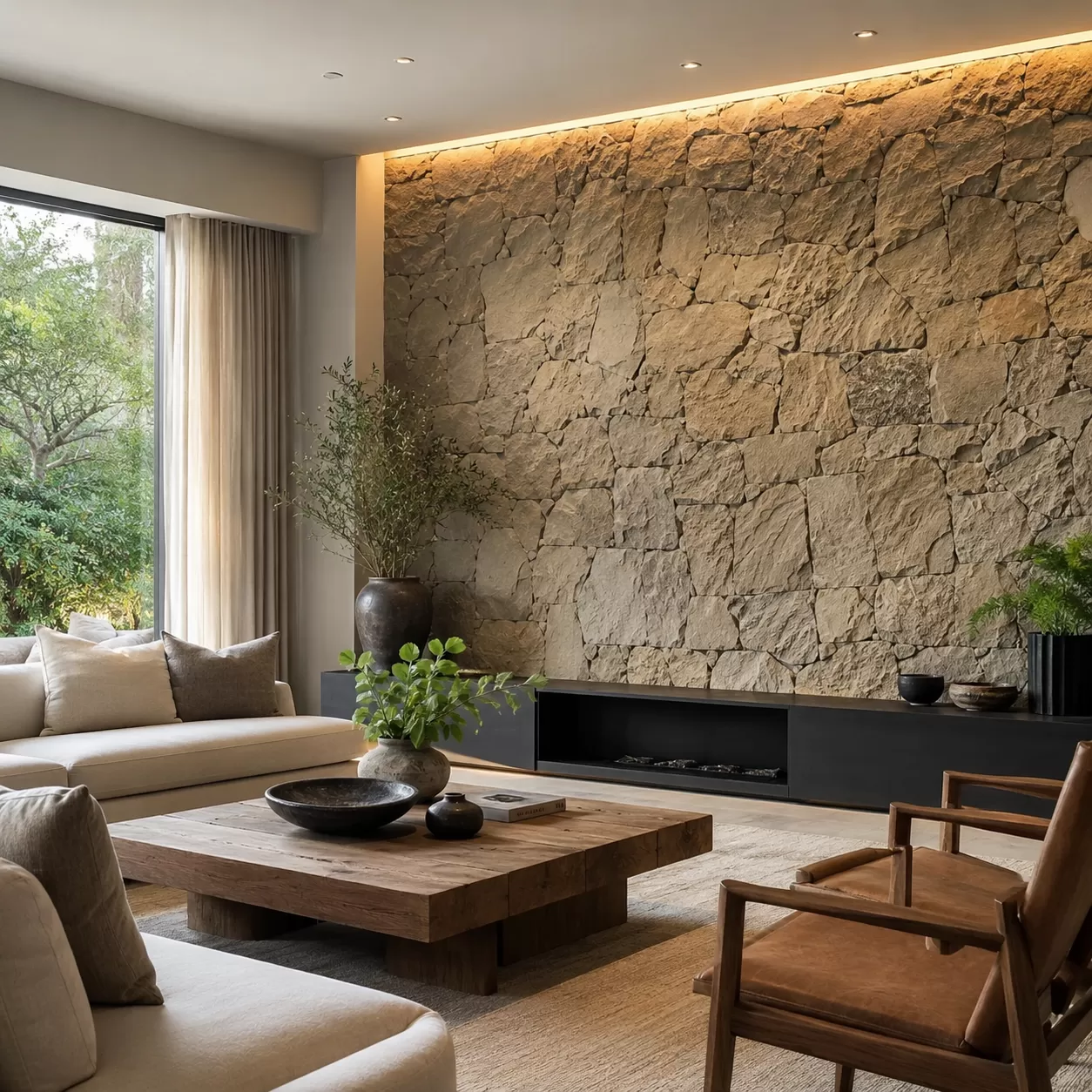
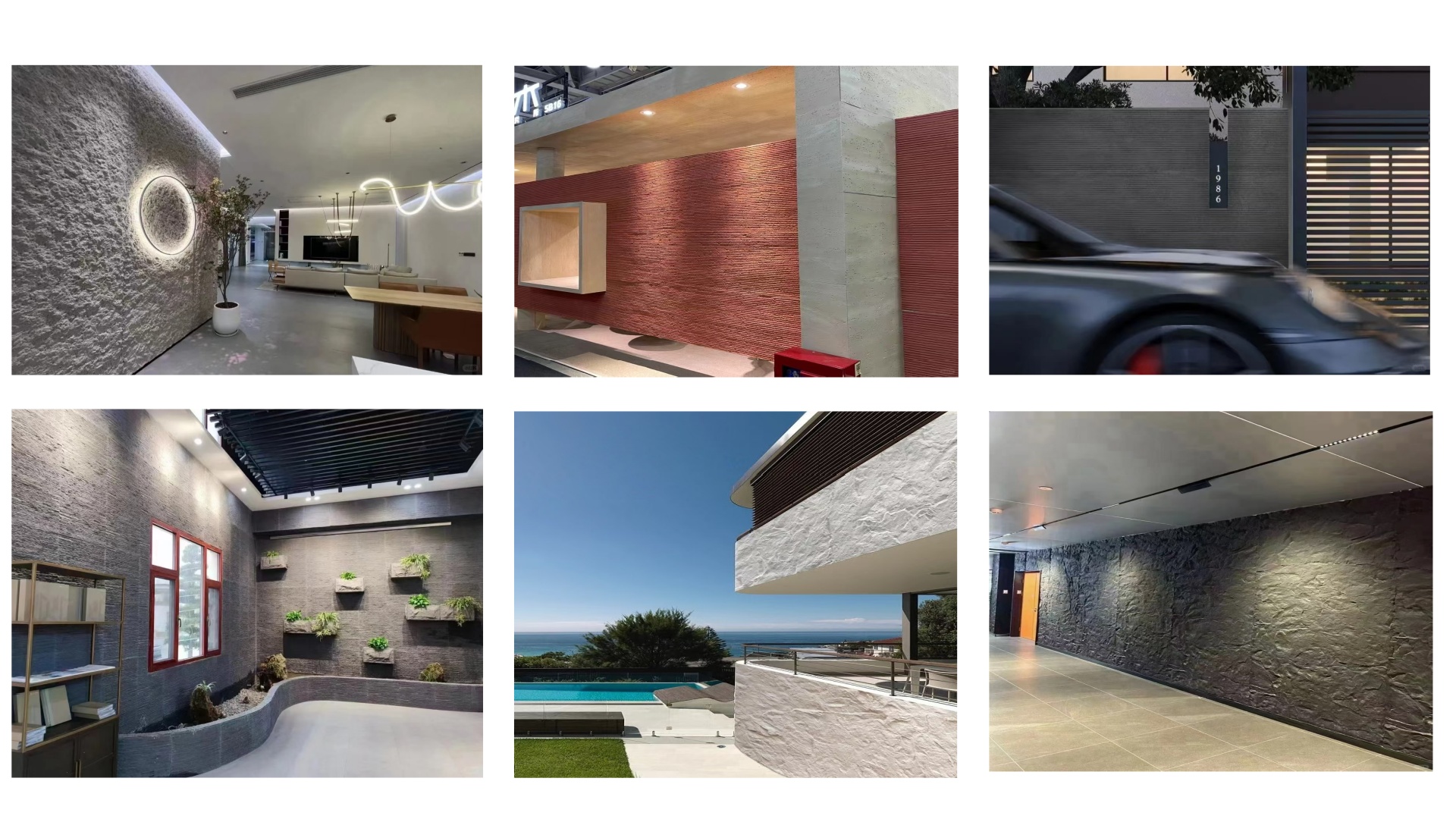
In reality, flexible stone offers an enormous range of aesthetic options. Because it’s a manufactured product, we can replicate the texture and appearance of almost any natural stone, including marble, granite, slate, travertine, and sandstone. We can even create custom textures like woven patterns or leather.
As a flexible stone OEM/ODM supplier, this is where we really help our clients shine. Our product lines can precisely recreate the look and feel of natural materials. Do you need the classic, porous look of travertine for a feature wall? We can do that. Want the rugged texture of slate for an exterior facade?
We can do that, too. We can even go beyond stone. We’ve developed flexible surfaces that mimic the grain of wood or the soft texture of leather. This versatility means you are not limited by the source quarry. We can create a consistent, high-quality finish for a large project, ensuring every panel matches perfectly. This gives designers ultimate creative freedom to achieve their vision, whether it’s a natural stone look or something completely unique.
What Are Flexible Stone Used For?
Are you unsure where a material like flexible stone fits into your project? It seems too good to be true, making you question if it’s suitable for demanding applications like exteriors.
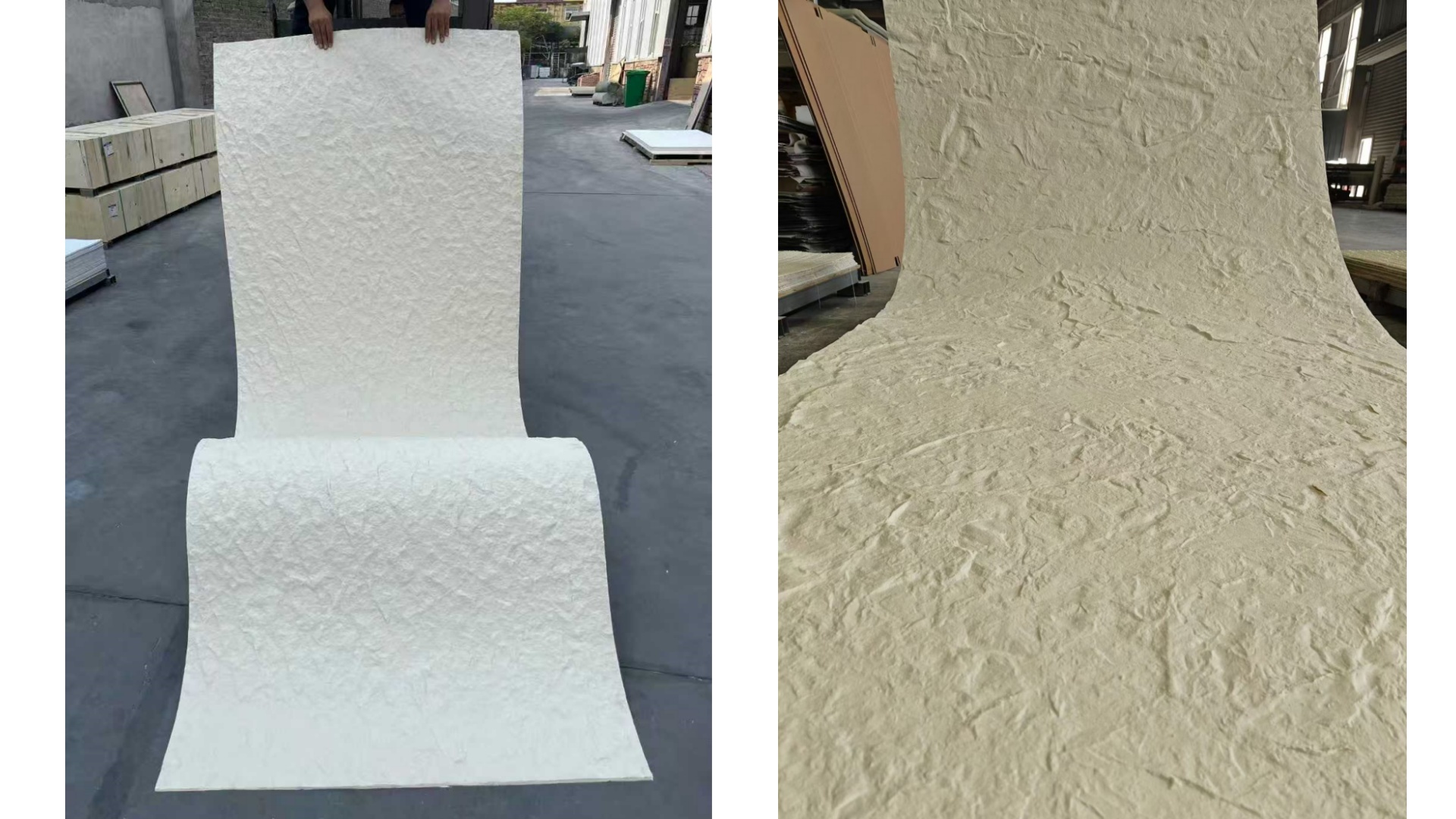
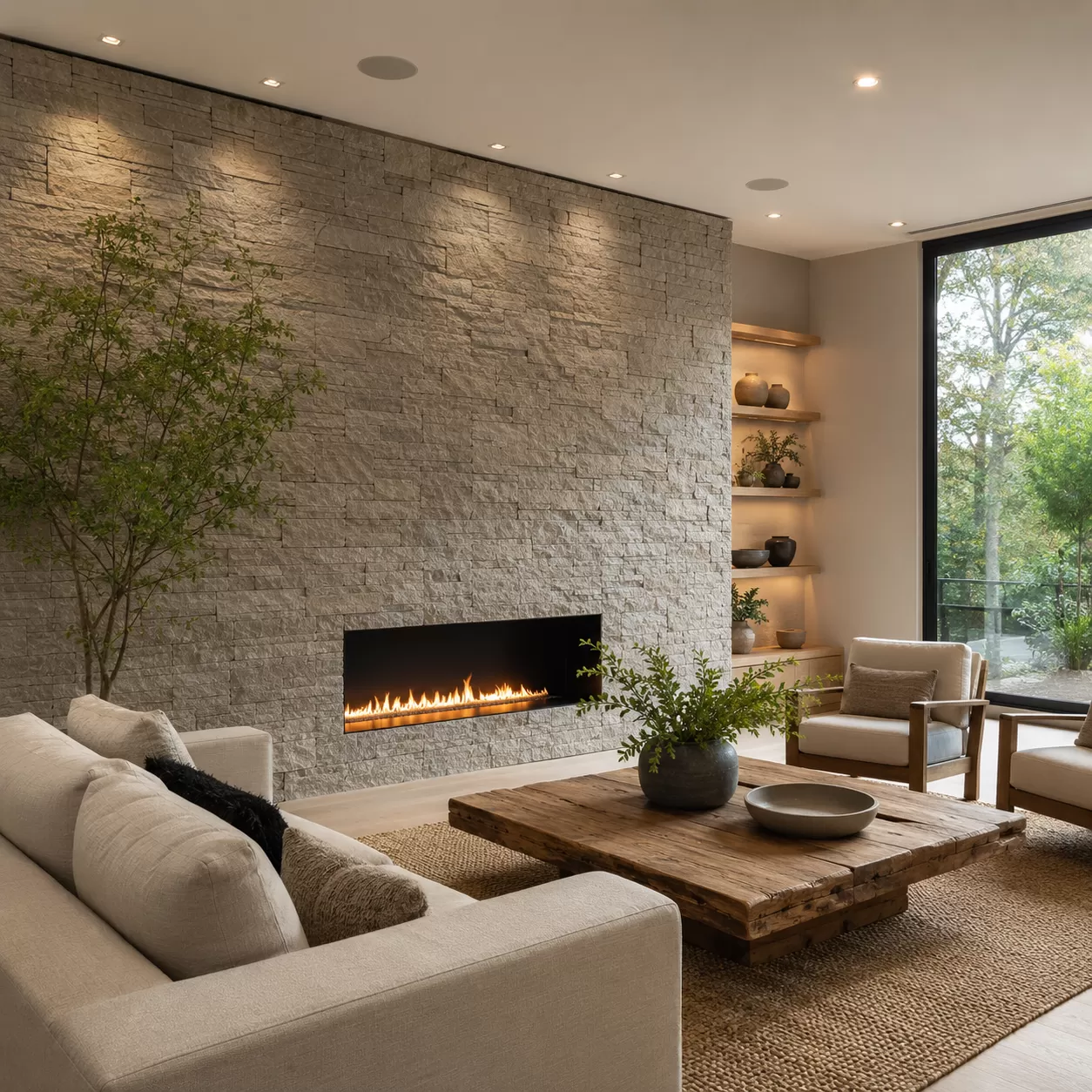
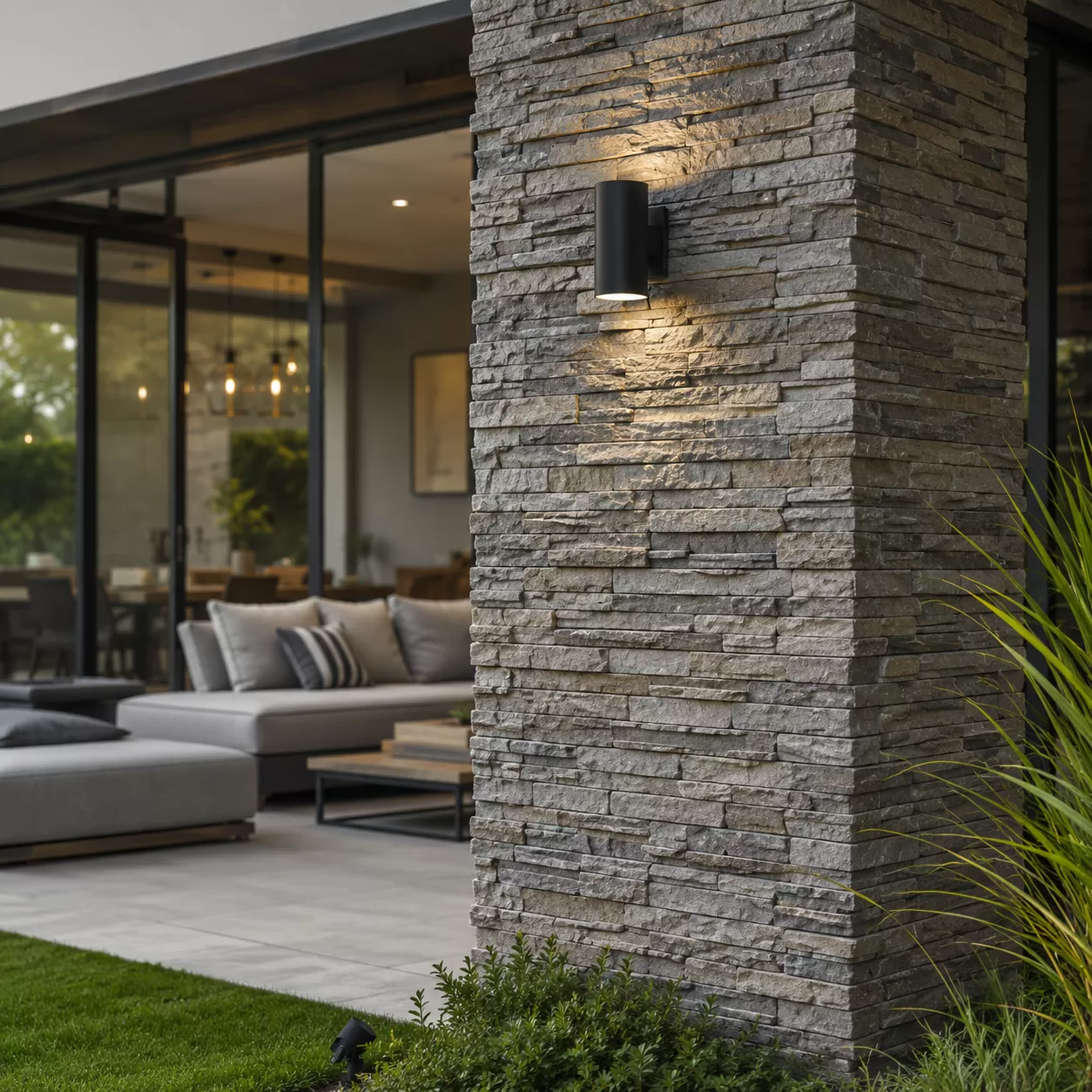
Flexible stone is incredibly versatile and can be used for both interior and exterior applications. It’s perfect for building facades, interior feature walls, columns, ceilings, and even furniture. Its lightweight nature makes it ideal for renovations, as it can be applied directly over existing surfaces.
Let’s break down the common applications we see with our B2B clients. For exteriors, its weather resistance and light weight make it a top choice for high-rise building facades. It reduces the structural load significantly compared to traditional stone cladding, which saves a lot on steel and concrete reinforcement.
For interiors, designers love it for creating stunning accent walls, wrapping reception desks, or cladding curved bulkheads. One of the most powerful uses is in renovation projects. Instead of the messy and costly process of tearing down old tiles or surfaces, you can often install flexible stone directly on top.
This dramatically speeds up project timelines and reduces labor costs. Because it can conform to any shape—arches, domes, wavy walls—it solves design challenges that are simply not practical with rigid materials.
Flexible Stone Technical Parameters?
Are you concerned about the performance and safety of a new material? When specifying materials, you need hard data on fire resistance, durability, and weight to ensure compliance and longevity.
Flexible stone excels in key technical areas. It is extremely lightweight, has an A-grade fire rating, and offers outstanding durability against weather, water, and frost. It provides high performance and safety, meeting the strict standards required for modern construction, especially in public and high-rise buildings.
As a manufacturer, providing clear technical data is crucial for our clients. Here’s a breakdown of the typical parameters our flexible stone products meet. These are the numbers that matter for architects, contractors, and importers who need to guarantee performance.
Parameter: Weight
Specification: 3–8 kg/m²
Benefit for Your Project: Reduces structural load by over 90% compared to traditional stone, saving on construction costs.
Parameter: Thickness
Specification: 3–9 mm
Benefit for Your Project: Ideal for renovations over existing surfaces and easy to handle and transport.
Parameter: Fire Rating
Specification: Class A (non-combustible)
Benefit for Your Project: Meets the highest fire safety standards for use on any building, including high-rises.
Parameter: Weather Resistance
Specification: Passes 3500-hour artificial aging test
Benefit for Your Project: Equivalent to 50 years of outdoor exposure without significant fading or degradation.
Parameter: Frost Resistance
Specification: No cracks after 100 freeze-thaw cycles
Benefit for Your Project: Ensures durability and integrity in cold climates with harsh winters.
Parameter: Water Absorption
Specification: Extremely low; surface has a hydrophobic “lotus effect”
Benefit for Your Project: Prevents water damage and allows rain to wash away dirt, reducing maintenance needs.
Parameter: Flexibility
Specification: Can be bent to a radius of <100mm
Benefit for Your Project: Allows for seamless application on curved walls, columns, and other non-flat surfaces.
These specifications demonstrate that flexible stone isn’t just an aesthetic choice; it’s a high-performance building material engineered for safety and long-term durability.
How To Choose The Best Flexible Stone For Your Project?
Worried about picking a low-quality product? With any new material, the market gets flooded with imitations that don’t perform. Choosing the wrong one can lead to costly failures.
The key is to look for a product that is flexible but not flimsy. Genuine flexible stone feels sturdy and has a uniform thickness. The texture should look and feel natural, not like a plastic sheet with a printed pattern. A simple hands-on inspection can tell you a lot.
Having seen many samples from different sources, I always tell our partners to perform a few simple, tool-free tests. These help you quickly spot fakes.
Simple Identification Tests
Look and Feel: A quality product is “flexible but firm.” It shouldn’t feel limp like a piece of rubber. The texture should be detailed and integrated into the material, not just printed on the surface. Poor quality imitations often have a slight plastic sheen and blurry patterns. Also, check the dimensions. High-quality products have very tight tolerances (e.g., ±0.3mm), while fakes can have uneven thickness and inconsistent sizing.
Smell It: Genuine flexible stone is made from natural minerals and should have no chemical smell, maybe just a faint earthy or mineral scent. If you open the box and get hit with a strong plastic or chemical odor, that’s a huge red flag. This smell can worsen when the material is heated by the sun.
Burn It: This is the ultimate test. A real, Class A fire-rated flexible stone will not catch fire when exposed to a flame. It will only char and will self-extinguish once the flame is removed. A fake product, made with inferior binders, will burn, produce black smoke, and leave behind a sticky, melted residue. This directly relates to the safety of your building.
Maintenance & Protection Setup for Flexible Stone?
Thinking that a beautiful facade will require constant, expensive cleaning? Building exteriors get dirty, and the cost of regular maintenance can be a major long-term burden for property owners.
Flexible stone is designed to be extremely low-maintenance. Its surface is treated to be hydrophobic, meaning water beads up and rolls off, taking dirt and dust with it. This self-cleaning effect keeps the building looking fresh for years with minimal effort.
This self-cleaning feature is something we engineer into our products using advanced nanotechnology. It creates what’s known as the “lotus effect.” Just like water on a lotus leaf, rain on the facade gathers into droplets and rolls away, carrying dust particles with it. This means the building essentially cleans itself every time it rains.
Furthermore, the material is incredibly waterproof. We’ve tested our products by soaking them in water for 96 hours straight. They don’t swell, crack, or delaminate. Once dry, they return to their original strength and color. For our clients, especially property developers and managers, this is a huge selling point. It drastically reduces the long-term cost of ownership by eliminating the need for frequent, costly facade cleaning
Where Can Flexible Stone Be Used?
Flexible stone combines the natural beauty of stone with lightweight flexibility, making it suitable for a wide range of applications:
Building Facades – Exterior walls, cladding systems, and architectural features.
Interior Decoration – Feature walls, living spaces, hotel lobbies, and retail environments.
Commercial Projects – Shopping malls, offices, restaurants, and exhibition spaces.
Renovation Projects – Ideal for upgrading existing surfaces without adding significant structural weight.
Curved & Irregular Surfaces – Perfect for columns, arches, curved walls, and custom designs where traditional stone is difficult to install.
Hospitality & Public Spaces – Hotels, resorts, cafes, museums, and cultural buildings seeking a natural stone aesthetic with greater design flexibility.
Flexible stone offers architects and designers a practical solution where appearance, efficiency, and versatility are equally important.
Flexible Stone Buyer’s Guide?
How can you be sure the product you’re buying is legitimate and meets standards? Without proper documentation, you’re taking a big risk on performance, safety, and compliance.
Always ask the supplier for complete certification and testing reports. A reputable manufacturer will readily provide official documents for fire rating (Class A), durability tests, and international standards. If they can’t provide these, or if the reports look suspicious, walk away.
When we work with importers, distributors, and contractors, providing a full compliance package is standard procedure. This is non-negotiable for ensuring a project’s success and safety.
Conclusion
In short, flexible stone offers the beauty of natural stone with unmatched lightness, flexibility, and safety. It’s a smart, cost-effective solution for creating stunning, durable, and low-maintenance architectural designs.
