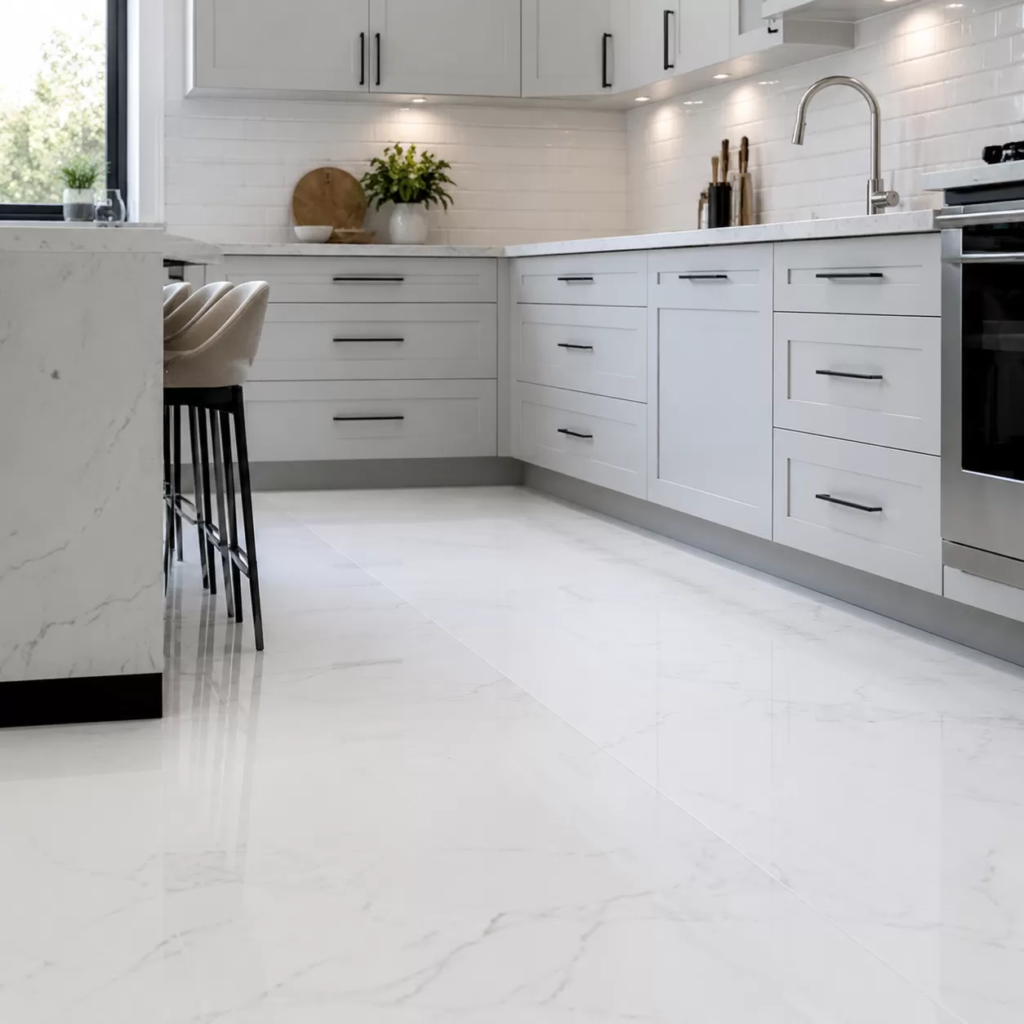
What is Kitchen Porcelain Tile Flooring?
Kitchen porcelain tile flooring is the premium standard for modern residential and commercial spaces. Engineered for high-traffic environments, it is a specialized form of vitrified ceramic that offers superior density and performance. As a leading porcelain tile supplier and manufacture, we ensure our tiles meet rigorous global standards for strength and aesthetic versatility.
The Science Behind Porcelain Tile Strength
The secret to porcelain’s durability lies in its composition and firing process. It is crafted from a refined blend of kaolin clay, feldspar, and quartz, then kiln-fired at extreme temperatures exceeding 1,200°C.
- Vitrification: This process transforms the clay into a glass-like state, resulting in a nearly non-porous material.
- Density: Porcelain is pressed with immense force before firing, making it significantly heavier and harder than standard tiles.
- Scratch Resistant: Its high mineral hardness ensures the surface remains pristine even under heavy foot traffic or kitchen mishaps.
Porcelain vs. Ceramic Tile: What’s the Difference?
While they look similar, porcelain and ceramic have distinct technical profiles. The primary differentiator is the water absorption rate; to be certified as true porcelain, the tile must have an absorption rate of 0.5% or less.
| Feature | Porcelain Tile | Ceramic Tile |
|---|---|---|
| Composition | Refined clay + minerals | Coarser clay |
| Firing Temp | Very High (Vitrified) | Moderate |
| Durability | Commercial Grade | Residential Grade |
| Waterproof | Exceptional (≤ 0.5%) | Moderate |
| Best Use | Heavy-duty Kitchen Floors | Walls / Low-traffic Areas |
Porcelain’s “through-body” color property also means that if the tile is chipped, the color remains consistent throughout the material, unlike ceramic which reveals a different colored base underneath the glaze.
Why Choose Porcelain Tile for Kitchen Floors?
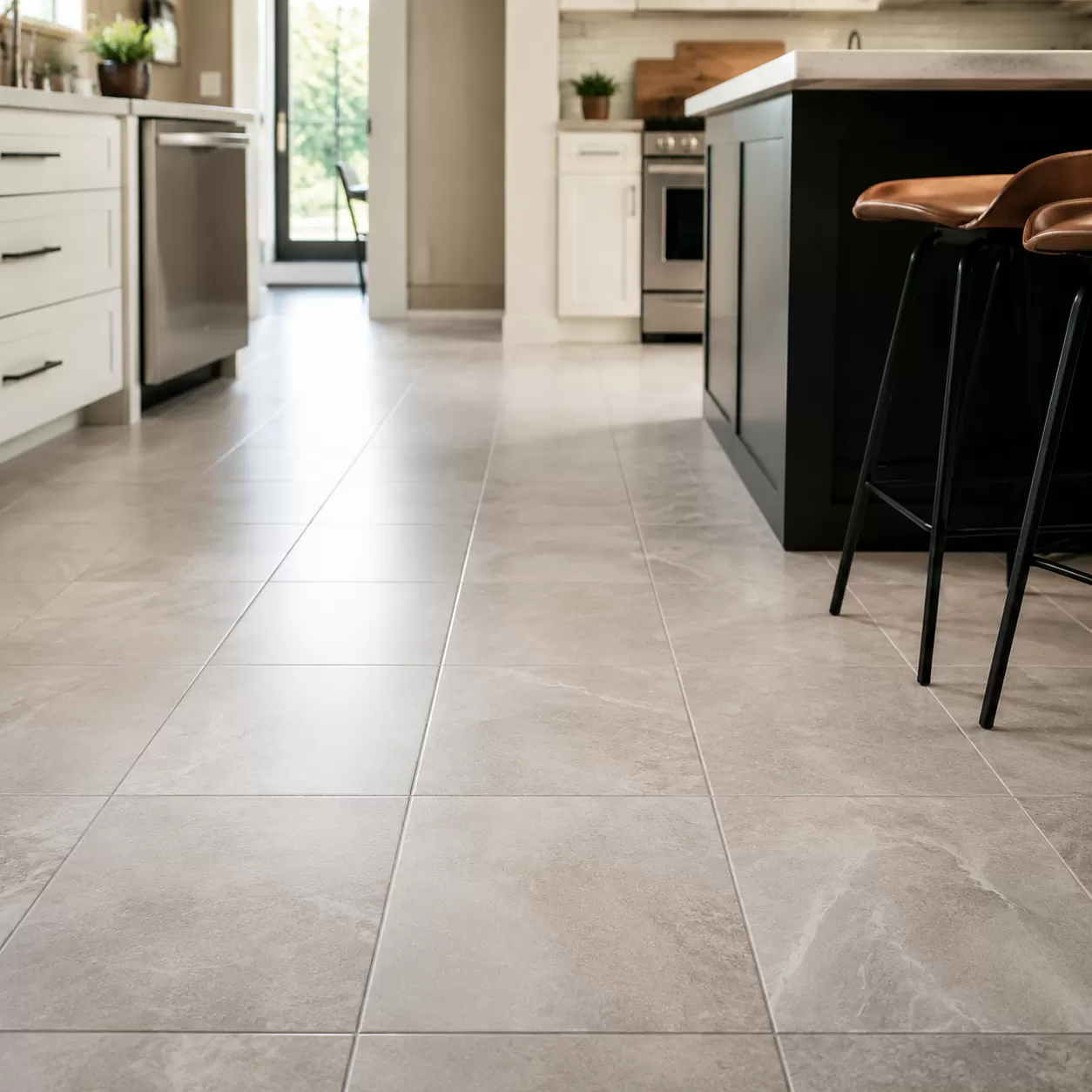
When we design and manufacture our kitchen porcelain tile flooring, we build it to handle the hardest daily abuse. The kitchen is the high-traffic hub of your home, and your floor needs to stand up to dropped pots, heavy foot traffic, and constant spills. As a leading manufacturer, we ensure our porcelain tile delivers the ultimate blend of strength, style, and long-term value.
Unmatched Durability and Lifespan
Porcelain is incredibly dense and tough. It easily resists scratches from pets, high heels, and moving furniture, making it ideal for both busy residential kitchens and heavy-duty commercial spaces. While other floors start to scratch and fade after a few years, a properly installed porcelain floor can easily last a lifetime without losing its original look.
Waterproof and Stain-Resistant Properties
Kitchens are prone to liquid spills, dropped food, and moisture. Our kitchen porcelain tile flooring features an exceptionally low absorption rate, making it completely waterproof.
- Zero deep stains: Spilled wine, coffee, and oil sit on the surface instead of soaking in.
- Easy cleanup: Muddy footprints and grease wipe away with a damp mop.
- Hygienic surface: It resists bacteria and mold growth, keeping your cooking environment clean and safe.
Pros and Cons of Kitchen Porcelain Flooring
To help you make the best decision for your home, here is a quick, honest breakdown of what to expect when choosing porcelain for your kitchen layout.
| Pros (Advantages) | Cons (Disadvantages) |
|---|---|
| Superior durability; highly scratch resistant. | Cold underfoot without radiant subfloor heating. |
| 100% waterproof and stain-resistant surface. | Hard surface; dropped glassware will likely break. |
| Low maintenance; no sealing required for the tile. | Heavy material that requires a strong, flat subfloor. |
| High resale value and unmatched lifespan. | Professional installation is highly recommended. |
Popular Styles and Design Options for Kitchens
When choosing kitchen porcelain tile flooring, you don’t have to sacrifice style for durability. As a direct porcelain tile supplier and manufacturer, we design our collections to match the exact looks global homeowners and designers want right now.
Natural Stone and Wood-Look Porcelain
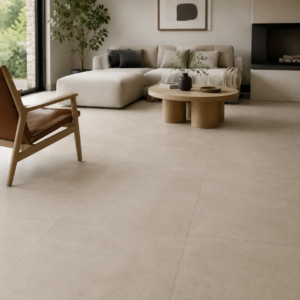
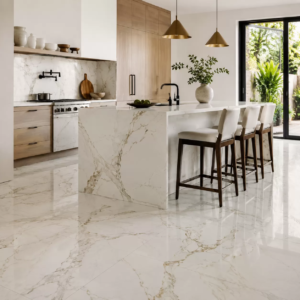
You can get the warm look of hardwood or the upscale feel of marble without any of the maintenance headache. Wood-look porcelain planks feature realistic grain textures that won’t warp from kitchen spills. Natural stone porcelain mimics travertine and slate, giving you a high-end look that is completely scratch resistant.
Classic Color Palettes: From Bold to Beige
The right color sets the entire mood of your home. Our manufacturing process focuses on high-demand, versatile color palettes:
- Neutral Neutrals: Cream, soft beige, and warm taupe to make small kitchens feel larger.
- Modern Monochromes: Crisp whites, deep charcoals, and matte blacks for a sleek, contemporary edge.
- Bold Accents: Subtly blended blues and greens for eye-catching kitchen islands or feature floors.
Large Format Tiles and Unique Shapes
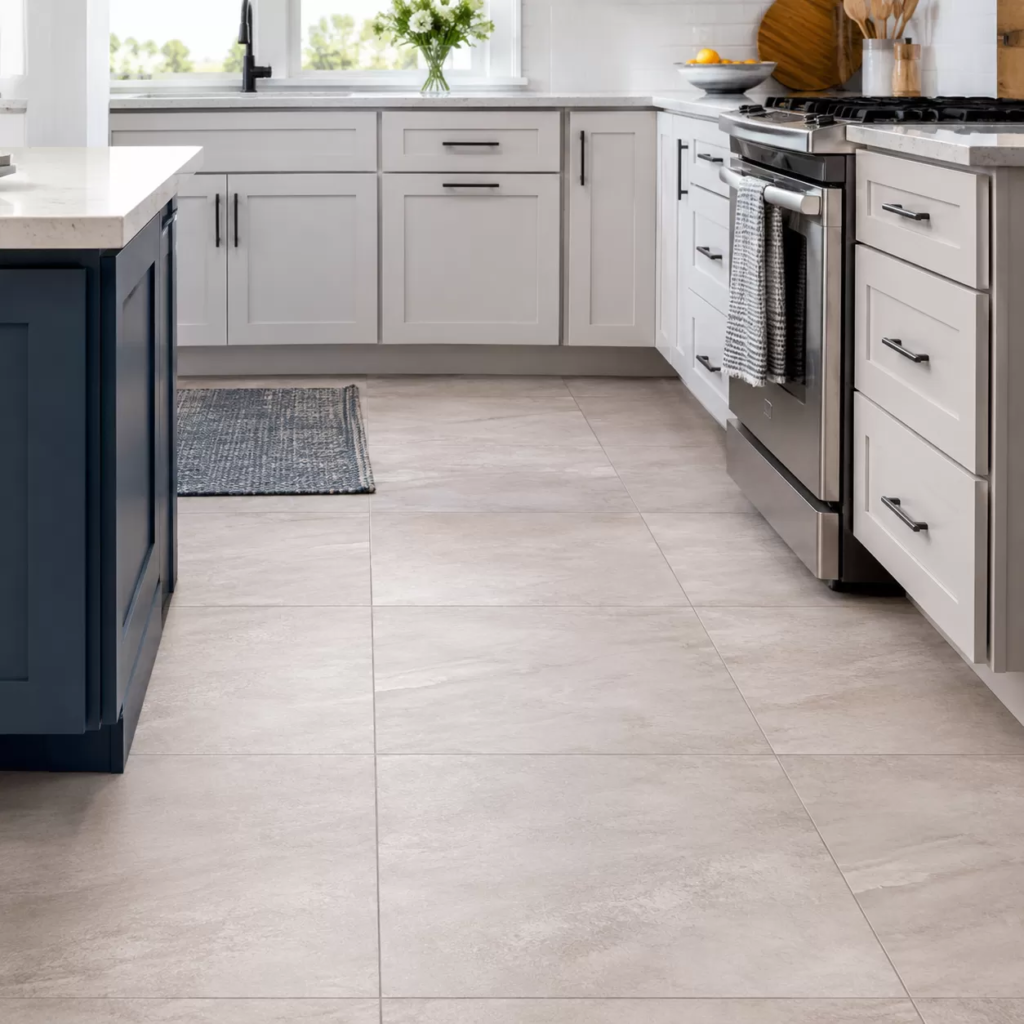
Bigger tiles mean fewer grout lines, creating a seamless and spacious feel. Large format kitchen porcelain tile flooring (like 24×48 or 36×36 inches) is highly requested for modern open-concept layouts. For those wanting more character, hexagon shapes and herringbone patterns add instant architectural interest.
Matte vs. Polished Finishes for Kitchen Floors
The finish you choose affects both the look and the safety of your kitchen.
| Finish Type | Best For | Visual Effect | Maintenance & Safety |
|---|---|---|---|
| Matte Finish | High-traffic family kitchens, commercial spaces | Natural, understated, and modern | High slip resistance; hides smudges and footprints easily. |
| Polished Finish | Luxury designs, darker kitchens | Glossy, reflective, and high-end | Brightens spaces by reflecting light; requires regular wiping to keep smudge-free. |
Porcelain Tile vs. Other Kitchen Flooring Options
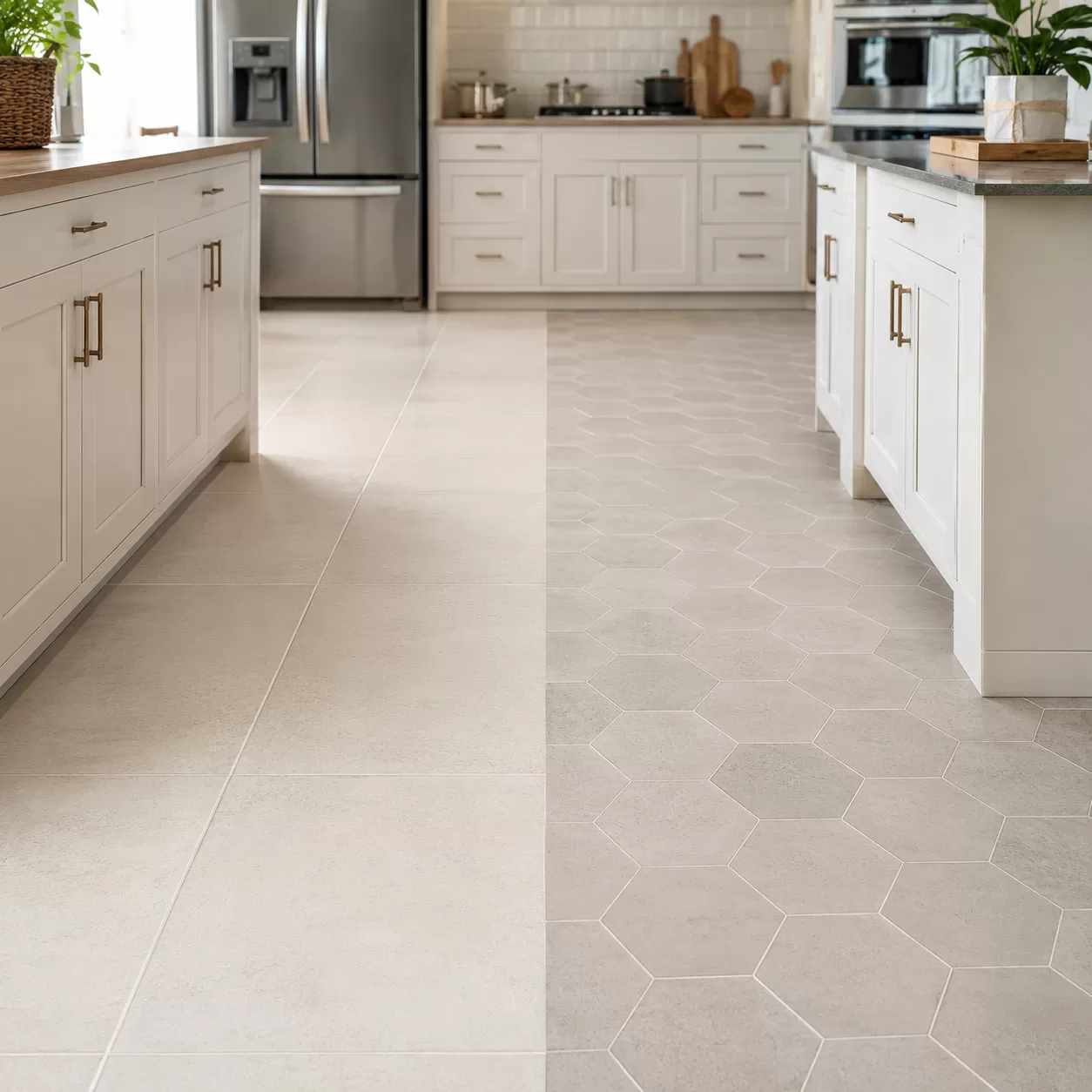
Choosing the right floor comes down to balancing daily chaos with long-term value. While many materials claim to handle the heart of the home, kitchen porcelain tile flooring outlasts and outperforms the competition when looking at true wear and tear.
Here is how porcelain stacks up against the most popular alternatives on the market.
Porcelain Tile vs. Luxury Vinyl Plank (LVP)
Luxury Vinyl Plank (LVP) is a budget-friendly favorite because it is soft underfoot and easy to install. However, LVP cannot match the permanent value and durability of porcelain. As a leading porcelain tile supplier and manufacturer, we build tiles to withstand decades of heavy foot traffic without wearing down.
| Feature | Kitchen Porcelain Tile | Luxury Vinyl Plank (LVP) |
|---|---|---|
| Lifespan | 50+ years (Permanent) | 10 to 20 years (Temporary) |
| Scratch Resistance | Extremely scratch resistant | Prone to tears from furniture and pet claws |
| Heat Resistance | Completely fireproof; won’t melt | Can scorch or warp near hot ovens |
| Resale Value | High long-term ROI | Low to moderate |
Porcelain Tile vs. Natural Stone
Natural stone like marble or travertine offers a high-end look, but it requires constant pampering. Porcelain gives you the exact same upscale design ideas—including realistic veining and textures—without the high-maintenance headache.
- Porosity: Natural stone is highly porous and absorbs liquids fast. Porcelain is virtually impervious to water.
- Sealing Hassles: Stone needs chemical sealing every year. Porcelain never needs sealing.
- Stain Resistance: Acidic spills like tomato sauce or wine can permanently etch natural stone. Porcelain wipes clean instantly.
- Cost Efficiency: Get a luxury look at a fraction of the material and upkeep cost.
Porcelain Tile vs. Hardwood Flooring
Hardwood brings warmth to a home, but the kitchen is a war zone for real wood. Between dishwasher leaks, dropped cast-iron pans, and spilled water, wood floors in a kitchen face constant risks.
- Water Damage: Hardwood warps, cups, and rots when exposed to moisture. Kitchen porcelain tile flooring handles standing water without a single issue.
- Dents and Scratches: Heavy kitchen traffic quickly dulls a wood finish, requiring expensive sanding and refinishing. Porcelain keeps its factory-fresh look forever.
- Commercial-Grade Strength: Our porcelain tiles meet commercial wear standards, meaning they won’t crack under the weight of heavy appliances or dropped pots.
How to Choose the Right Kitchen Porcelain Tile Flooring
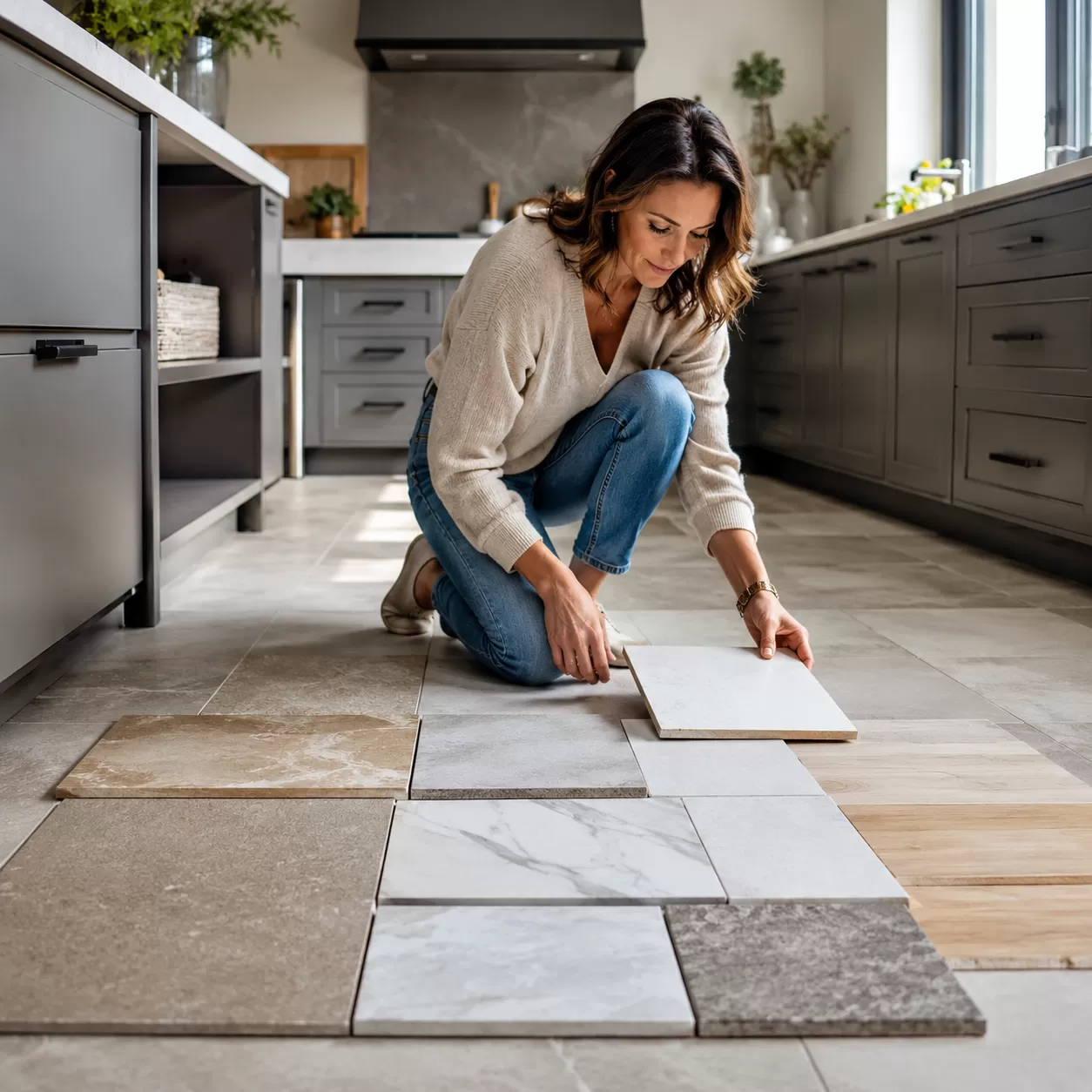
Picking the perfect kitchen porcelain tile flooring comes down to balancing daily foot traffic, safety, and your personal style. As a direct porcelain tile supplier and manufacturer, we know that the right specifications make all the difference in how your floor performs over time.
Selecting the Best Size and Thickness
The dimensions of your tile affect both the installation process and the visual spaciousness of your kitchen. Standard floor tiles range from traditional squares to modern large formats.
| Tile Size | Best For | Pros |
|---|---|---|
| Standard (12″x12″ to 16″x16″) | Small kitchens, utility rooms | Traditional look, easier to install on uneven subfloors. |
| Large Format (24″x24″ or larger) | Open-plan kitchens, modern layouts | Fewer grout lines, creates a seamless and expansive feel. |
| Plank Sizes (6″x24″ to 8″x48″) | Wood-look designs, galley kitchens | Mimics real hardwood layouts with maximum durability. |
Thickness Note: For residential kitchen floors, standard 8mm to 10mm thickness provides excellent structural strength and scratch resistant qualities without adding unnecessary weight to your subfloor.
Understanding Slip Resistance and Safety
Kitchen floors face inevitable spills, making slip resistance a top priority for a safe home environment. We measure this using the DCOF (Dynamic Coefficient of Friction) rating.
- DCOF Rating ge 0.42: This is the standard requirement for level interior spaces expected to be walked upon when wet. Always look for this rating for kitchen environments.
- Surface Texture: Matte, honed, or lightly textured surfaces offer better traction than high-gloss polished finishes.
- Commercial vs. Residential: If your kitchen sees heavy traffic or connects directly to an outdoor patio, opting for a commercial-grade textured porcelain ensures maximum safety.
Matching Your Kitchen’s Interior Design Style
Your flooring sets the foundation for your entire kitchen aesthetic. Use these design ideas to match your tile to your cabinetry and countertops:
- Modern & Minimalist: Choose large-format concrete or cement-look porcelain tiles in monochromatic gray or charcoal. Minimizing grout lines creates a sleek, continuous surface.
- Rustic & Farmhouse: Opt for wood-look porcelain planks with realistic grain textures, or tumbled stone-look tiles that offer warmth and character.
- Classic & Transitional: Go with neutral beige, cream, or soft white stone-look tiles. These tones complement almost any cabinet color and help bounce natural light around the room.
Installation and Maintenance Tips for Kitchen Tiles
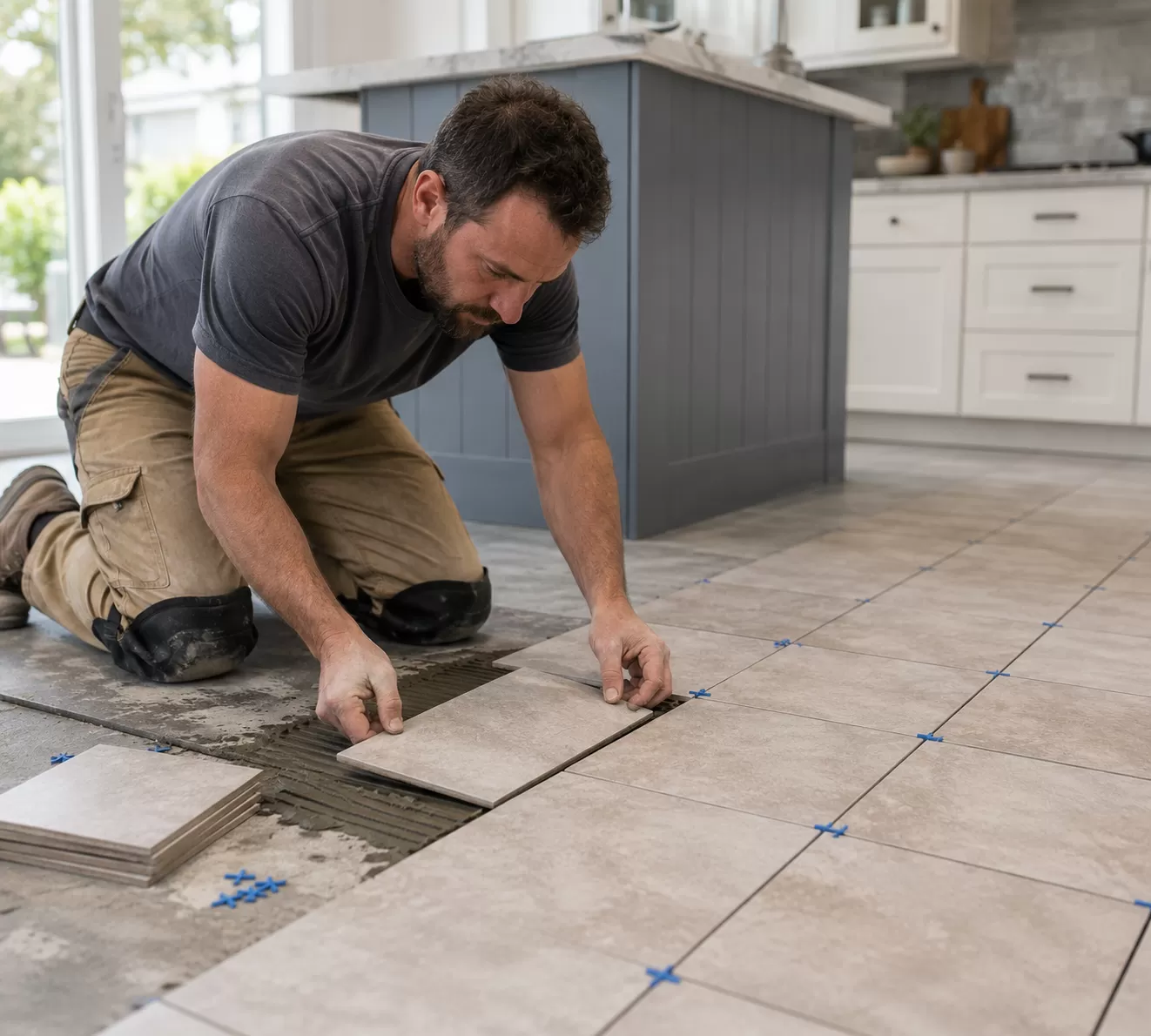
Getting the most out of your kitchen porcelain tile flooring comes down to correct installation and smart upkeep. As a direct supplier and manufacturer, we see firsthand how proper technique pairs with our high-end manufacturing to create a lifetime floor.
Essential Tips for Tiling a Kitchen Floor
A flawless installation ensures your floor handles heavy foot traffic without cracking. If you want a professional-grade finish, keep these core steps in mind:
- Prep the Subfloor: The surface must be perfectly flat, clean, and rigid. Any flex in the subfloor will cause tiles or grout to crack later.
- Use the Right Mortar: Select a high-quality, polymer-modified thinset mortar designed specifically for porcelain’s low absorption rate.
- Watch the Spacing: Use leveling spacers to prevent lippage (uneven tile edges) and keep your grout lines perfectly straight.
- Back-Butter Large Tiles: For large-format kitchen porcelain tile flooring, apply mortar to both the floor and the back of the tile for maximum bond strength.
How to Clean Matte and Polished Porcelain
Porcelain is incredibly low-maintenance, but matte and polished surfaces require slightly different care to keep their factory shine.
| Finish Type | Daily Cleaning | Deep Cleaning | What to Avoid |
|---|---|---|---|
| Matte Porcelain | Sweep daily; mop with warm water and a drop of mild dish soap. | Use a vinegar and water solution to cut through stubborn kitchen grease. | Wax, oil-based cleaners, or heavy polishers that leave a dull film. |
| Polished Porcelain | Dust mop to remove grit; wipe with a microfiber mop and clean water. | Use a neutral-pH tile cleaner to restore the high-gloss shine without streaking. | Steel wool, abrasive scrubbing powders, or harsh acid cleaners. |
Long-Term Care and Grout Maintenance
While our porcelain tiles are virtually indestructible, scratch-resistant, and waterproof, the surrounding grout lines need a little extra attention to stay pristine.
- Seal the Grout: Unlike the tile itself, cement-based grout is porous. Apply a high-quality grout sealer right after installation and reapply it annually to prevent stains.
- Address Spills Immediately: Wipe up acidic spills like wine, tomato sauce, or coffee right away to keep the grout from discoloring.
- Steam Clean Regularly: For deep cleaning without harsh chemicals, a steam mop works wonders on both the tile surface and the grout lines, lifting dirt out easily.
Frequently Asked Questions About Kitchen Porcelain Tile
Are Porcelain Tiles Slippery When Wet?
They can be, but it completely depends on the finish you choose. Polished tiles look stunning but get slick when wet. For a high-traffic zone like the kitchen, we always recommend opting for a matte or textured surface. These finishes offer much better slip resistance, keeping your kitchen floor safe from inevitable spills.
Do Homeowners Regret Installing Tile in the Kitchen?
Generally, no—mostly because the durability is unmatched. However, the most common complaint we hear from homeowners isn’t about the porcelain itself; it’s about the grout lines getting dirty or the floor feeling cold underfoot. You can easily avoid these regrets by:
- Using dark or pre-sealed grout to hide dirt.
- Installing radiant underfloor heating before the tile goes down.
- Standing on a cushioned mat near the sink for extra comfort.
How Long Will a Porcelain Tile Floor Last?
A lifetime. As a trusted porcelain tile supplier and manufacturer, we build these tiles to handle heavy foot traffic, dropped pans, and daily messes.
| Feature | Lifespan Expectancy |
|---|---|
| Kitchen Porcelain Tile | 50+ Years (Often outlasts the house) |
| Luxury Vinyl Plank (LVP) | 10–20 Years |
| Traditional Hardwood | 20–30 Years (Requires refinishing) |
Because it is highly scratch resistant and virtually impervious to water, a quality kitchen porcelain tile flooring installation is essentially a permanent upgrade for your home.