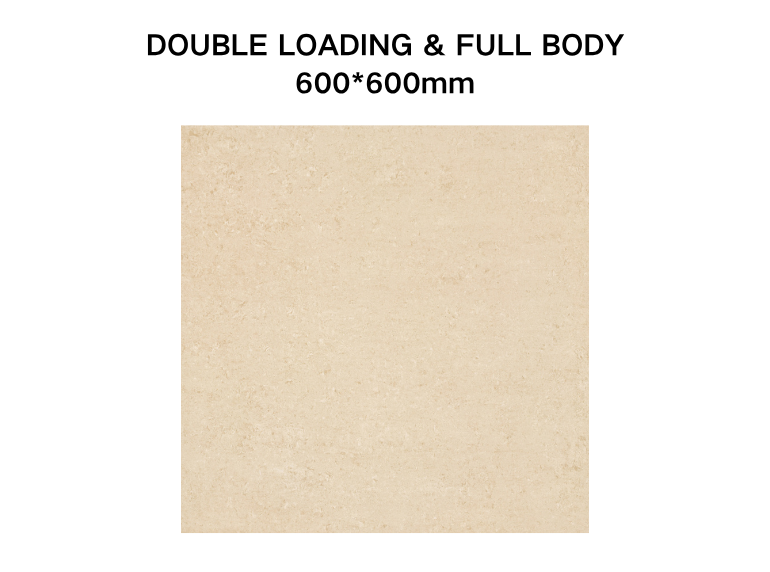
size:600x600mm
pcs/ctn:4pcs/ctn
kg/ctn:26.7kg/ctn
ctn/plt:40ctn/plt
ctn/container:1030ctn/container
Can Floor Tiles Be Used on Walls Pros Cons and Key Tips
Can You Use Floor Tiles on Walls?
The Direct Answer: Is It Safe and Possible?
Yes, you can absolutely use floor tiles on walls. It is a completely safe and highly effective design choice. While you cannot put thin wall tiles on the floor due to risk of cracking, the reverse application works perfectly. Floor tiles are engineered to withstand heavy foot traffic, meaning they bring exceptional strength and a premium feel when installed on vertical surfaces.
Key Differences Between Wall Tiles and Floor Tiles
Understanding the structural differences ensures a successful installation. Floor tiles and wall tiles are manufactured to meet different performance standards.
| Feature | Floor Tiles | Wall Tiles |
|---|---|---|
| Weight & Thickness | Thicker, heavier, and denser | Thinner, lightweight, and easier to cut |
| Durability | High impact and scratch resistance | Moderate durability; prone to cracking under weight |
| Water Absorption | Very low (especially porcelain options) | Higher absorption rate |
| Slip Resistance | Rated for traction (COF rating) | Usually smooth or highly glazed |
When to Choose Floor Tiles for Wall Applications
Opting for floor tiles on your walls is an ideal strategy in several specific scenarios:
- Creating a Cohesive Aesthetic: Perfect for achieving a continuous, seamless look where the floor design flows uninterrupted up the wall.
- High-Moisture Environments: Excellent for shower surrounds and wet rooms, as the low water absorption of dense floor tiles provides superior moisture protection.
- High-Impact Zones: Ideal for commercial spaces, busy mudrooms, or accent walls that require extra resistance to scratches, bumps, and daily wear.
Advantages of Using Floor Tiles on Walls
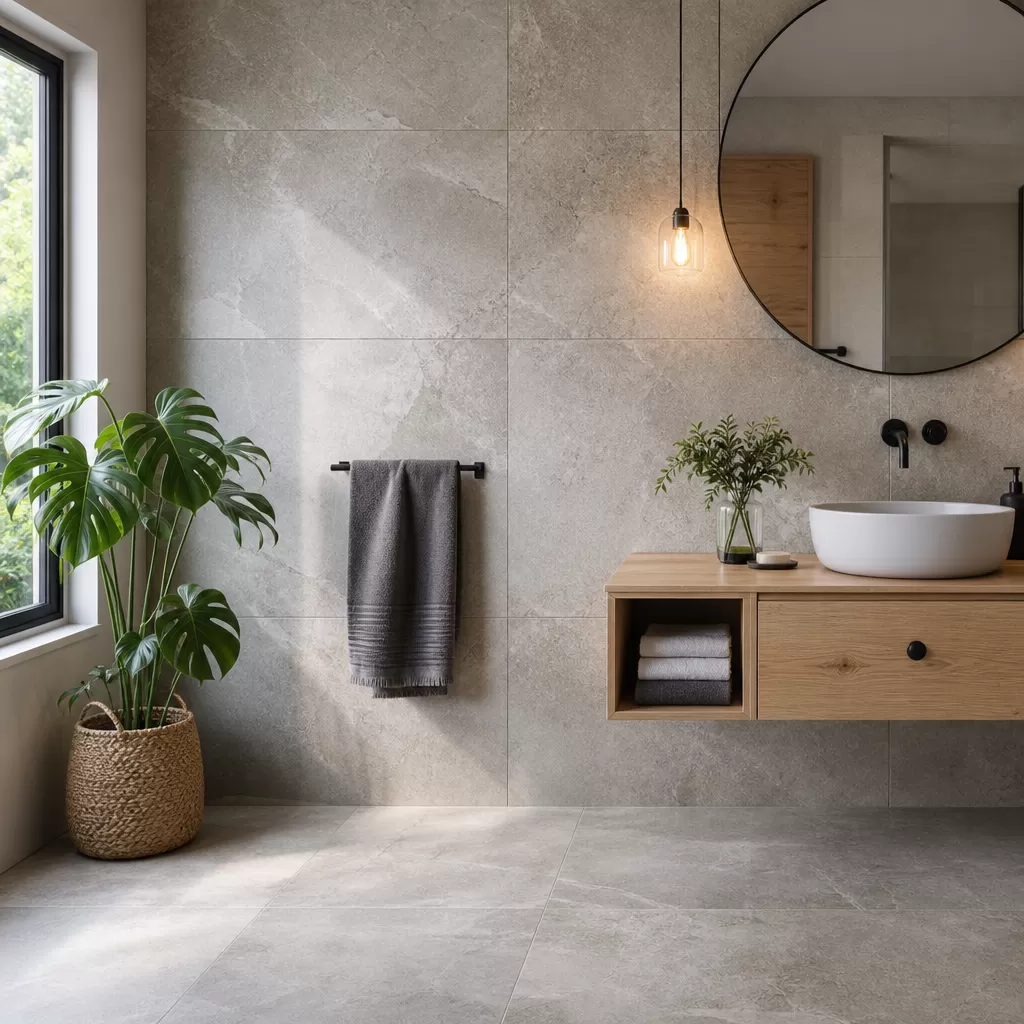
Using floor tiles on your walls isn’t just a workaround; it’s a strategic design choice that brings a high-end feel and rugged performance to any room.
Enhanced Durability and Longevity
Floor tiles are built to take a beating. Because they are engineered for heavy foot traffic, their durability is significantly higher than standard wall-only options.
- Impact Resistance: They handle knocks and bumps better, making them perfect for busy hallways or mudrooms.
- Moisture Protection: As a leading Porcelain Tile manufacturer and supplier, we ensure our floor-grade porcelain has extremely low porosity, providing a superior moisture barrier for shower walls.
- Scratch & Heat Resistance: Their tough surface resists wear and heat, making them an ideal choice for kitchen splashes and fireplace surrounds.
Seamless Design and Aesthetics
One of the biggest perks is the visual flow. Using the same tile for both the floor and the wall creates a “continuous wrap” effect that makes a space feel much larger.
- Minimal Grout Lines: Floor tiles are often larger, meaning fewer grout lines to clean and a cleaner, more modern look.
- High-End Finish: The extra thickness of floor tiles adds a premium, architectural depth to the wall that thinner tiles simply can’t match.
Cost-Effectiveness for Full-Room Tiling
Buying in bulk often leads to better pricing. If you are tiling a whole bathroom, using the same product for every surface simplifies your logistics and reduces waste.
| Feature | Wall Tile | Floor Tile on Wall |
|---|---|---|
| Strength | Moderate | High |
| Longevity | Standard | Superior |
| Visual Flow | Broken | Seamless |
| Versatility | Walls only | Floors & Walls |
By sticking to one high-quality product, you save on the headache of color-matching different batches and ensure your project stays on budget without sacrificing quality.
Important Factors to Consider Before Installation
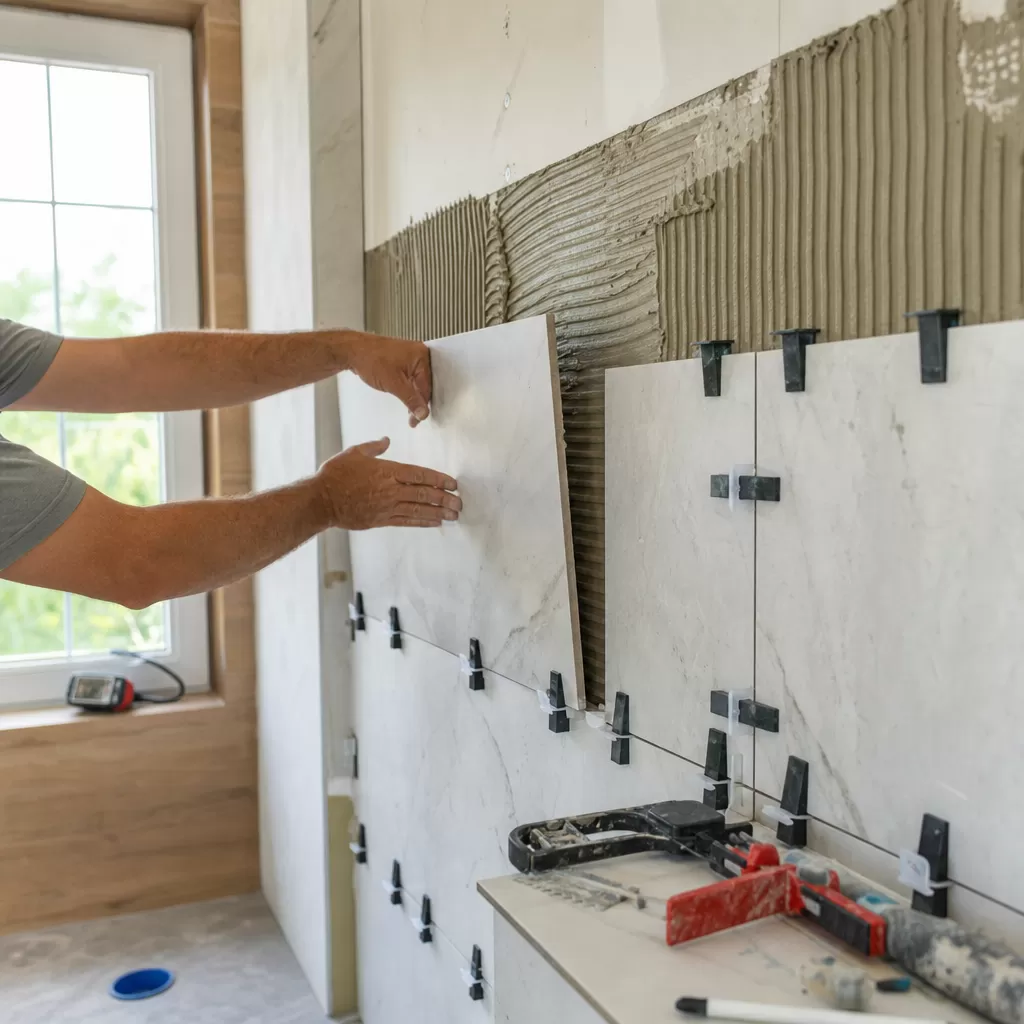
Before mounting floor tiles onto your walls, you must assess a few critical structural and technical requirements. Because floor products are inherently heavier and thicker than standard wall pieces, successful installation relies on proper preparation and the right materials.
Weight and Wall Structural Support
The primary challenge when putting floor tiles on walls is managing the weight. Standard drywall cannot support heavy porcelain or ceramic floor tiles.
- Drywall Limits: Standard drywall typically supports up to 5 lbs per square foot.
- Backer Board Requirement: For heavier floor tiles, you must install cement backer board or a reinforced substrate securely fastened to the wall studs.
- Stud Spacing: Ensure wall studs are spaced correctly (usually 16 inches on center) to handle the added load without bowing.
Tile Size and Thickness Impact
Floor tiles are manufactured with greater thickness to withstand foot traffic, which directly impacts how they behave on a vertical surface.
| Tile Property | Wall Tile Standard | Floor Tile Standard | Wall Installation Impact |
|---|---|---|---|
| Thickness | Typically 4mm to 8mm | Typically 9mm to 12mm+ | Thicker tiles stick out further, requiring careful planning around outlets and trim. |
| Weight | Lightweight, easy to hold | Heavy, prone to slipping | Gravity pulls heavy tiles down during installation; requires spacers and ledger boards. |
| Size | Small to medium | Large format (12times12 to 24times24+) | Large tiles require perfectly flat walls to prevent lippage (uneven edges). |
Adhesive and Substrate Requirements
Standard wall mastics will fail under the weight of a heavy floor tile. To ensure a permanent bond and prevent sagging, you must upgrade your installation materials.
- Thinset Mortar: Use a premium, polymer-modified thixotropic (sag-resistant) thinset mortar. This holds heavy tiles in place instantly while the mortar cures.
- Substrate Preparation: The wall surface must be clean, completely flat, and free of paint or wallpaper. Apply a high-quality bonding primer if you are tiling over challenging surfaces.
- Back-Buttering: For large-format floor tiles, apply mortar to both the wall and the back of the tile (back-buttering) to guarantee 100% coverage and prevent air pockets.
Common Application Scenarios
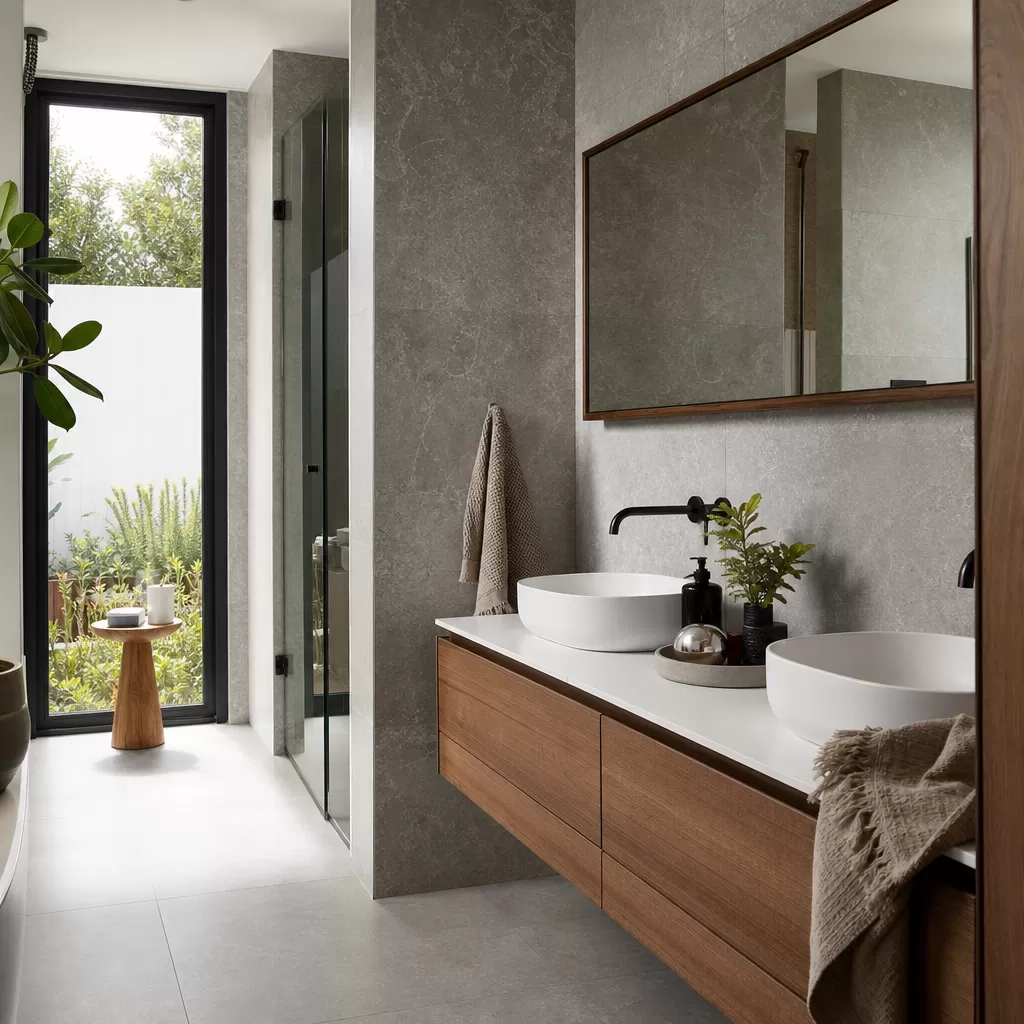
When you want a high-end, cohesive look, using floor tiles on walls is a game-changer. It’s a design trick we often use to make spaces feel larger and more intentional. Here are the most effective ways to pull this off:
Using Floor Tiles on Bathroom and Shower Walls
Bathrooms are the most common spots for this application. By running the same tile from the floor up the shower wall, you eliminate visual breaks, creating a spa-like atmosphere.
- Water Resistance: Most floor-grade porcelain or ceramic is nearly impervious to moisture.
- Easy Maintenance: Larger floor tiles mean fewer grout lines to scrub in the shower.
- Pro Tip: Ensure your wall substrate can handle the extra weight of a heavy-duty floor tile.
Creating a Floor-to-Wall Kitchen Backsplash
A floor-to-wall transition in the kitchen is a bold architectural move. Using a durable floor tile as a backsplash adds significant heat resistance behind the stove while providing a rugged, industrial vibe.
- Visual Flow: Matches the kitchen floor for a seamless, continuous aesthetic.
- Durability: Stands up to heavy cleaning and grease splashes better than thin decorative glass.
Accent Walls and Fireplace Surrounds
Floor tiles are perfect for creating high-impact focal points. Because they are often thicker and more textured, they add a premium feel to living areas.
- Fireplace Safety: Porcelain floor tiles are excellent for fireplace surrounds due to their ability to withstand temperature fluctuations.
- Texture: Large-format floor tiles create a “slab” look on accent walls that standard wall tiles simply can’t mimic.
| Scenario | Primary Benefit | Recommended Material |
|---|---|---|
| Shower Walls | Zero visual clutter | Porcelain |
| Kitchen Backsplash | Heat & stain resistance | Ceramic/Porcelain |
| Fireplace | Thermal stability | Natural Stone or Porcelain |
As a leading Porcelain Tile manufacture and supplier, we’ve seen these applications transform standard rooms into luxury spaces. The extra thickness of a floor tile provides a depth of color and texture that makes any wall a standout feature.
Frequently Asked Questions About Wall and Floor Tiles
Can Wall Tiles Be Used on Floors?
No, absolutely not. While you can use floor tiles on walls, you cannot swap them the other way around.
Wall tiles are manufactured differently than floor-grade options:
- Lower Durability: They are thinner and much more fragile.
- Safety Hazards: They usually have a smooth, glossy glaze that becomes incredibly slippery when wet.
- Cracking Risks: They simply cannot handle the weight of foot traffic or heavy furniture.
Using wall tiles on a floor will quickly result in cracked surfaces and safety issues.
Is It Easier to Tile Walls or Floors First?
In most standard installations, it is highly recommended to tile the walls first, but with a specific twist.
Here is the cleanest workflow used by professionals:
- Leave the bottom row blank: Hang a temporary ledger board on the wall, skipping the very bottom row of wall tiles.
- Tile the walls: Work your way up the wall from the ledger board.
- Tile the floor: Complete the entire floor installation next.
- Finish the bottom row: Cut and install the final bottom row of wall tiles to sit cleanly on top of the finished floor.
This method protects your new floor tiles from falling tools, dripping mortar, and heavy foot traffic while you work on the walls.
How Do You Maintenance and Clean Wall-Mounted Floor Tiles?
Maintaining heavy-duty floor tiles on a wall is incredibly straightforward because these materials are inherently built to resist wear and tear. As a direct manufacturer, we engineer these products for maximum density and low porosity.
- Daily Care: Wipe down the tiles with a soft microfiber cloth and warm water. For bathrooms and kitchens, a mild, pH-neutral cleaner works best.
- Grout Protection: Grout lines are always the most vulnerable spot. Seal the grout lines right after installation and reapply sealer annually to prevent mold, mildew, and staining.
- What to Avoid: Skip harsh abrasive scrubbers, steel wool, or bleach-heavy chemicals. These can dull the finish over time and degrade the adhesive backing.