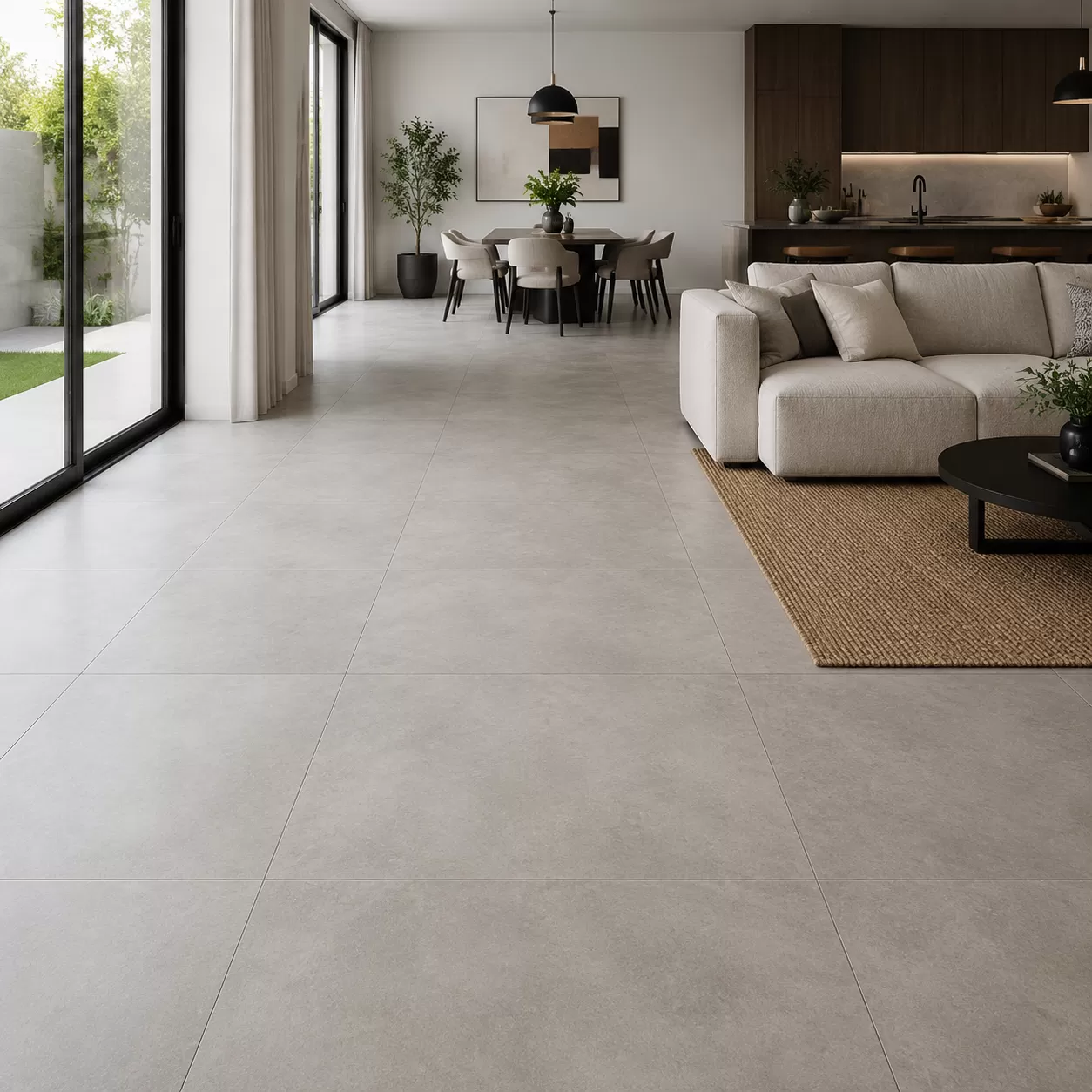
What Are Large Format Tiles?
Transforming a space often starts from the ground up, and large format tiles have become a cornerstone of modern interior design. As a premier porcelain tile manufacturer and supplier, we recognize that these expansive surfaces offer unmatched elegance and structural integrity for both residential and commercial flooring projects.
Definition and Standard Dimensions
By industry standards, a large format tile is defined as any tile featuring at least one edge that measures 15 inches or greater. However, manufacturing advancements have pushed these boundaries far beyond the original criteria. Today, these tiles are engineered to cover vast floor areas with minimal interruption.
Common Dimensions Include:
- Standard Large Format: 24″ x 24″ or 18″ x 36″
- Oversized Planks: 8″ x 48″ or 12″ x 48″ (popular for wood-look designs)
- Extra-Large Panels: 24″ x 48″, 36″ x 36″, and even massive gauged porcelain slabs reaching up to 5′ x 10′
Popular Materials and Finishes
The visual impact and longevity of your floor depend entirely on the composition and surface treatment of the tile. Large format tiles are crafted to serve as highly durable flooring solutions capable of withstanding heavy foot traffic.
Top Materials:
- Porcelain: The ultimate standard for large tiles. It is exceptionally dense, highly water-resistant, and ideal for a pristine bathroom remodel.
- Ceramic: A slightly lighter option, well-suited for standard indoor residential use.
- Natural Stone: Marble, travertine, and slate offer unique, unrepeatable organic veining.
Trending Finishes:
- Polished: Delivers a high-gloss, reflective surface that instantly elevates the luxury of a room.
- Matte: Provides a non-reflective, highly contemporary look that naturally hides smudges, making it incredibly low maintenance.
- Textured: Enhances slip resistance while realistically mimicking the tactile feel of natural wood grains or raw stone.
Pros of Using Large Tiles on Floors
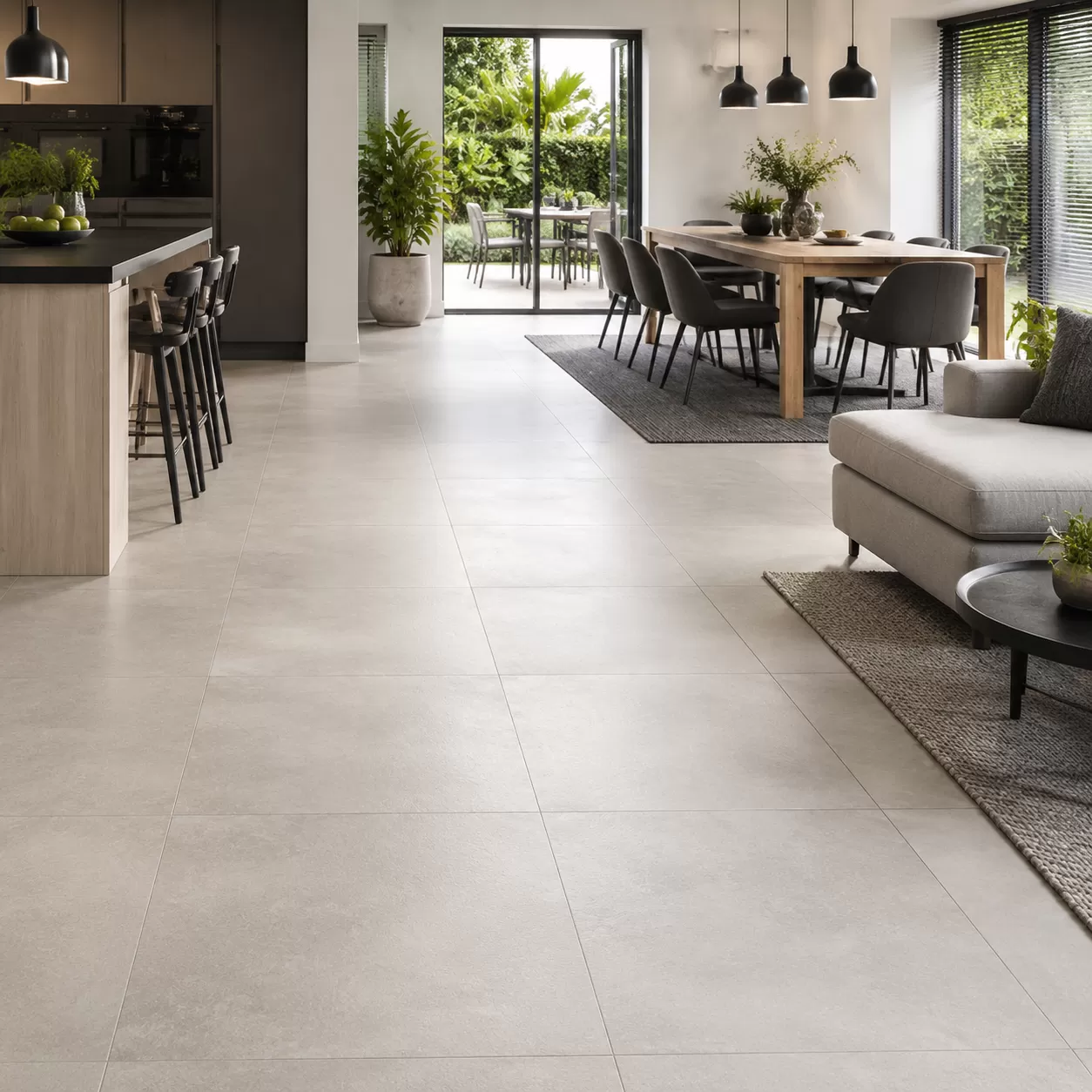
When deciding on the best materials for your project, understanding what are the pros and cons of using large tiles on floors is essential. Because we are porcelain tile manufacture and supplier, we know firsthand why homeowners, builders, and designers are constantly choosing oversized options for modern builds.
Fewer Grout Lines for a Seamless Look
The most immediate advantage of large format tiles is the drastic reduction of grout lines.
- Uninterrupted surface: Covering a larger area per tile minimizes the busy grid effect common with smaller tiles.
- Clean finish: The floor flows continuously, giving your space a premium, unified, and highly polished appearance.
Creates the Illusion of a Spacious Room
Big tiles trick the eye into seeing more space than there actually is.
- Visual expansion: Fewer dividing lines make the floor stretch out, reducing visual clutter.
- Perfect for tight spaces: Even during a compact bathroom remodel, laying down oversized floor tiles instantly makes the room feel open, expansive, and airy.
Modern Aesthetic Appeal
Large tiles deliver a sleek, contemporary vibe that traditional sizing simply cannot match.
- Trend-forward design: They bring a minimalist, modern architectural feel to living rooms, kitchens, and commercial lobbies.
- Versatile canvas: The smooth, continuous surface acts as a perfect foundation for both bold and subtle interior design choices.
Easy Maintenance and Cleaning
If you want a hassle-free home, this is exactly what you need.
- Less scrubbing: Grout is notorious for trapping dirt, dust, and grime. Fewer grout lines mean less time spent scrubbing with heavy-duty cleaners.
- Effortless upkeep: You get highly durable flooring that functions as a truly low maintenance surface, requiring just a simple sweep and standard mop to stay looking brand new.
Cons and Challenges of Large Format Tiles
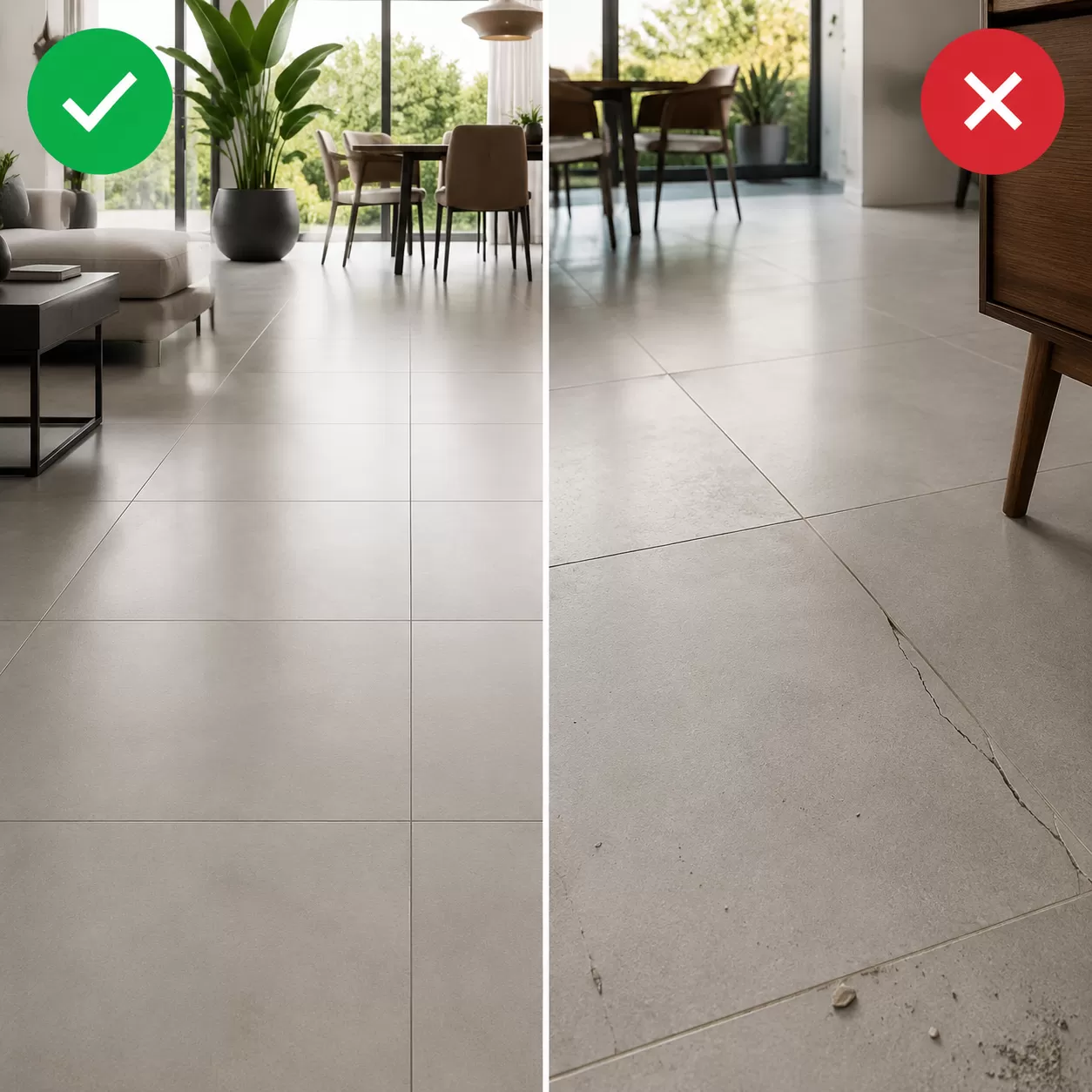
While the benefits are clear, it is crucial to understand the cons of using large tiles on floors before starting your bathroom remodel or living space upgrade. As a porcelain tile manufacturer and supplier, I always advise our clients to prepare for the specific physical and technical challenges these oversized pieces bring to a job site.
Strict Subfloor Preparation Requirements
Large format tiles demand a perfectly flat surface. Unlike smaller mosaics that can contour to minor dips in a concrete slab, large tiles have zero flexibility.
- Lippage Risk: An uneven subfloor causes tile edges to sit higher or lower than adjacent tiles, creating a tripping hazard and ruining the sleek aesthetic.
- Self-Leveling Compounds: You will almost certainly need to invest time and money into self-leveling underlayment prior to installation.
- Zero Tolerance: The industry standard typically allows a variance of less than 1/8 inch over 10 feet.
Difficult and Heavy Installation Process
Handling these tiles is rarely a simple DIY project. They require specialized equipment and serious manual labor to install correctly.
| Installation Challenge | What It Means for Your Project |
|---|---|
| Extreme Weight | A single tile can weigh 40 pounds or more, making them exhausting to lift, shift, and maneuver. |
| Specialized Tools | Installers need heavy-duty suction cup lifting tools and large-notch trowels. |
| Mortar Coverage | Achieving the required 90% minimum mortar coverage underneath takes specific back-buttering techniques. |
Increased Risk of Breakage
While they create incredibly durable flooring once properly set, large format tiles are highly vulnerable during transit, cutting, and installation. Lifting a massive tile at the wrong angle or failing to support it properly during a cut can snap an expensive piece in half. Because of this fragility before setting, you must calculate a higher waste factor when ordering materials to account for accidental breakages.
Design Tips for Large Floor Tiles
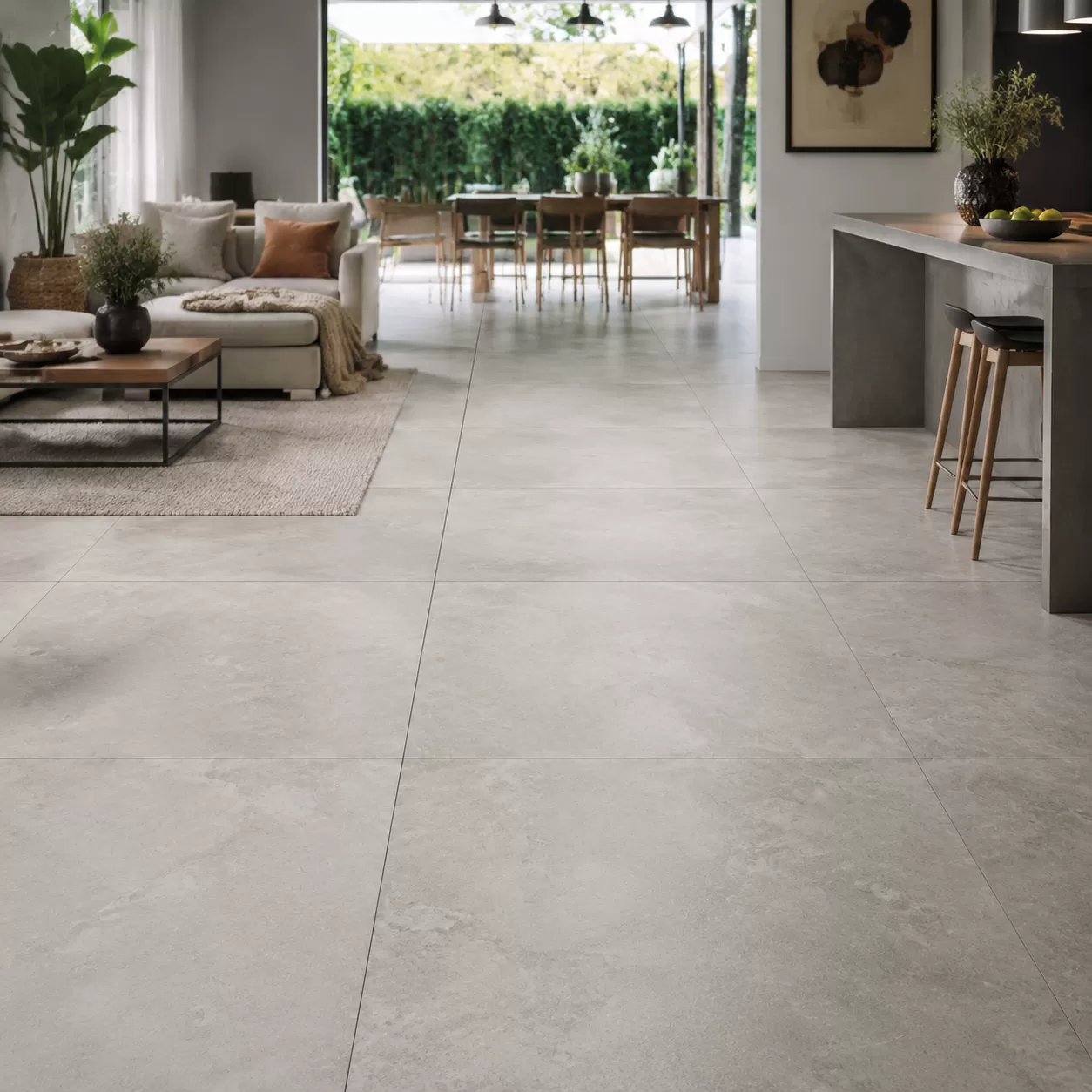
Understanding what are the pros and cons of using large tiles on floors is only half the battle; how you design and lay them out dictates the final result. Because we are a porcelain tile manufacturer and supplier, we see exactly what works best when styling large format tiles to maximize their impact.
Choosing the Right Grout Color
The grout you select completely changes the vibe of your durable flooring. Since large tiles naturally have fewer grout lines, the color you choose determines whether those lines disappear or stand out.
- Matching Grout: Choosing a grout color identical to your tile creates a continuous, monolithic look. This is the secret to making a small bathroom remodel feel massive and luxurious.
- Contrasting Grout: Using a darker or lighter grout outlines each individual tile. While this highlights the tile’s shape, it breaks up the visual flow and can make the room feel smaller.
- Keep it Tight: Pair matching grout with a narrow grout joint (usually 1/16 to 1/8 inch) for an ultra-sleek, low maintenance surface.
Selecting the Best Layout Pattern
Large tiles require specific layout strategies to look their best and sit perfectly flat on your subfloor.
- Straight Stack (Grid): Laying tiles directly in line with one another is the most popular choice for modern aesthetics. It provides clean, unbroken lines that complement the size of the tile.
- Staggered (Offset): If you prefer a classic brick look, never use a 50% offset with large format tiles. Always use a maximum 1/3 offset to prevent “lippage,” which is when the edge of one tile sits higher than the one next to it.
- Diagonal: Laying large tiles on a 45-degree angle draws the eye outward, making narrow hallways or small rooms feel significantly wider. However, this pattern requires more cutting and generates more material waste.
Are Large Format Tiles Right for Your Space?
Deciding whether to use oversized tiles comes down to your specific project needs. Because we are a porcelain tile manufacturer and supplier, we see firsthand how these materials can completely transform the look and feel of a room. When chosen correctly, they deliver exceptional style and long-lasting performance.
Best Rooms and Applications for Large Tiles
Large format tiles work exceptionally well in areas where you want to maximize the feeling of space.
- Open-Concept Living Areas: These tiles create a continuous, flowing design that connects living rooms, dining rooms, and hallways without visual breaks.
- Kitchens: They provide a sleek, modern foundation that stands up to heavy foot traffic.
- Bathroom Remodel: Using oversized tiles on bathroom floors and shower walls is highly popular. The reduced grout lines make them incredibly low maintenance and highly water-resistant.
- Commercial Spaces: Lobbies and retail stores benefit greatly from this durable flooring, projecting a high-end, professional image.
Why You Should Work With a Professional Installer
While the aesthetic payoff is huge, the installation process for oversized tiles is not a standard DIY project. Hiring an experienced contractor is highly recommended.
- Subfloor Preparation: The subfloor must be perfectly level. Professionals know how to spot and fix minor dips that would otherwise cause a large tile to crack under pressure.
- Heavy Lifting and Handling: These tiles are incredibly heavy and fragile before installation. Experts use specialized suction cups and lifting tools to prevent breakage.
- Preventing Lippage: A professional installer uses advanced leveling systems to ensure every tile edge is perfectly flush with the next, eliminating tripping hazards and unsightly shadows.
- Specialized Cutting Tools: Cutting large format tiles requires industrial-grade wet saws and specific scoring techniques to prevent chipping the edges.
