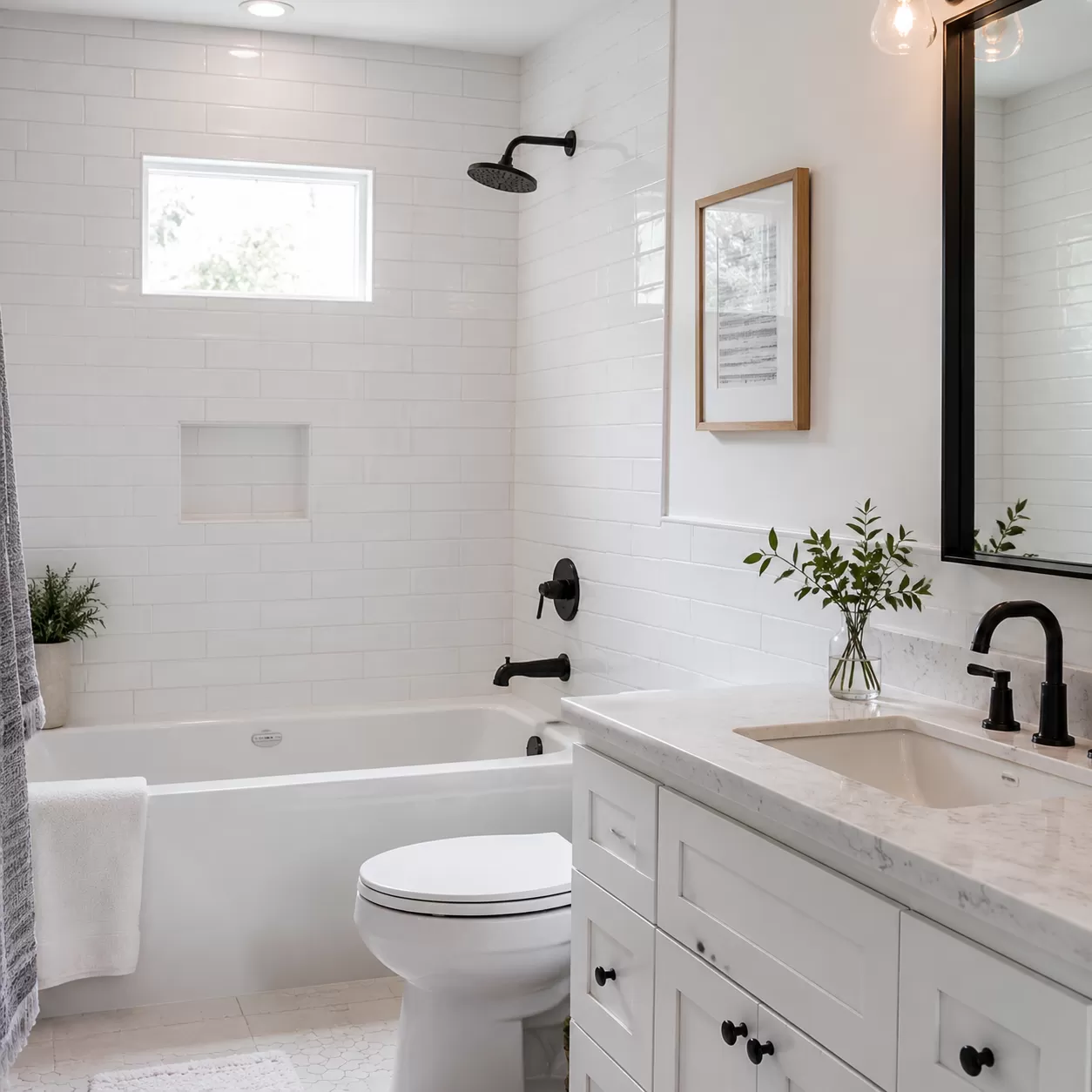
You might already know that white is the ultimate go-to color for home renovations…
But why are white tiles always considered for bathrooms, exactly?
Well, you’re in for a treat because I’ve put together a complete breakdown.
The right tile can instantly create the illusion of a larger space and dramatically enhance natural light and brightness.
But getting it wrong? That can leave your space feeling cold, sterile, and impossible to keep clean.
In this post, you’re going to learn exactly how to choose the best popular types and shapes of white tiles, how to style them with wood and natural accents to add warmth, and the exact step-by-step methods to maintain and clean white bathroom tiles so your grout stays fresh.
So if you are ready to master this timeless and versatile aesthetic, this guide is for you.
Let’s dive right in.
Why Are White Tiles Always Considered for Bathrooms?
When planning a bathroom remodel, one design choice consistently dominates the conversation: white tiles. As a trusted porcelain tile manufacture and supplier, we see firsthand the enduring global demand for this classic option. White tiles remain a staple in modern and traditional architecture alike, offering unparalleled functional and aesthetic benefits that transform ordinary washrooms into luxurious retreats.
Creates the Illusion of a Larger Space
Bathrooms are frequently the smallest rooms in a home, making spatial perception a critical element of bathroom design. White tiles naturally expand the visual footprint of a room.
- Visual Expansion: Light colors recede from the eye, making walls appear further away.
- Seamless Flow: Using matching white tiles on both walls and floors removes visual boundaries, creating a unified, expansive look.
Enhances Natural Light and Brightness
A bright bathroom feels clean, inviting, and refreshing. White surfaces are highly reflective, maximizing every ounce of available light.
- Maximizes Sunlight: Even a small frosted window can illuminate a room when paired with white walls.
- Boosts Artificial Lighting: In windowless spaces, white tiles bounce vanity lighting effectively, eliminating dark shadows and making daily grooming routines easier.
Offers a Timeless and Versatile Aesthetic
Trends come and go, but white remains completely immune to the passing fads of interior design. Choosing a white porcelain tile guarantees an investment that will look stylish for decades.
- The Perfect Neutral Base: White provides a blank canvas, allowing you to easily swap out accent colors, towels, or hardware without a complete renovation.
- Adaptable Styles: Whether you prefer minimalist modernism, rustic farmhouse, or striking black and white tilework, white tiles adapt effortlessly to your evolving personal taste.
Potential Drawbacks of White Bathroom Tiles
Even though we love this classic look, it is important to understand the downsides. Because we are porcelain tile manufacture and supplier experts, we always make sure our clients know exactly what to expect when choosing these materials for their homes.
Can Feel Cold or Sterile Without Proper Styling
A pure white bathroom design provides a fantastic neutral base, but it can easily feel like a clinical space if it is not balanced correctly.
- Lack of Warmth: Without natural elements or contrasting colors, a room covered entirely in white porcelain tile can feel stark and uninviting.
- Flat Aesthetics: Relying purely on flat, glossy white surfaces often creates an environment that lacks visual depth and character.
Shows Dirt and Requires Frequent Cleaning
The reality of bright white surfaces is that they are completely unforgiving when it comes to daily messes.
- High Visibility: Stray hairs, dust, water spots, and soap scum show up immediately against a bright background.
- Constant Maintenance: Keeping these surfaces pristine requires a strict cleaning routine. Even when you incorporate stunning black and white tilework, the white sections will always demand the most attention to keep the space looking fresh.
Popular Types and Shapes of White Tiles
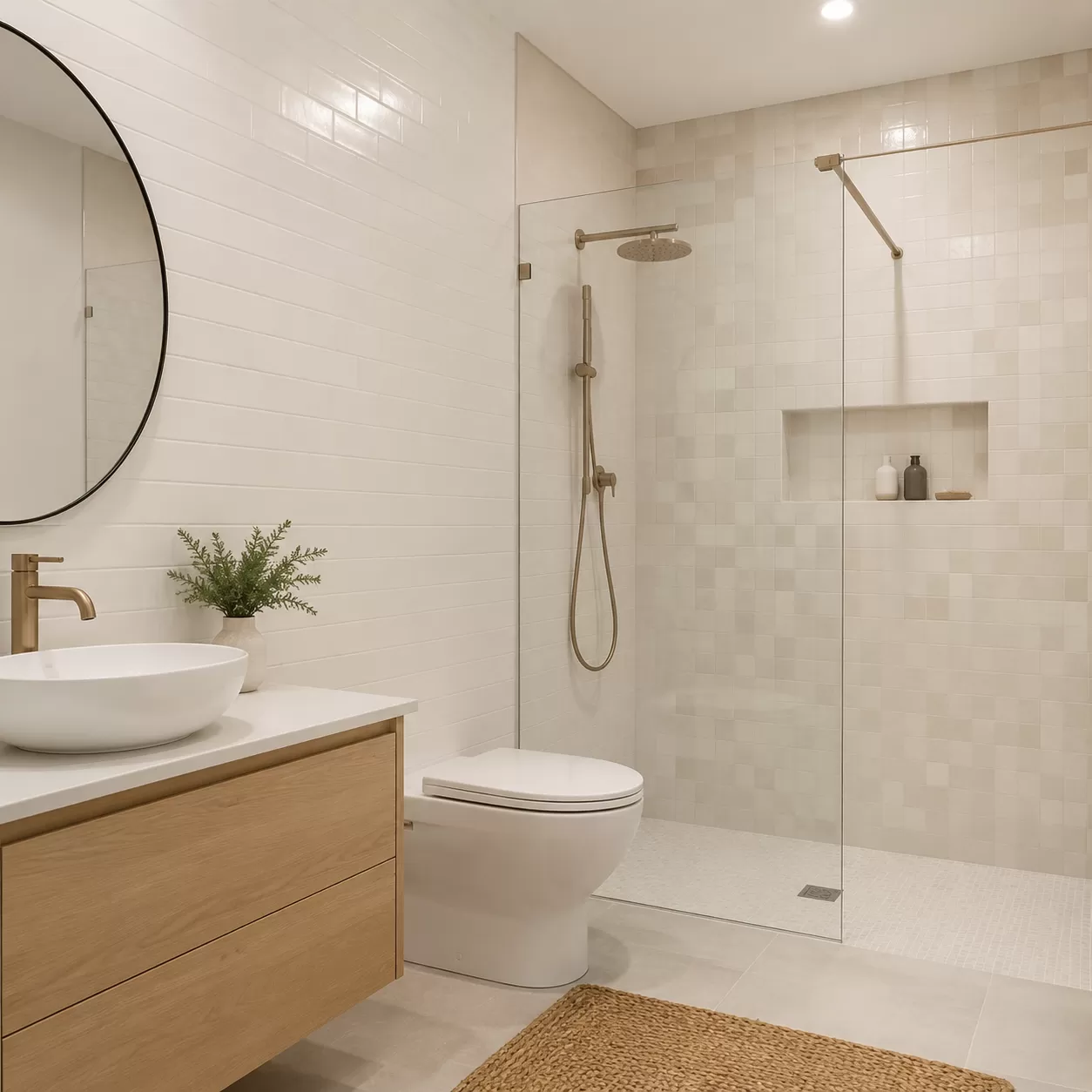
When mapping out a new bathroom design, the sheer variety of white tiles available is impressive. Choosing the right shape and material is what ultimately defines your space.
Classic White Subway Tiles
Subway tiles are a global staple. They are simple, timeless, and provide the perfect neutral base for any bathroom aesthetic.
- Versatile Layouts: You can lay them horizontally, vertically, or in a trendy herringbone pattern.
- High Contrast: They pair flawlessly with dark grout, making them a top choice for classic black and white tilework.
Modern White Hexagon Tiles
If you want a contemporary touch without losing that bright, clean appeal, hexagon tiles are the way to go.
- Visual Interest: The geometric shape naturally breaks up flat walls and floors.
- Slip Resistance: The extra grout lines required for smaller hex tiles provide great grip for wet bathroom floors.
Elegant White Marble and Porcelain Tiles
Because we are porcelain tile manufacture and supplier experts, we know firsthand what works best in high-moisture areas.
- Unmatched Durability: A premium white porcelain tile resists water absorption, stains, and scratches far better than natural stone.
- Luxury on a Budget: You get the elegant, high-end look of real marble veining combined with the zero-maintenance benefits of porcelain.
How to Style a White Tile Bathroom
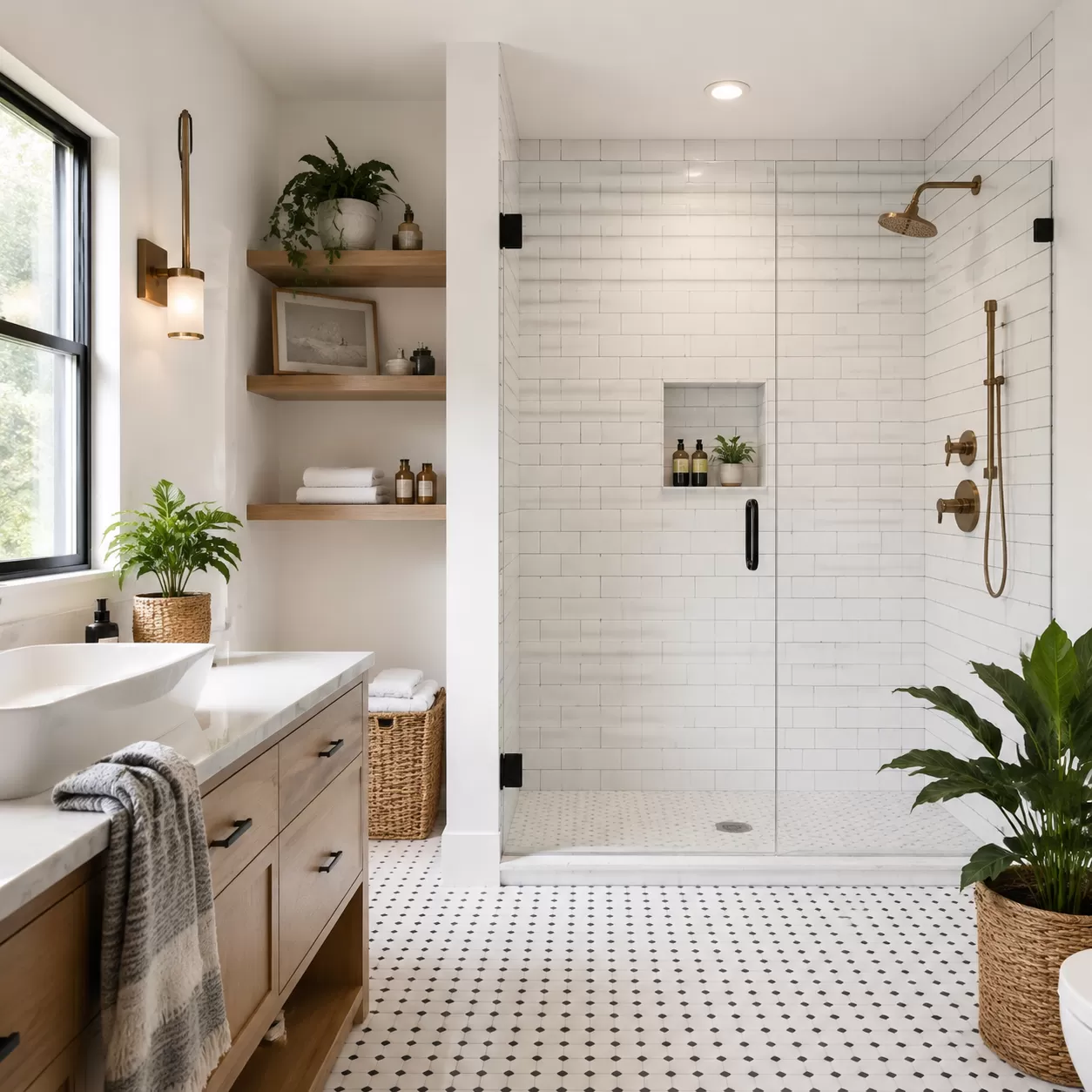
A white tile bathroom provides the perfect neutral base, but it needs the right styling to avoid feeling flat or unfinished. By focusing on a few key design elements, you can easily elevate your entire bathroom design and create a space that feels intentional and inviting.
Add Warmth with Wood and Natural Accents
White spaces can sometimes feel stark if left completely bare. Bringing in natural elements is the easiest and most effective fix to balance the room.
- Wooden vanities: Introducing oak, teak, or walnut tones instantly warms up the room and breaks up the white walls.
- Natural plants: A touch of greenery, like a potted fern or hanging eucalyptus, softens the hard lines of a white porcelain tile.
- Woven accessories: Rattan baskets, bamboo bath mats, and wooden shelving add an earthy, organic feel that makes the bathroom more comfortable.
Create Visual Contrast with Dark Grout
You do not have to stick to blending your tiles together with matching white grout. Using dark grey or black grout lines completely changes the dynamic of the space.
- Defines the shape: Dark grout highlights the geometric outlines, making classic subway or hexagon shapes truly pop.
- Low maintenance: It is highly practical, as it hides dust, moisture stains, and discoloration much better in high-traffic wet areas.
- Classic vibe: A bold grout line naturally nods to vintage black and white tilework, giving the bathroom a timeless, architectural edge.
Incorporate Distinct Textures and Patterns
Because we are porcelain tile manufacture and supplier experts, we know that mixing finishes and layouts is the secret to keeping a monochromatic room interesting.
- Mix matte and gloss: Pair glossy tiles on the walls to bounce light around the room with matte tiles on the floor for better slip resistance.
- Play with layouts: Instead of a standard horizontal brick pattern, try installing your tiles in a herringbone, chevron, or vertical stack for a modern twist.
- Add 3D elements: Using textured or fluted wall tiles creates subtle shadows and highlights, bringing essential depth to a solid white space.
Tips for Choosing the Right White Tile
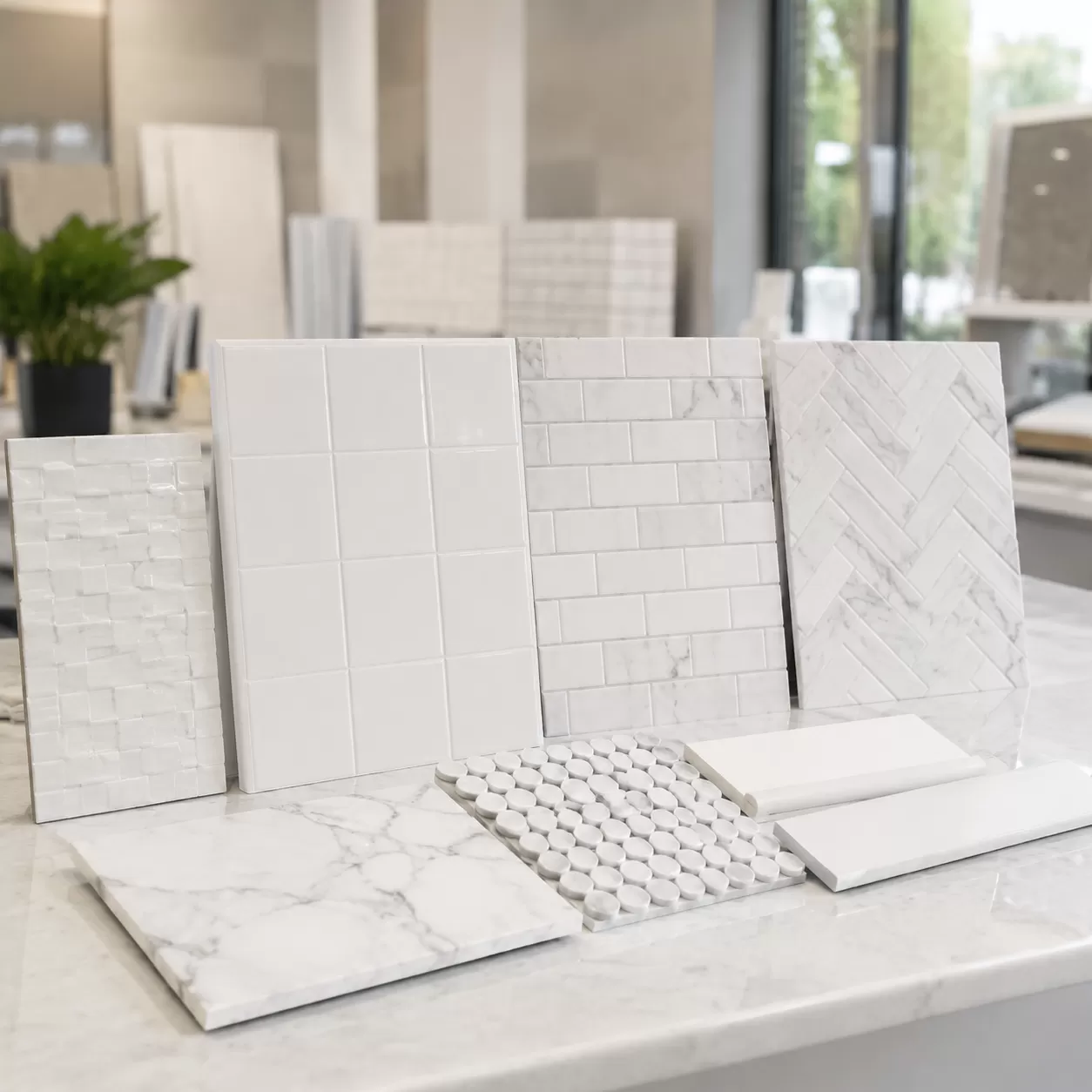
When you decide to build your bathroom design around a clean, neutral base, picking the exact type of tile makes all the difference. Because we are a porcelain tile manufacture and supplier, I have seen firsthand how the right finish and material can make or break a space. Here is how to nail your selection.
Matte vs. Glossy Finishes
Choosing between matte and glossy depends entirely on where the tile is going. Both offer distinct benefits for white tilework.
- Glossy Finishes: These are perfect for walls. The high-shine surface bounces light around the room, making the space feel larger. Glossy tiles are also incredibly easy to wipe down, so soap scum and water splashes clean up in seconds.
- Matte Finishes: Always use matte tiles for the floors. They provide better traction, reducing the risk of slipping when the floor is wet. Matte finishes are also great at hiding water spots, smudges, and dust.
Selecting the Best Material for Wet Areas
Bathrooms handle a lot of moisture, so your materials need to be tough.
I strongly recommend white porcelain tile for wet areas like shower floors and main bathroom floors. Porcelain is fired at higher temperatures than standard ceramic, making it extremely dense and nearly waterproof. It resists stains, handles heavy foot traffic, and stands up to daily moisture without warping or cracking. If you are mixing black and white tilework for a classic pattern, stick to porcelain for both colors to ensure uniform durability across your entire floor.
How to Maintain and Clean White Bathroom Tiles
Keeping your bathroom looking pristine doesn’t have to be a daily struggle. As a porcelain tile manufacture and supplier, we know firsthand that a consistent routine is the secret to preserving the beauty of your investment.
Routine Cleaning Best Practices
Daily and weekly habits stop grime before it becomes a stubborn problem. Here is how to keep your white porcelain tile looking brand new:
- Sweep or vacuum regularly: Remove loose dirt, hair, and dust before they get wet and stick to the floor.
- Use mild solutions: Stick to pH-neutral cleaners or a simple mix of warm water and dish soap. Harsh acidic chemicals can strip the finish off your tiles.
- Squeegee after showering: Wipe down wet walls immediately to prevent hard water stains and soap scum buildup.
- Mop weekly: Use a microfiber mop with your neutral cleaner to gently lift away everyday dirt without leaving streaks.
Keeping White Grout Looking Fresh
Grout lines can easily ruin a flawless bathroom design if they turn yellow or gray. Since white tiles rely on a clean, neutral base, maintaining the grout is just as important as cleaning the tile itself.
- Apply a baking soda paste: Mix baking soda with a little water, apply it directly to the grout, and gently scrub with a soft-bristled brush.
- Use oxygen bleach: If you have high-contrast black and white tilework, avoid harsh chlorine bleach, which can degrade grout over time. Oxygen bleach is a safer, highly effective alternative for lifting deep stains.
- Seal annually: The absolute best defense against dirty grout is a high-quality penetrating sealer. Apply it once a year to lock out moisture, mold, and daily grime.
