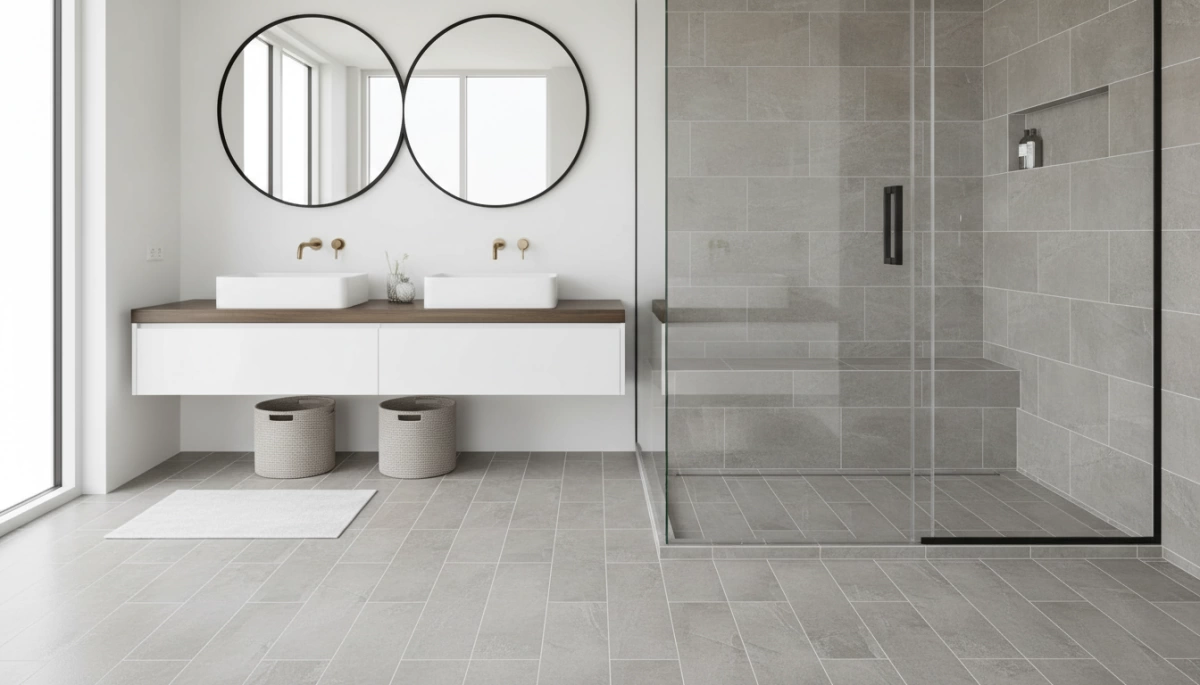
Are you struggling to find the perfect balance between style and durability for your remodel?
Choosing the right bathroom flooring porcelain tiles can make or break your entire project.
You might already know that porcelain is the gold standard for water resistance and longevity…
But with countless finishes, PEI ratings, and design trends out there, how do you choose the right one?
Well, you’re in for a treat because I’ve put together a complete guide to mastering porcelain bathroom floors.
In this post, you’re going to learn exactly how to select, install, and maintain the perfect tiles for your space, step by step.
From trending wood-look styles to creating completely waterproof shower floors, it’s all here.
So if you’re looking to upgrade your home with a beautiful, long-lasting bathroom, this guide is for you.
Let’s dive right in.
Understanding Porcelain Tile for Bathroom Floors
Bathroom flooring porcelain tiles represent the gold standard in modern interior design. Combining unmatched durability with high-end aesthetics, these tiles are engineered to withstand the unique challenges of wet environments. As a dedicated Porcelain Tile manufacture and supplier, we ensure our products meet the rigorous demands of global residential and commercial projects.
What is Porcelain Tile Made Of?
Porcelain is a specialized subtype of ceramic, refined through advanced manufacturing processes to achieve superior density. Its composition and production include:
- Refined Kaolin Clay: A finer, purer clay base than standard ceramic.
- Feldspar and Quartz: Mineral additives that facilitate the vitrification process.
- High-Pressure Pressing: The raw materials are compressed under immense force to eliminate air pockets.
- Extreme Kiln Firing: Fired at temperatures exceeding 1,200°C (2,200°F), resulting in a glass-like, non-porous structure.
Porcelain vs. Ceramic: Which is Best for Bathrooms?
For any bathroom renovation, choosing between porcelain and ceramic is a critical decision. While both have their place, porcelain is the superior choice for flooring due to several key factors:
| Feature | Porcelain Tile | Ceramic Tile |
|---|---|---|
| Water Absorption | < 0.5% (Impervious) | Higher (Porous) |
| Durability | Extremely High; Scratch Resistant | Moderate |
| Density | High Density; Heavy Duty | Lower Density; Lighter |
| Best Use | Floors, Showers, Outdoor | Walls, Low-traffic areas |
Porcelain’s low absorption rate makes it naturally resistant to stains and moisture damage, ensuring your bathroom floor remains pristine for decades. If you are looking for a material that combines safety, longevity, and style, porcelain is the undisputed industry leader.
Benefits of Porcelain Bathroom Flooring
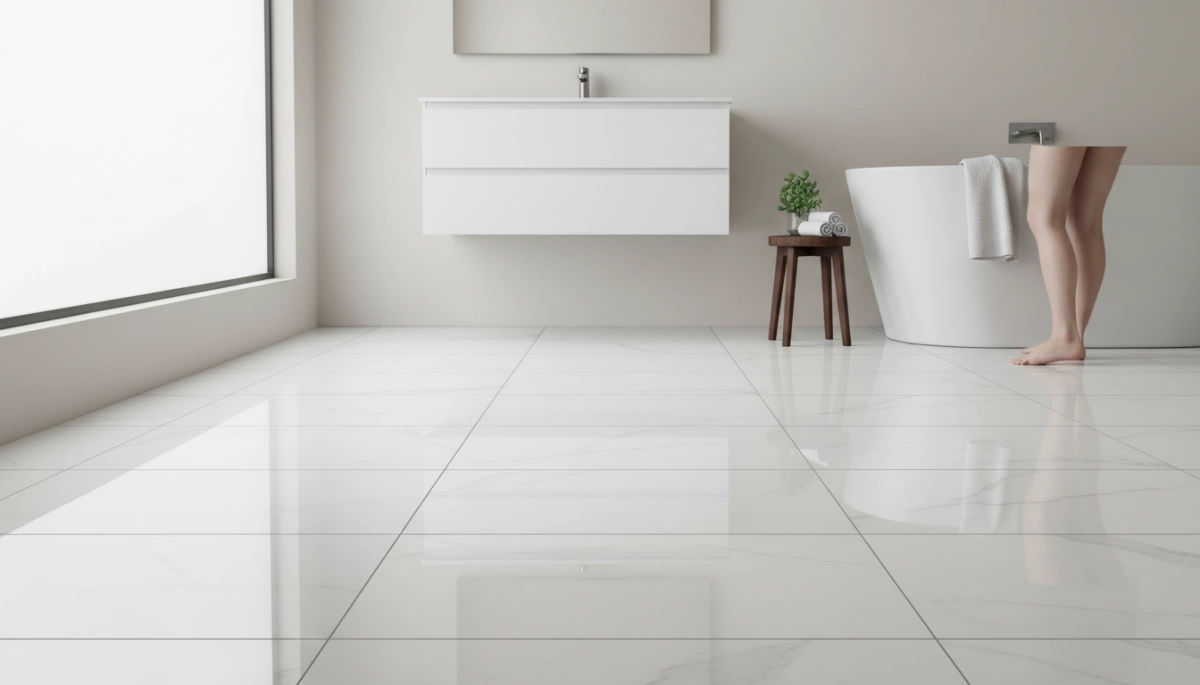
I’ve seen firsthand how choosing the right material changes the longevity of a bathroom renovation. When it comes to performance, bathroom flooring porcelain tiles stand in a league of their own compared to standard ceramic or laminate.
Superior Durability and Water Resistance
Porcelain is incredibly dense because it’s fired at much higher temperatures. This process makes the tiles nearly waterproof, with an absorption rate of less than 0.5%. Whether it’s splashes from the tub or high humidity, these tiles won’t swell or degrade.
- Impact Resistant: Harder than granite, making it difficult to crack or chip.
- Moisture Barrier: Naturally resists mold and mildew growth.
- Tough Surface: Ideal for busy households with kids or pets.
Easy to Clean and Maintain
I always tell my clients that porcelain is the lowest-maintenance option available. Because the surface is non-porous, spills and grime stay on top rather than soaking in. Whether you prefer a textured finish or polished porcelain, keeping it spotless is simple.
| Feature | Porcelain Tile | Standard Ceramic |
|---|---|---|
| Water Absorption | < 0.5% (Nearly Waterproof) | > 3.0% (Porous) |
| Density | Extremely High | Moderate |
| Stain Resistance | Excellent | Good |
| Cleaning | Damp mop & mild soap | Requires more care |
Long-Lasting Value for Your Home
Investing in bathroom flooring porcelain tiles is a smart move for your property value. Unlike other materials that might need replacing every decade, porcelain can easily last 50 years or more if installed correctly. It doesn’t fade under UV light and maintains its “like-new” finish even in high-traffic areas, ensuring your bathroom looks premium for the long haul.
Top Porcelain Tile Styles and Trends
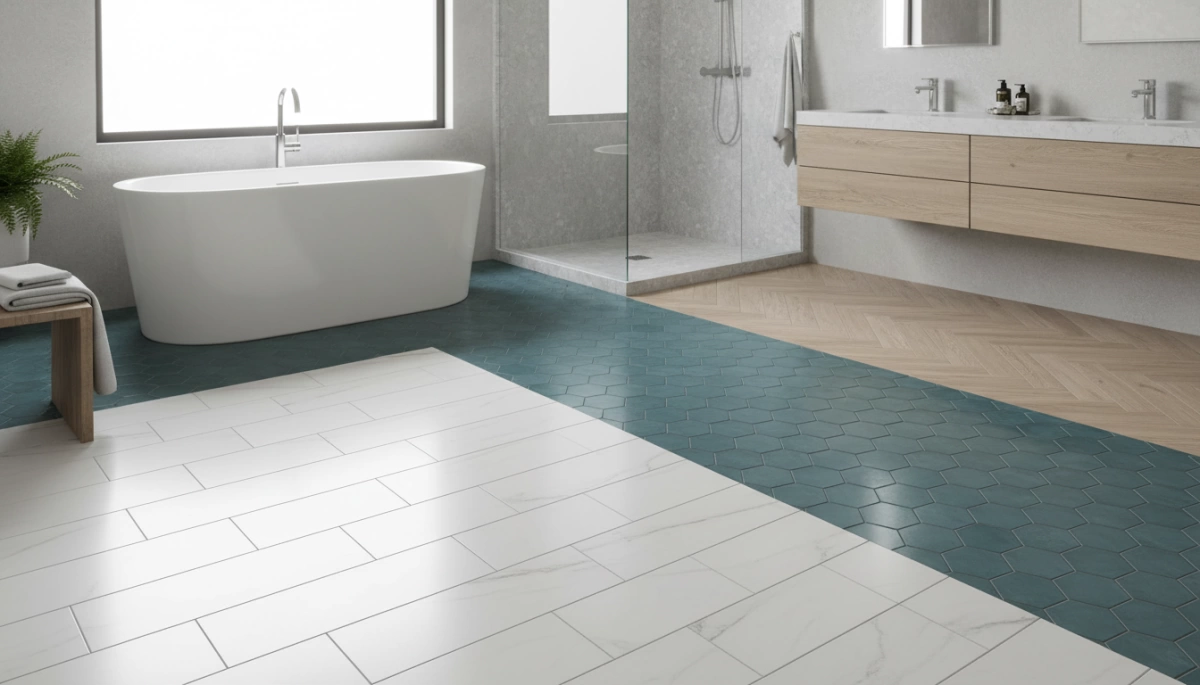
The design of bathroom flooring porcelain tiles has evolved rapidly, moving from basic functional pieces to the centerpiece of home aesthetics. We focus on bringing the latest global design movements directly to your renovation project, ensuring your space looks modern for years to come.
Natural Stone and Wood Look Porcelain
We have mastered the art of replicating nature through high-definition inkjet printing. You can now get the warmth of hardwood or the elegance of marble without the high maintenance.
- Wood-Look Planks: These offer the cozy texture of oak or walnut but are completely waterproof, making them perfect for wet areas where real wood would fail.
- Marble and Slate Replicas: Our polished porcelain options mimic Carrara marble or rugged slate, providing a high-end feel for shower walls and floors without the need for constant sealing.
- Textured Finishes: We provide “honed” or “tumbled” textures that feel realistic underfoot while providing extra grip.
Trending Colors: From Crisp White to Bold Hues
Color sets the mood for your entire bathroom renovation. While neutrals remain the foundation of our collection, we are seeing a surge in expressive palettes.
- Classic Whites and Grays: These remain the top choice for a clean, spa-like atmosphere. They reflect light and make any space feel larger.
- Moody Earth Tones: Deep charcoals, forest greens, and navy blues are becoming favorites for those wanting a sophisticated, “boutique hotel” vibe.
- Terracotta and Warm Beiges: We are seeing a return to earthy, sun-drenched tones that bring a Mediterranean feel to the modern home.
Popular Sizes and Shapes for Small and Large Baths
Choosing the right dimensions for your bathroom flooring porcelain tiles can completely change the perception of the room’s size.
| Tile Type | Best Use Case | Visual Impact |
|---|---|---|
| Large Format (24×48) | Master Bathrooms | Fewer grout lines for a seamless, high-end look. |
| Standard Rectangles (12×24) | General Flooring | The most versatile size that works in almost any layout. |
| Hexagons & Mosaics | Shower Floors | Provides excellent slip resistance and a custom designer feel. |
| Plank Tiles | Narrow Bathrooms | Running planks lengthwise can make a short room appear much longer. |
We recommend using larger tiles to minimize grout cleaning and create a more expansive feel, even in compact guest baths. For those looking to add a unique touch, our geometric shapes and picket tiles offer a fresh alternative to traditional squares.
Versatile Applications in the Bathroom
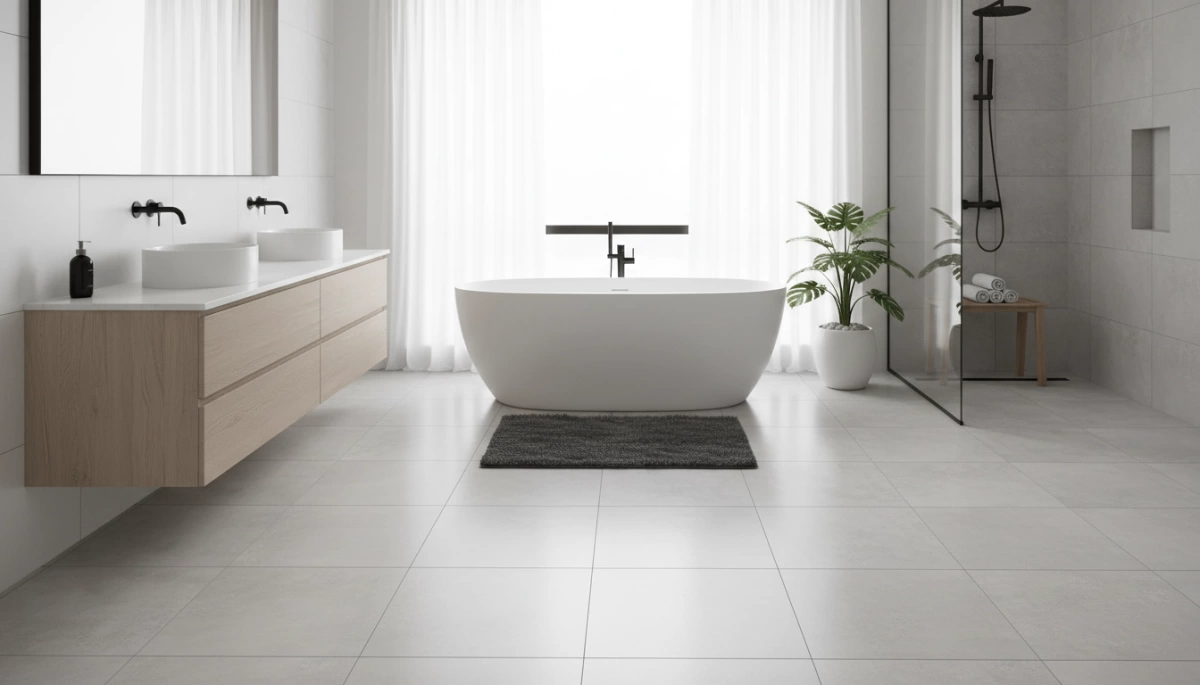
As a direct porcelain tile manufacturer and supplier, we see firsthand how versatile these materials are. While they are famous for floors, their utility extends to every corner of a bathroom renovation.
High-Traffic Bathroom Floors
The main floor is the foundation of your space. Our bathroom flooring porcelain tiles are engineered to withstand constant foot traffic, moisture, and temperature shifts.
- Durability: They resist chips and cracks better than almost any other material.
- Stain Resistance: Spilled makeup or cleaners won’t leave a permanent mark.
- Texture: We offer various finishes to ensure the floor remains safe even when wet.
Waterproof Shower Floors and Walls
Porcelain is the ultimate choice for wet zones. Because it is fired at extremely high temperatures, it becomes incredibly dense and waterproof.
- Shower Walls: Using porcelain on the walls prevents water seepage and protects your home’s structure.
- Hygiene: The non-porous surface doesn’t give bacteria or mold a place to hide.
- Polished Porcelain: For a sleek, modern look, many of our clients choose polished finishes for vertical surfaces to reflect light.
Creating Seamless Backsplashes and Accents
Modern design often involves taking the floor tile right up the wall. This creates a seamless, high-end look that mimics luxury hotels.
- Visual Continuity: Using the same tile for the floor and backsplash makes the room feel unified and larger.
- Low Maintenance: Unlike paint or wallpaper, a porcelain backsplash is scrubbable and completely waterproof.
- Custom Accents: You can use different sizes of the same tile to create visual interest without clashing colors.
How to Choose the Right Porcelain Tile
Picking the perfect bathroom flooring porcelain tiles involves more than just finding a pretty pattern. As a porcelain tile manufacture and supplier, I’ve seen how the right technical choice can make or break a bathroom renovation. You need a balance of safety, durability, and style to ensure your floor handles moisture without a hitch.
Understanding Glazed vs. Unglazed Finishes
The finish determines both the look and the maintenance level of your tile.
- Glazed Porcelain: These tiles have a glass-like coating. This allows for endless colors and patterns, including polished porcelain that shines. They are non-porous and perfect for shower walls.
- Unglazed Porcelain: The color runs all the way through the tile. These are incredibly tough and naturally slip-resistant, making them a go-to for high-traffic areas or even outdoor flooring transitions.
Slip Resistance and PEI Ratings
Safety is the priority in a wet environment. Always check the PEI rating (durability) and the DCOF (slip resistance) before buying. For a bathroom floor, you want a tile that can handle bare feet on a wet surface.
| Feature | Recommended Rating | Why it Matters |
|---|---|---|
| PEI Rating | Class 3 or 4 | Ensures the tile won’t crack or wear under daily foot traffic. |
| Slip Resistance | DCOF > 0.42 | Provides enough “grip” to prevent falls on wet bathroom floors. |
| Water Absorption | < 0.5% | Defines true porcelain; it won’t soak up water or grow mold. |
Ordering Samples to Match Your Space
Never commit to a full pallet based on a screen image. Lighting in a showroom or on a website is never the same as the lighting in your home.
- Check the Texture: Feel the tile with your hand (or foot) to ensure it’s not too slippery for a splash zone.
- Test the Color: See how the tile looks next to your vanity and under your bathroom’s specific LED or natural light.
- Verify the Batch: Ordering samples ensures the “dye lot” matches what you expect for a seamless look.
Installation and Maintenance Tips
As a direct Porcelain Tile manufacture and supplier, we know that the success of your bathroom renovation depends on more than just picking a beautiful design. Proper handling and long-term care ensure your bathroom flooring porcelain tiles stay in peak condition for decades.
Preparing Your Subfloor for Installation
A high-quality tile is only as good as the surface beneath it. Before we ship out orders, we always remind our clients that the subfloor must be flawlessly prepared to prevent future cracking.
- Flatness is Key: Use a level to check for dips. Any variation over 1/8 inch should be corrected with a self-leveling underlayment.
- Rigidity: Porcelain is heavy and stiff. Your subfloor must be strong enough to prevent flexing, which can cause tiles to pop or grout to crack.
- Cleanliness: Remove all dust, grease, and old adhesive. A clean bond is essential for the thin-set to hold.
- Moisture Barriers: For shower walls and wet zones, always install a waterproof membrane over your backer board before tiling.
How to Clean Porcelain Floor Tile and Grout
One of the biggest perks of porcelain is its low-maintenance nature. You don’t need harsh chemicals to keep your floors looking brand new.
- Routine Sweeping: Remove sand and grit daily, as these can act like sandpaper on the finish over time.
- Mild Cleaning: Use a pH-neutral cleaner and warm water. Avoid bleach or ammonia, which can damage grout over time.
- Grout Care: Use a soft-bristled brush for the grout lines. If you notice discoloration, a simple paste of baking soda and water usually does the trick.
Do You Need to Seal Porcelain Bathroom Tiles?
This is the most common question we get as a supplier. Because porcelain is extremely dense, the tile itself rarely needs sealing, but there are exceptions:
- Unglazed and Matte: These generally never require sealing due to their low porosity.
- Polished Porcelain: The polishing process can open up microscopic pores. We recommend applying a penetrating sealer to polished porcelain to prevent deep-set stains.
- Seal the Grout: Even if your tiles are waterproof, your grout is not. Always apply a high-quality grout sealer to prevent moisture from seeping into the subfloor and to keep mold from growing in the joints.
