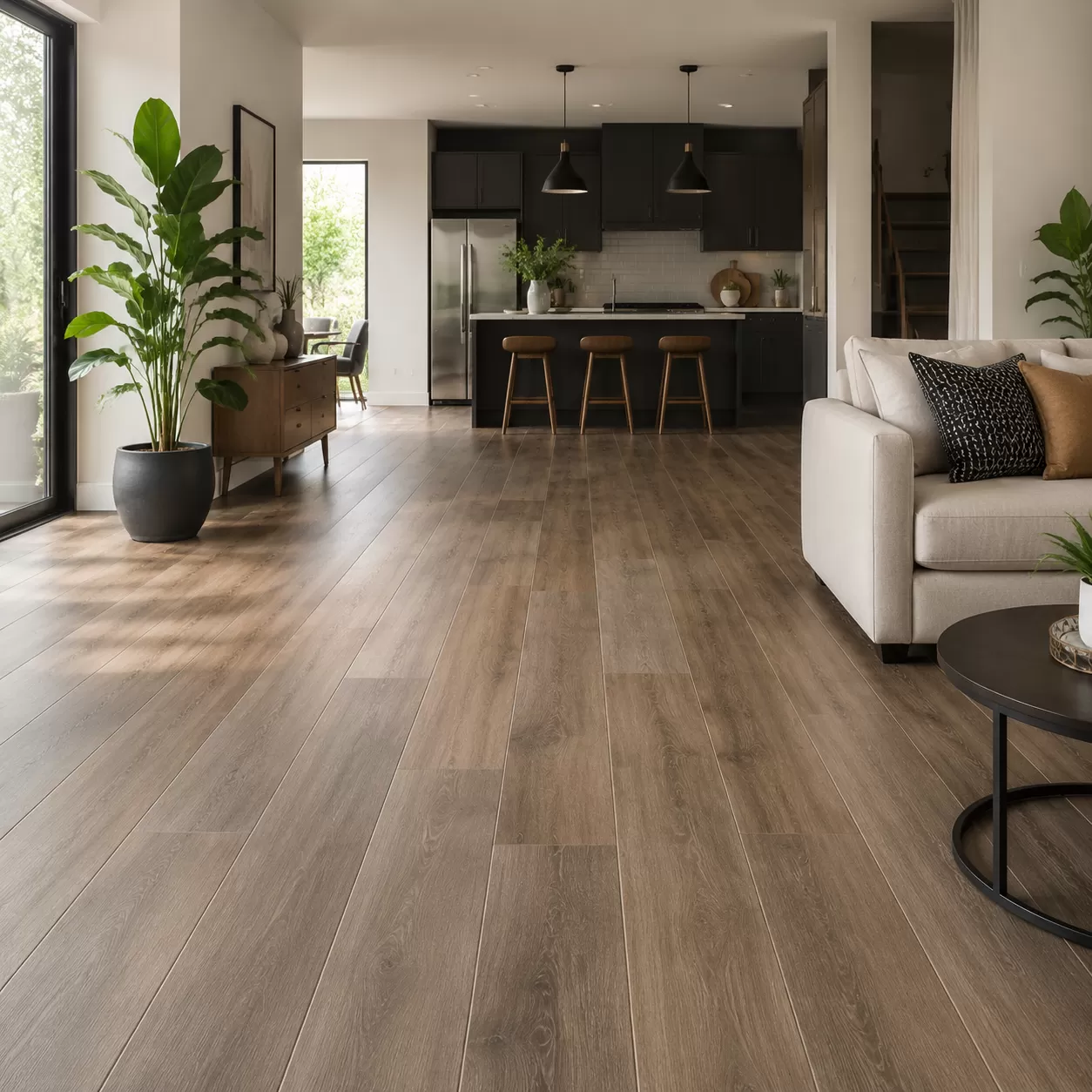
What Is Wood-Look Floor Tile?
Core Definition and Materials
Wood-look floor tile is a high-performance flooring solution that blends the timeless, organic beauty of natural hardwood with the rugged resilience of kiln-fired clay. Manufactured using advanced high-definition inkjet printing technology, these tiles replicate the intricate grain patterns, knots, and textures of real timber. The primary materials consist of refined clay, feldspar, and sand, which are compressed under extreme pressure and fired at temperatures exceeding 2,000°F. This engineering process creates an ultra-dense, non-porous surface that delivers authentic wood aesthetics without the vulnerability to scratching, warping, or fading.
Porcelain vs. Ceramic Wood Tiles
When selecting wood-look tile, the choice generally comes down to porcelain or ceramic composition. While they look identical on the surface, their structural performance varies based on density and water absorption rates:
- Porcelain Wood Tiles: Fired at much higher temperatures and made from highly refined clay, porcelain is denser and harder. It features a water absorption rate of less than 0.5%, making it the premium choice for heavy-traffic areas, commercial spaces, and wet environments like walk-in showers or outdoor patios.
- Ceramic Wood Tiles: Slightly less dense and easier to cut during installation, ceramic is best suited for indoor residential spaces with moderate foot traffic, such as bedrooms or accent walls. It offers a highly budget-friendly alternative while still providing excellent durability compared to natural materials.
| Feature | Porcelain Wood Tile | Ceramic Wood Tile |
|---|---|---|
| Clay Type | Refined white clay | Common red or white clay |
| Water Absorption | Less than 0.5% (Impervious) | Greater than 0.5% (Slightly absorbent) |
| Best Used For | Indoor/Outdoor, High Traffic, Wet Areas | Indoor Residential, Light Traffic, Walls |
| Durability | High scratch and chip resistance | Moderate scratch resistance |
Why Choose Wood Floor Tiles Over Real Hardwood?
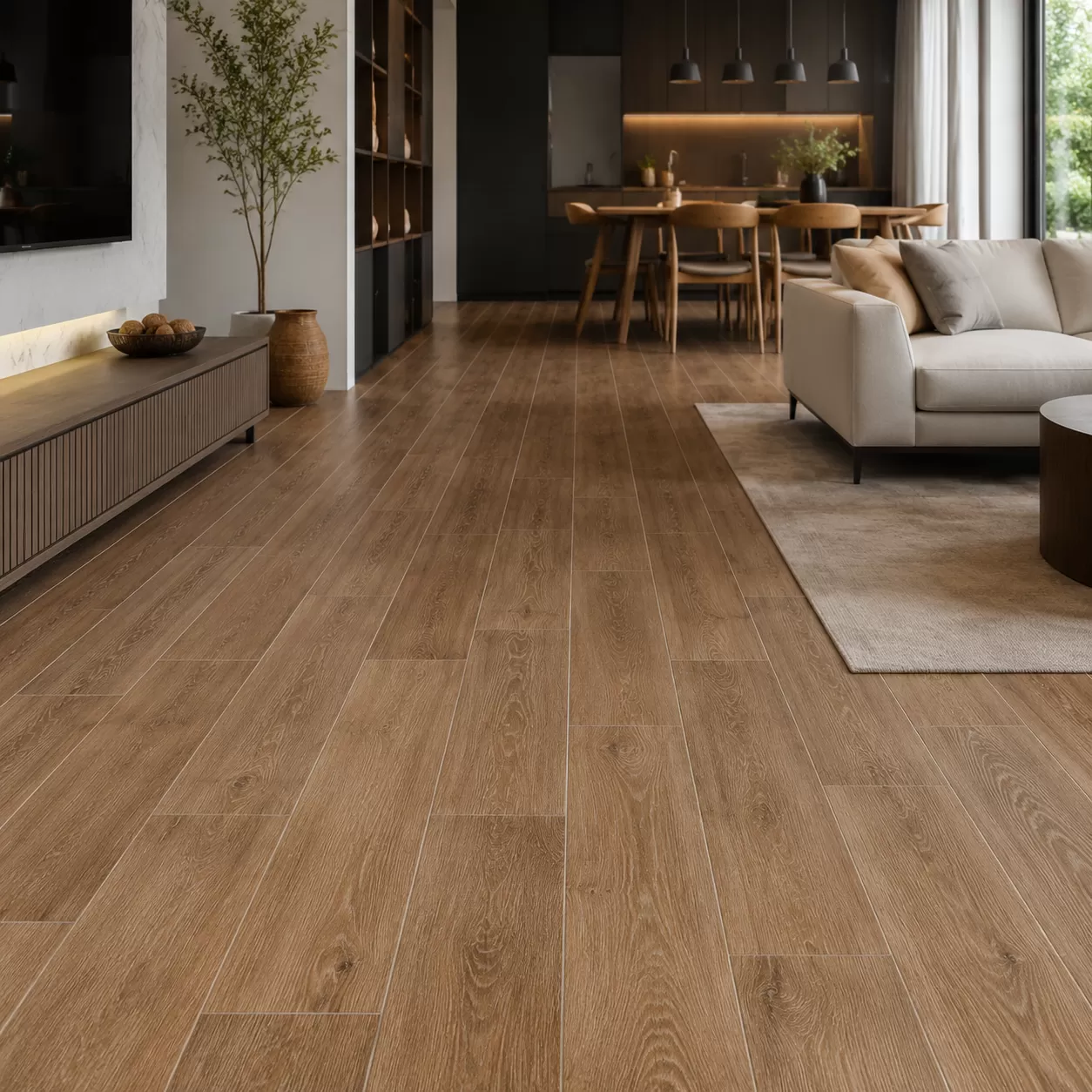
Durability and Longevity
Real wood scratches, dents, and wears down under heavy foot traffic, pets, and furniture. Wood-look floor tiles are built to last a lifetime. They resist scratches, scuffs, and chips, making them ideal for busy households. They won’t fade under direct sunlight, ensuring your floors look brand new for decades.
Low Maintenance and Easy Cleaning
Maintaining real hardwood requires specialized cleaners, periodic sealing, and careful refinishing. Wood tile simplifies your life. You can sweep, vacuum, and mop with standard household cleaners without worrying about damaging the surface.
| Maintenance Task | Real Hardwood | Wood-Look Tile |
|---|---|---|
| Daily Cleaning | Special wood cleaners only | Any standard mop or vacuum |
| Refinishing/Sanding | Required every 7-10 years | Never required |
| Stain Resistance | Low (absorbs spills quickly) | High (non-porous surface) |
Water Resistance and Moisture Protection
The biggest flaw of natural wood is its vulnerability to moisture. High humidity, spills, and standing water cause real planks to warp, buckle, and grow mold. Wood floor tiles offer total water resistant protection. This makes them the perfect alternative for areas where traditional wood fails, such as kitchen flooring and bathroom tiles.
Cost-Effectiveness and Installation Costs
While the upfront material cost of premium tile can be similar to high-end hardwood, the long-term savings are massive.
- Lower Lifecycle Costs: No expensive resealing, sanding, or specialized repairs over time.
- Efficient Installation: Modern leveling systems allow for fast, precise installation.
- Higher ROI: Increases property value due to its indestructible nature and universal appeal in high-moisture zones.
Popular Applications of Wood Floor Tiles in Home Interiors
Wood-look tile is reshaping how we design modern homes. By blending the warm, organic aesthetic of natural timber with the indestructible nature of tile, we can now bring the look of hardwood into spaces where real wood would never survive. Here are the most popular applications of wood floor tiles in everyday home interiors.
Kitchen Floors and Backsplashes
The kitchen is the heart of the home, but it is also a magnet for spills, dropped cast-iron pans, and heavy foot traffic. Using wood floor tiles for kitchen flooring gives you that seamless, high-end look without the constant worry of water damage or staining.
- Flooring: Porcelain wood planks handle heavy traffic and spilled liquids effortlessly.
- Backsplashes: Running slimmer wood-look tiles up the wall creates an eye-catching, rustic focal point behind the stove or sink that wipes clean in seconds.
Bathroom Floors and Walk-In Showers
Real hardwood and bathrooms are a recipe for disaster due to high humidity. Wood-look tile completely solves this issue, allowing homeowners to create a spa-like oasis.
- Total Moisture Protection: These water resistant and waterproof tiles won’t warp, crack, or grow mold when exposed to steam and standing water.
- Walk-In Showers: Extending bathroom tiles from the main floor straight into a walk-in shower creates a stunning, continuous visual flow.
- Safety Tip: We always recommend textured finishes for bathroom floors to provide extra slip resistance when wet.
Living Rooms and Dining Areas
Living rooms and dining areas demand a welcoming, cozy atmosphere. Wood-effect tiles deliver that classic warmth while offering unmatched resistance to daily wear and tear.
| Benefit | Why It Matters for Living & Dining Areas |
|---|---|
| Scratch Resistance | Perfect for homes with pets, kids, and heavy moving furniture. |
| Easy Cleanups | Dropped food, wine spills, and tracked-in mud wipe away without staining. |
| Radiant Heating | Tile pairs beautifully with underfloor heating systems to keep your living space cozy all winter. |
Bedrooms and Cozy Living Spaces
While bedrooms traditionally rely on carpet or traditional hardwood, wood-look tiles are rapidly gaining traction in modern bedroom design.
- Allergy-Friendly: Unlike carpets, these tiles don’t trap dust, dander, or allergens, ensuring cleaner indoor air quality.
- Feature Walls: Homeowners are increasingly installing wood tiles on bedroom walls behind the bed to serve as a durable, texture-rich alternative to a traditional headboard.
Outdoor and Commercial Applications of Wood Tiles
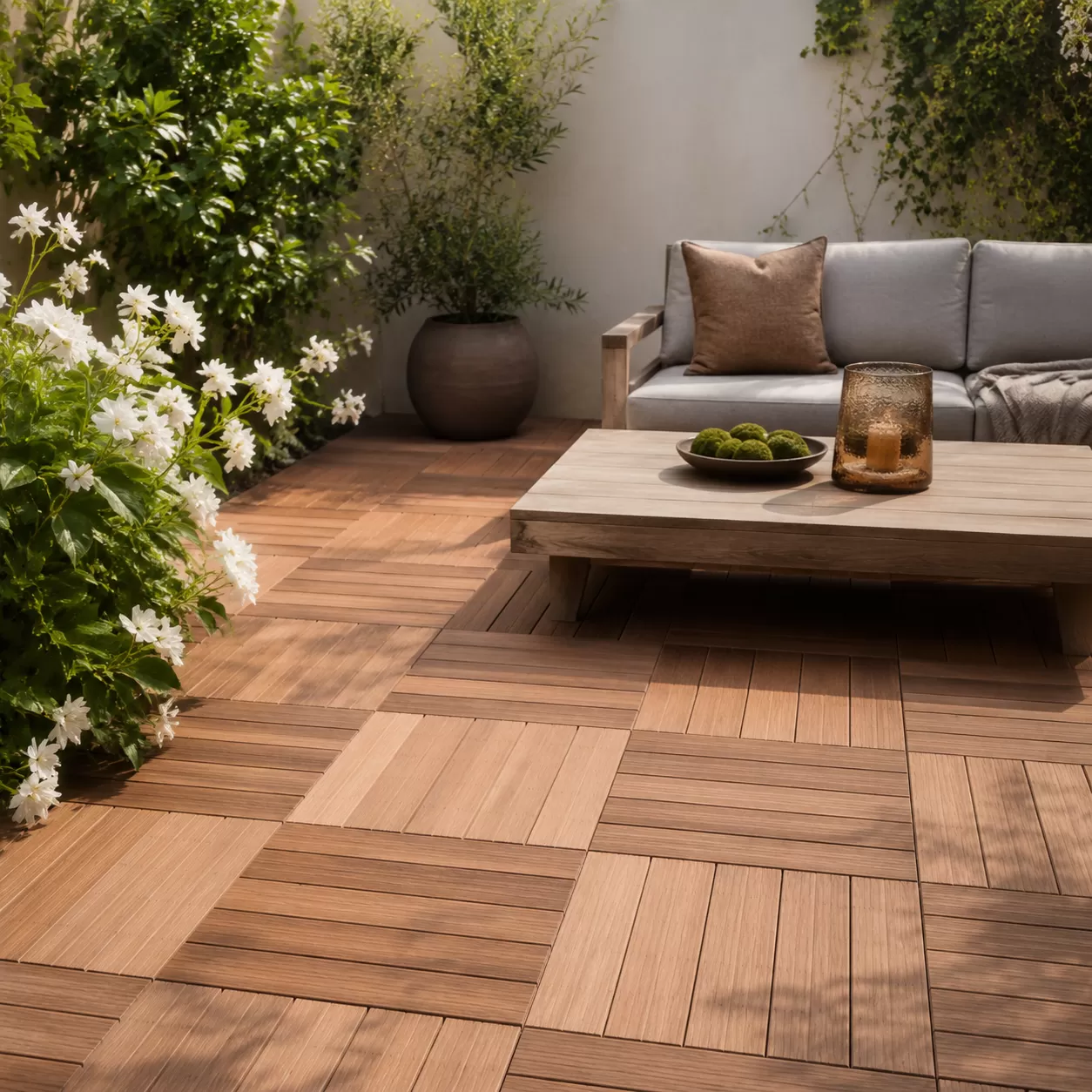
Patios, Decks, and Outdoor Living Spaces
Real wood decks rot, warp, and fade under the sun and rain. That is why we love using wood-look tile for outdoor living spaces. It gives you that beautiful, warm patio or deck vibe without the constant staining and sealing.
- Weatherproof: It handles extreme heat, frost, and heavy rain without cracking or peeling.
- Slip Resistance: Perfect around pool decks and open patios when you choose a textured, high-friction finish.
- Fade-Proof: Unlike natural lumber, UV rays won’t bleach these tiles, keeping your outdoor design vibrant for decades.
High-Traffic Commercial Settings
In commercial design, you need flooring that can take a beating and still look upscale. Wood floor tiles are a top choice for busy corporate offices, retail boutiques, and bustling restaurants.
| Commercial Need | Wood-Look Tile Solution |
|---|---|
| Heavy Foot Traffic | High PEI-rated porcelain resists scratches from heels, boots, and luggage wheels. |
| Spills & Stains | Completely non-porous; coffee, wine, and mud wipe away instantly. |
| Fire Safety | Naturally fire-resistant, meeting strict commercial building codes. |
| Brand Image | Delivers the welcoming warmth of real hardwood with zero downtime for floor refinishing. |
Trending Colors, Textures, and Styles of Wood Floor Tiles
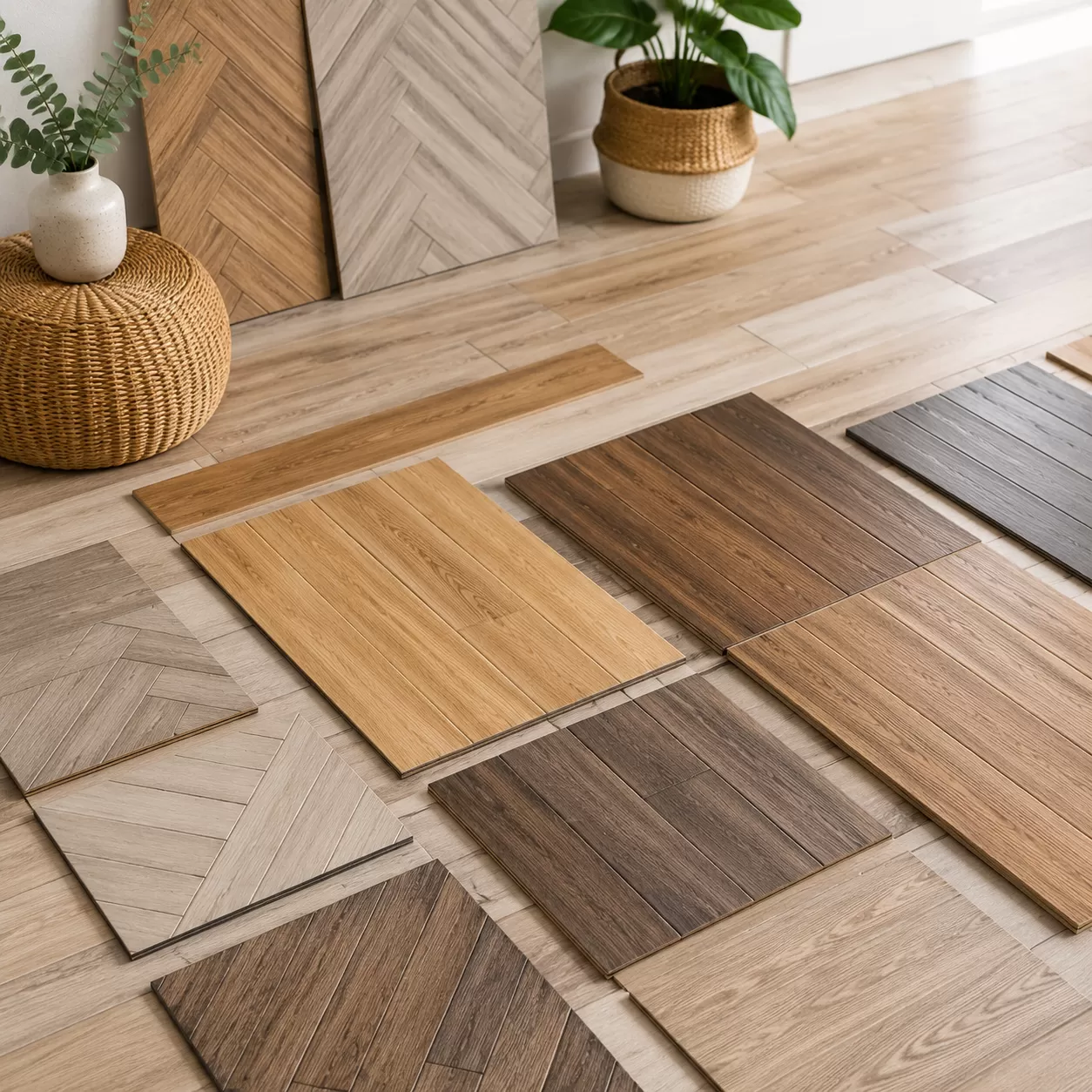
When selecting the best options for your space, the latest design trends offer an incredible mix of realism and style. Today’s wood floor tiles perfectly mimic the natural world while providing the unmatched durability of engineered surfaces.
Pale and Light Wood Tones
Light wood-look tile is dominating modern interior design. From airy Scandinavian blonds to soft coastal grays, these pale shades completely transform cramped or dark areas.
- Brighten Up Rooms: Ideal for smaller spaces or rooms with limited natural light.
- Modern Aesthetic: Pairs perfectly with minimalist, contemporary, and farmhouse decor.
- Visual Space: Makes floors appear expansive and seamless, especially when using matching grout.
Dark and Classic Wood-Effect Stoneware
For a timeless, high-end look, deep and rich tones provide an elegant foundation. Dark wood-effect stoneware brings warmth and a sense of luxury to both residential and commercial spaces.
- Rich Tones: Deep espresso, charcoal, and classic walnut finishes add instant drama.
- High Contrast: Creates a stunning backdrop for light-colored furniture and bright walls.
- Cozy Vibe: Perfect for large living rooms, executive offices, and formal dining areas.
Natural Grain and Mimicked Textures
The biggest leap in wood floor tiles technology is the texture. You no longer just get the look of timber; you actually feel it. Advanced manufacturing creates authentic surfaces that are indistinguishable from real wood.
- Three-Dimensional Depth: Features realistic knots, grain patterns, and wire-brushed finishes.
- Tactile Feel: Provides a slip-resistant texture, making it a safe choice for bathroom tiles and kitchen flooring.
- Matte Finishes: Mimics oil-rubbed hardwood without the constant maintenance or fear of scratches.
Popular Layout Patterns for Wood Floor Tiles
How you lay your tile changes the entire vibe of a room. Because these tiles mimic natural timber planks, you can use traditional hardwood layout techniques to create a premium finish.
Straight Plank Layout
The straight plank layout is the go-to standard for a clean, modern aesthetic. Planks run parallel to each other, running either the length or width of the room.
- Best for: Making narrow spaces like hallways or galley kitchens look longer.
- Pro Tip: Always use a staggered offset (like a 1/3 joint breakdown) rather than a 50% brick pattern to prevent lippage and ensure a smooth surface.
Herringbone and Chevron Patterns
If you want to add visual interest and a high-end designer feel, these zig-zag patterns are incredibly popular options for kitchen flooring and entryway accents.
- Herringbone: Planks are laid at a 90-degree angle to one another, creating an interlocking V-shape. It adds texture and movement to large open floors.
- Chevron: The ends of the tiles are cut at an angle to meet in a perfect point. It offers a striking, geometric look that works beautifully on accent bedroom walls or master bathroom tiles.
Basketweave and Parquet Designs
For a classic, historic look, basketweave and parquet designs bring timeless artistry into modern homes.
- Parquet: Groups of tile planks are arranged in squares or geometric blocks to create a patchwork effect.
- Basketweave: Strips of wood-look tile appear to weave over and under each other, offering a distinct retro charm.
- Key Advantage: These intricate layouts make a bold statement in dining rooms or main living areas, giving the impression of expensive custom carpentry with all the benefits of a durable, water resistant surface.
Tips for Choosing and Installing Wood-Look Tile
Getting the best results from wood-look tile comes down to the details. Here is what we recommend focusing on to make sure your project looks high-end and lasts for years.
Selecting the Right Tile Shape and Size
The right dimensions will completely change how a room feels. For the most authentic look, we recommend sticking to modern standard plank sizes.
- Standard Planks: 6″ × 24″ or 8″ × 36″ closely match traditional hardwood flooring.
- Large Format Planks: 8″ × 48″ sizes create a seamless look with fewer grout lines, making smaller rooms feel much larger.
- Mix and Match: Combining different widths (like 4-inch, 6-inch, and 8-inch planks) mimics historic, random-width solid wood floors.
Choosing the Best Grout Color and Line Width
Grout can make or break popular applications of wood floor tiles. If the grout is too wide or the wrong color, the wood illusion is ruined.
| Installation Element | Recommended Specification | Why It Matters |
|---|---|---|
| Grout Joint Width | 1/16 inch to 1/8 inch max | Keeps lines thin so the floor looks like seamless wood planks. |
| Grout Color | One shade darker than the tile | Blends into the shadows of the “wood grain” for a natural look. |
| Grout Type | High-performance, stain-resistant | Essential for kitchen flooring and wet bathroom tiles to prevent discoloration. |
Design Tips: Mixing Looks with Wall Colors
Balancing your floor tile with your wall colors keeps your space looking grounded and intentional.
- Light Wood Floors (Ash, White Oak): Pair with crisp white, soft gray, or deep navy walls. This creates a clean, Scandinavian or modern coastal vibe.
- Medium Wood Floors (Natural Oak, Hickory): Pair with warm neutrals, olive greens, or terracotta. This enhances the cozy, organic feel of the room.
- Dark Wood Floors (Walnut, Espresso): Pair with light, breathable wall colors like cream or beige. The contrast prevents the room from feeling cramped or dark.
- Texture Matching: If your tile has a heavy, rustic grain, keep your bedroom walls or living room walls smooth to avoid visual clutter.
