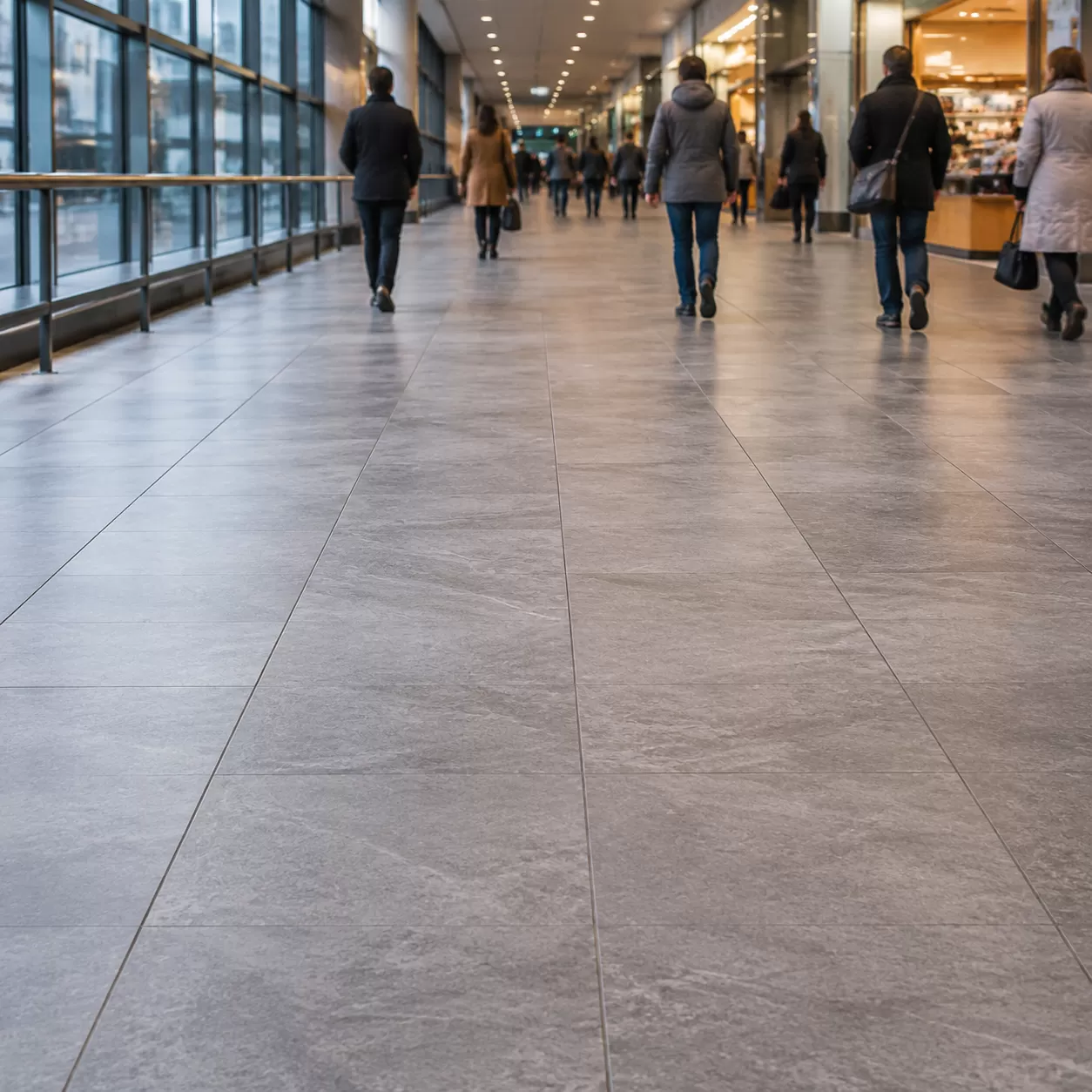
Why Tile is the Ultimate Choice for High-Traffic Areas
When outfitting a property for heavy foot traffic, flooring selection directly impacts your long-term return on investment. Busy environments demand a surface that can endure constant pressure without degrading visually or structurally. Tile stands out as the premier flooring option for demanding environments, offering structural integrity that outlasts alternative materials by decades.
Unmatched Durability and Lifespan
High-traffic zones require a flooring material with exceptional density and compressive strength. Premium tiles, particularly vitrified tiles and dense ceramics, undergo extreme heat firing that fuses the raw minerals into a practically impenetrable solid block.
- Decades of Performance: While synthetic laminate or vinyl flooring may require replacement every 5 to 10 years under heavy use, properly installed tile routinely lasts 20 to 50 years.
- Structural Integrity: Tile resists warping, buckling, and indentation from heavy furniture, high heels, or rolling loads.
- Global Market Viability: This extreme longevity minimizes replacement cycles, making it the most financially viable option for both commercial asset managers and residential property owners worldwide.
Resistance to Scratches, Stains, and Wear
Daily exposure to grit, moisture, and dropped objects will quickly ruin lesser flooring surfaces. Hardened tile provides an engineered defense mechanism against these exact vulnerabilities.
- Scratch Resistance: The surface hardness of quality tile prevents microscopic abrasions from abrasive dirt and debris tracked in from outdoors.
- Stain Defiance: Non-porous surfaces prevent liquids, oils, and harsh chemicals from penetrating past the surface layer, eliminating permanent discoloration.
- Fading Immunity: Unlike wood or carpet, tile is completely UV-resistant. It will not fade, discolor, or lose its structural finish when exposed to direct, continuous sunlight through large entryways or storefront windows.
Easy Maintenance and Upkeep
Operational efficiency relies heavily on how quickly and cost-effectively a floor can be cleaned. Tile eliminates the need for specialized, expensive maintenance routines like stripping, waxing, or deep chemical steaming.
- Routine Upkeep: Daily maintenance requires nothing more than a simple sweep and a damp mop to restore the surface to a pristine state.
- Hygienic Surface: The dense composition of the tile face prevents dust, pollen, and bacteria from anchoring into the floor, creating a safer, cleaner indoor air environment.
- Moisture Barrier: Because it does not absorb water, damp mopping can be performed frequently without the risk of moisture pooling, rotting, or lifting the subfloor beneath.
Key Factors to Consider When Choosing High-Traffic Tile
Understanding PEI Ratings for Durability
The Porcelain Enamel Institute (PEI) rating is the most reliable measure of a tile’s wear resistance. It tells us exactly how much foot traffic the surface glaze can handle before showing signs of damage.
For busy areas, we always recommend looking at the upper end of the scale:
| PEI Rating | Recommended Usage | Traffic Level |
|---|---|---|
| PEI 3 | Residential kitchens, hallways, and balconies | Moderate |
| PEI 4 | All residential spaces, restaurants, and light commercial | Heavy |
| PEI 5 | Malls, airport terminals, and public buildings | Extra Heavy |
Our Recommendation: Never go below a PEI 4 rating for any commercial space or high-use residential entryway to ensure long-term scratch resistance.
The Importance of Slip Resistance and Finish
A durable tile must also be safe. We measure slip resistance using the Dynamic Coefficient of Friction (DCOF). For high-traffic floors, a DCOF rating of 0.42 or greater is the standard for safety when wet.
The finish you choose directly impacts both safety and maintenance:
- Matt Finish: Provides excellent traction and hides scratches well. This is our top choice for busy public walkways.
- Textured Finish: Offers the highest slip resistance. Ideal for entryways exposed to rain or snow, though it requires a bit more effort to deep clean.
- Lappato (Semi-Polished): Strikes a balance between a sleek look and decent grip.
- Polished Finish: Highly reflective and beautiful, but becomes slippery when wet. Best avoided in heavy-traffic zones.
Selecting the Right Tile Size and Grout Options
Tile size and grout placement fundamentally change how a floor performs over time. Every grout line is a potential weak point for dirt accumulation and moisture penetration.
- Large-Format Flooring Options: Using larger tiles means fewer grout lines. This creates a visually seamless surface that is much easier to clean and maintain in busy corridors.
- Rectified Tiles: These tiles have machine-cut, perfectly straight edges. They allow us to lay them with incredibly thin grout lines (as small as 1/16 inch), minimizing the area where dirt can collect.
- Epoxy Grout: Traditional cement grout is porous and stains easily. For heavy-traffic zones, we always use epoxy grout. It is completely waterproof, highly stain-resistant, and won’t crack under heavy loads.
The Best Types of Tile for Heavy Traffic Areas
Porcelain Tile: The Top Performer for High-Wear Zones
Porcelain tile is the absolute king of high-traffic flooring. We manufacture these vitrified tiles using highly refined clay fired at extreme temperatures, making them incredibly dense and nearly impervious to moisture.
- Maximum Scratch Resistance: The dense body easily resists chips, scratches, and heavy impacts.
- Through-Body Color: Many of our porcelain options feature full-body color, meaning if a rare chip does occur, it is practically invisible because the color goes all the way through the tile.
- Low Absorption: With an absorption rate below 0.5%, spills and tracked-in mud cannot penetrate the surface.
Ceramic Tile: A Cost-Effective and Versatile Alternative
If you want a budget-friendly option that still delivers solid durability, ceramic tile is a fantastic choice. While slightly less dense than porcelain, a high-quality glazed ceramic tile works beautifully in active residential spaces.
- Design Flexibility: Available in countless colors, patterns, and textures to match any design style.
- Budget-Friendly: Offers an excellent balance of durability and affordability for large-scale projects.
- Optimal for Homes: Perfectly suited for busy family hubs like kitchens and hallways.
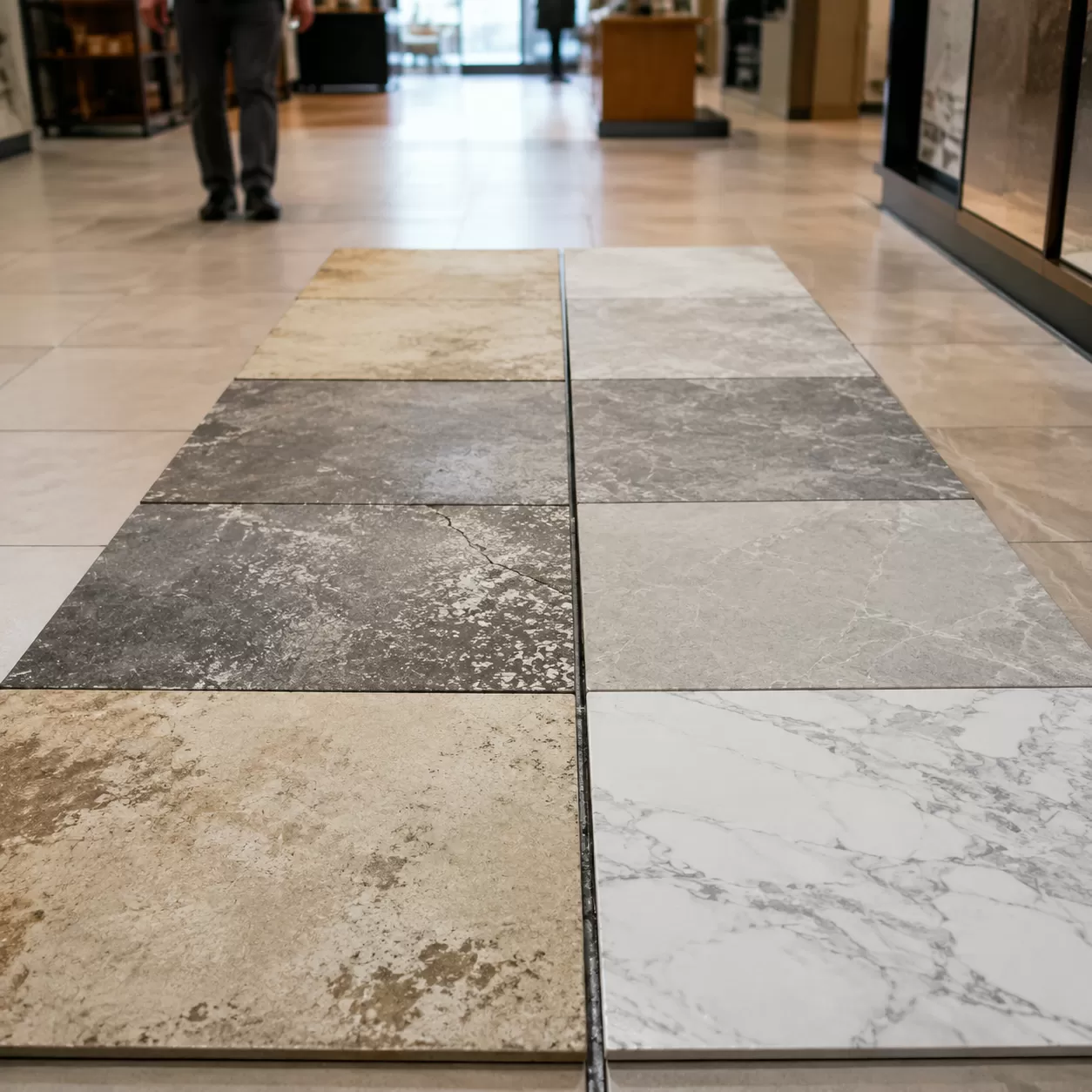
Quarry Tile: The Industrial-Grade Solution for Extreme Foot Traffic
For commercial kitchens, busy entryways, and industrial spaces, quarry tile is our go-to recommendation. Made from unglazed red clay, these tiles are built purely for performance and utility.
- Natural Slip Resistance: The rough, unglazed texture provides excellent traction even when wet.
- Extreme Durability: Easily handles massive foot traffic, heavy equipment, and harsh cleaning chemicals.
- Thick Profile: Typically thicker than standard tiles, providing extra strength against cracking under heavy loads.
Natural Stone Tile: Elegant and Robust Flooring Options
For a high-end look that stands the test of time, natural stone tile offers unmatched beauty and rugged durability. Materials like granite, slate, and dense limestone provide a high-end feel while handling heavy daily use.
- Unique Aesthetic: No two tiles look exactly alike, giving your space a premium, custom appearance.
- Long-Term Investment: When properly sealed, natural stone floors can last for generations.
- Textured Options: Choosing a slate or tumbled finish adds a natural textured finish that helps mask minor scuffs and enhances slip resistance.
Quick Comparison: Finding Your Best Flooring Options
| Tile Type | Durability Level | Best Fit For | Standout Feature |
|---|---|---|---|
| Porcelain | Exceptional | Commercial lobbies, busy entryways, kitchens | Maximum scratch resistance & water resistance |
| Ceramic | Moderate to High | Residential hallways, kitchens, bathrooms | Cost-effective and highly versatile designs |
| Quarry | Industrial | Commercial kitchens, mudrooms, outdoor walkways | Natural slip resistance & heavy load capacity |
| Natural Stone | High (When sealed) | Upscale retail, luxury homes, main living areas | Elegant, unique look with long-term value |
Best Application Scenarios for Heavy-Traffic Tiles
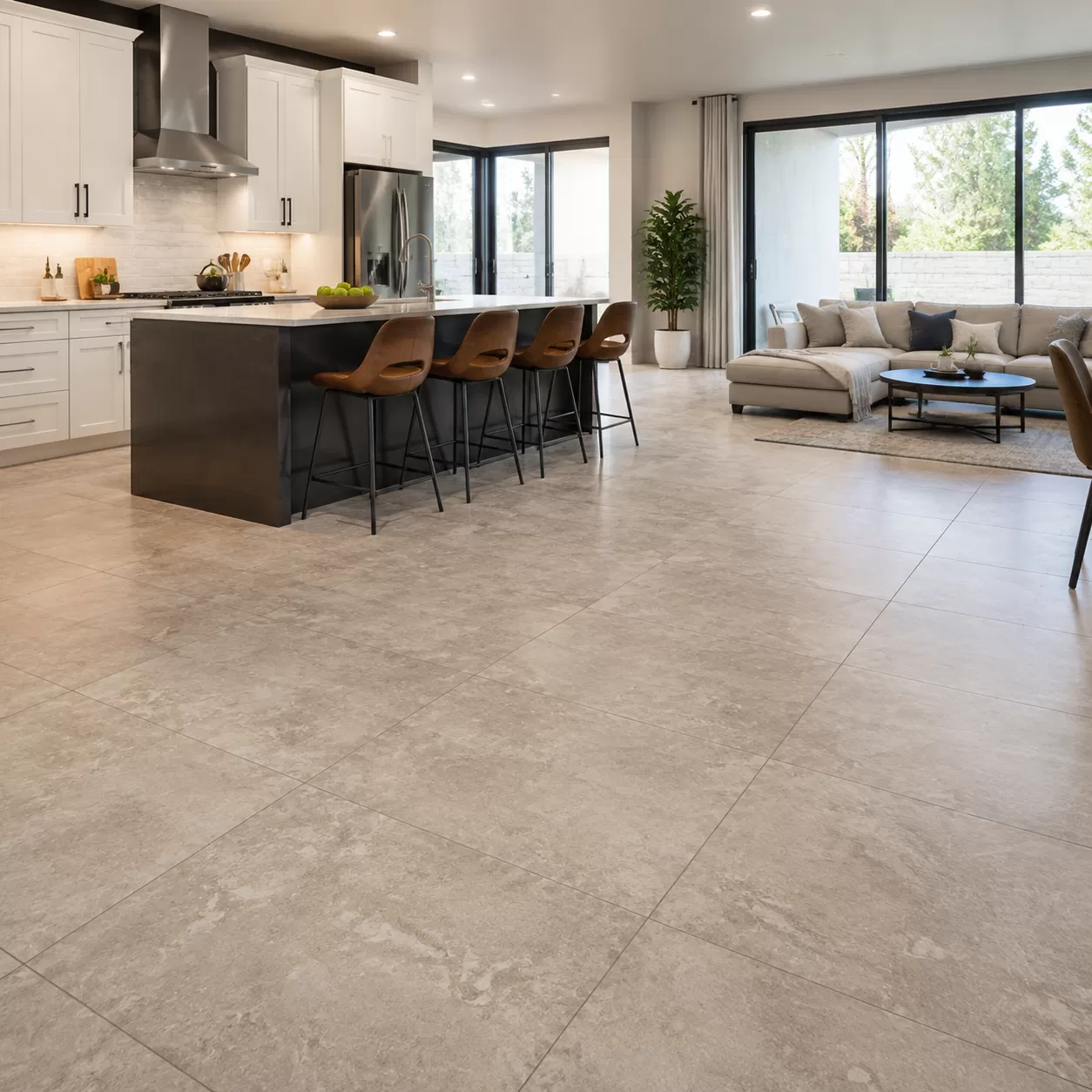
High-Wear Residential Spaces: Kitchens, Entryways, and Mudrooms
Residential high-traffic zones need flooring options that handle dropped pots, muddy boots, and pet claws without breaking a sweat.
- Kitchens: The absolute busiest hub in most homes. It requires tiles with excellent stain and scratch resistance to handle spilled ingredients, heavy foot traffic, and frequent cleanups.
- Entryways and Mudrooms: These areas take the brunt of outdoor dirt, grit, and moisture. Installing a textured finish tile here prevents slips and keeps tracked-in debris from scratching the surface.
- The Best Pick: For these home spaces, porcelain or advanced vitrified tiles offer the perfect blend of household beauty and rugged durability.
Commercial Environments: Retail Stores, Lobbies, and Office Corridors
Commercial properties face a non-stop barrage of heavy foot traffic, rolling carts, and harsh cleaning chemicals. The flooring choice directly impacts maintenance costs and safety.
- Retail Stores and Lobbies: First impressions matter, but so does floor longevity. These areas need commercial-grade porcelain or natural stone that maintains its appearance under thousands of daily steps.
- Office Corridors: Long walkways see continuous, repetitive track wear. Selecting tiles with high PEI ratings ensures the walk paths won’t dull or fade over years of use.
- The Industrial Standard: For back-of-house commercial zones or heavy-duty retail, unglazed quarry tile remains the go-to choice for unmatched slip resistance and brute strength.
Essential Maintenance Tips to Extend the Life of Your High-Traffic Tile
High-use floors take a beating from dirt, grit, and moisture, making regular care non-negotiable.
Routine Cleaning Practices for High-Use Floors
Daily wear can quickly dull a floor if debris is left to grind into the surface. We recommend a simple, consistent cleaning schedule to protect your investment:
- Sweep or Vacuum Daily: Remove loose dirt and grit before it can act like sandpaper on your floor tiles.
- Damp Mop Weekly: Use a pH-neutral cleaner mixed with warm water. Avoid harsh chemicals, bleach, or ammonia, which can break down sealer and damage the tile face.
- Target Spills Fast: Wipe up liquid spills immediately to prevent staining, especially on porous flooring options.
The Crucial Role of Grout Sealing and Care
The biggest pain point with high-traffic flooring isn’t usually the tile—it’s the grout. Because grout is naturally porous, it acts like a sponge for dirty mop water and spills.
- Apply a High-Quality Sealer: Seal your grout lines immediately after installation, and reapply every 1 to 2 years in heavy traffic zones.
- Use the Right Brush: When scrubbing grout lines, use a nylon bristle brush. Steel wire brushes will scratch the tile and erode the grout.
- Opt for Epoxy Grout: For maximum scratch resistance and stain proofing in commercial spaces or mudrooms, we highly recommend using epoxy grout over standard cementitious grout.
Protective Measures: Utilizing Rugs and Floor Mats
The easiest way to maintain your high-use floors is to stop dirt from ever reaching them. Strategic placement of protective barriers drastically cuts down on floor wear.
| Placement Zone | Recommended Barrier Type | Main Benefit |
|---|---|---|
| Exterior Entryways | Heavy-duty scraper mats | Traps coarse mud, rocks, and grit before entry. |
| Interior Lobbies/Foyers | Walk-off mats (minimum 6-8 feet long) | Absorbs moisture and fine dust from shoe soles. |
| High-Use Work Stations | Anti-fatigue mats or runners | Protects against dropped items and heavy pivot wear. |
Pro Tip: Make sure all rugs used over your tiles have a non-staining, breathable backing. Avoid cheap rubber-backed mats, which can trap moisture underneath and discolor certain tile types over time.
