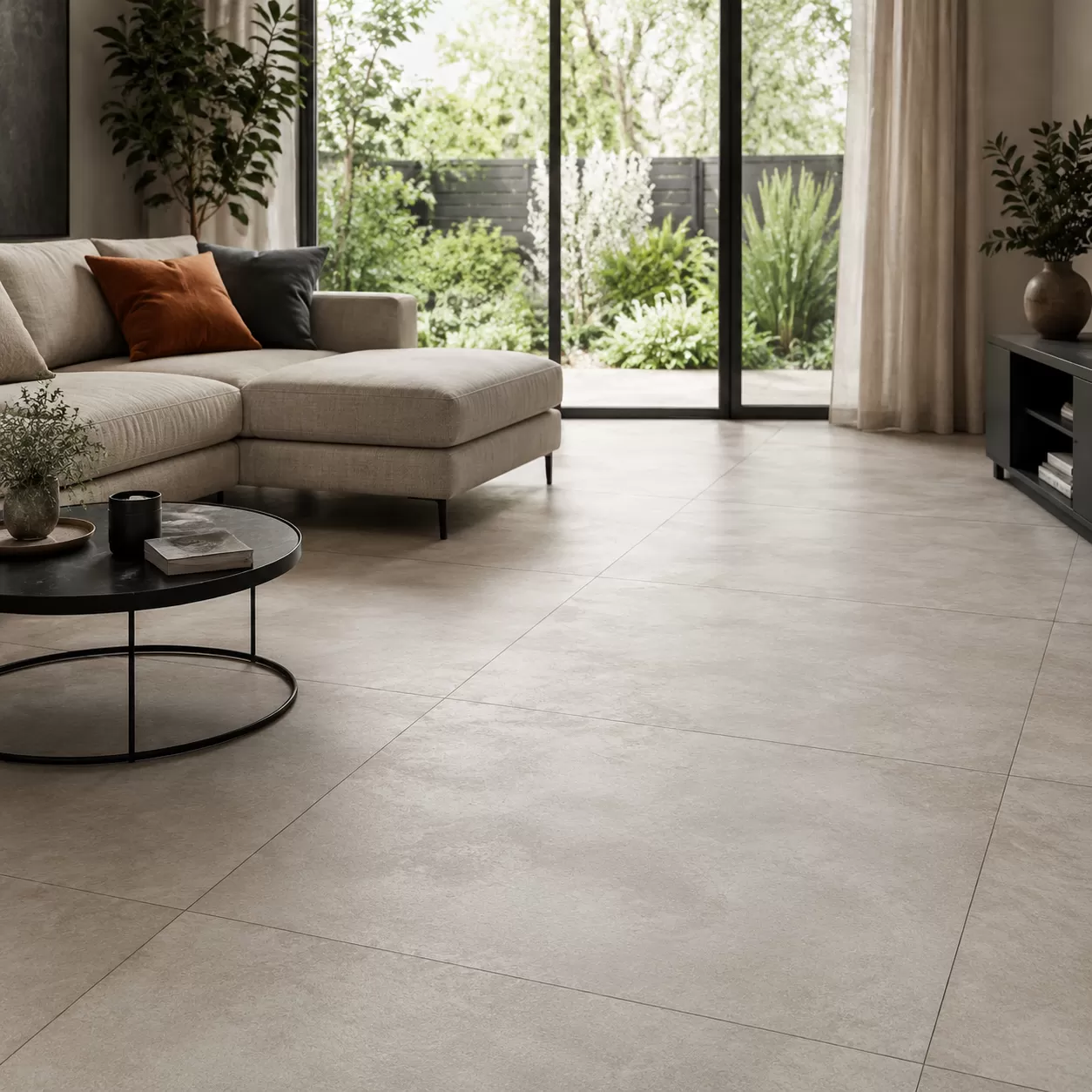
Understanding Large Format Tiles
What Defines a Large Format Tile?
In the modern surfaces industry, a large format tile is generally defined as any tile with at least one edge exceeding 15 inches (approximately 38 cm). Historically, standard flooring relied on smaller dimensions, but manufacturing advancements now allow for massive, precision-engineered slabs. These oversized pieces typically include popular dimensions such as:
- Square formats: 24″ x 24″, 36″ x 36″, and 48″ x 48″
- Plank formats: 8″ x 48″ and 12″ x 72″
- Massive porcelain panels: Up to 5′ x 10′ or larger
These expanded dimensions fundamentally change how material interacts with architecture, shifting the focus from individual pieces to a unified surface.
The Growing Trend of Big Tiles in Modern Design
The global demand for large format tiles is surging as homeowners and commercial developers prioritize a sleek, minimalist aesthetic. This growing trend is driven by a desire for continuity and architectural scale. By minimizing visual interruptions, big tiles emulate the premium look of solid natural stone slabs or poured concrete at a fraction of the cost.
As open-concept living dominates international design markets, large tiles serve as the perfect foundational element, effortlessly connecting kitchens, living areas, and outdoor spaces without jarring transitions.
Key Benefits of Choosing Large Tiles Over Small Tiles
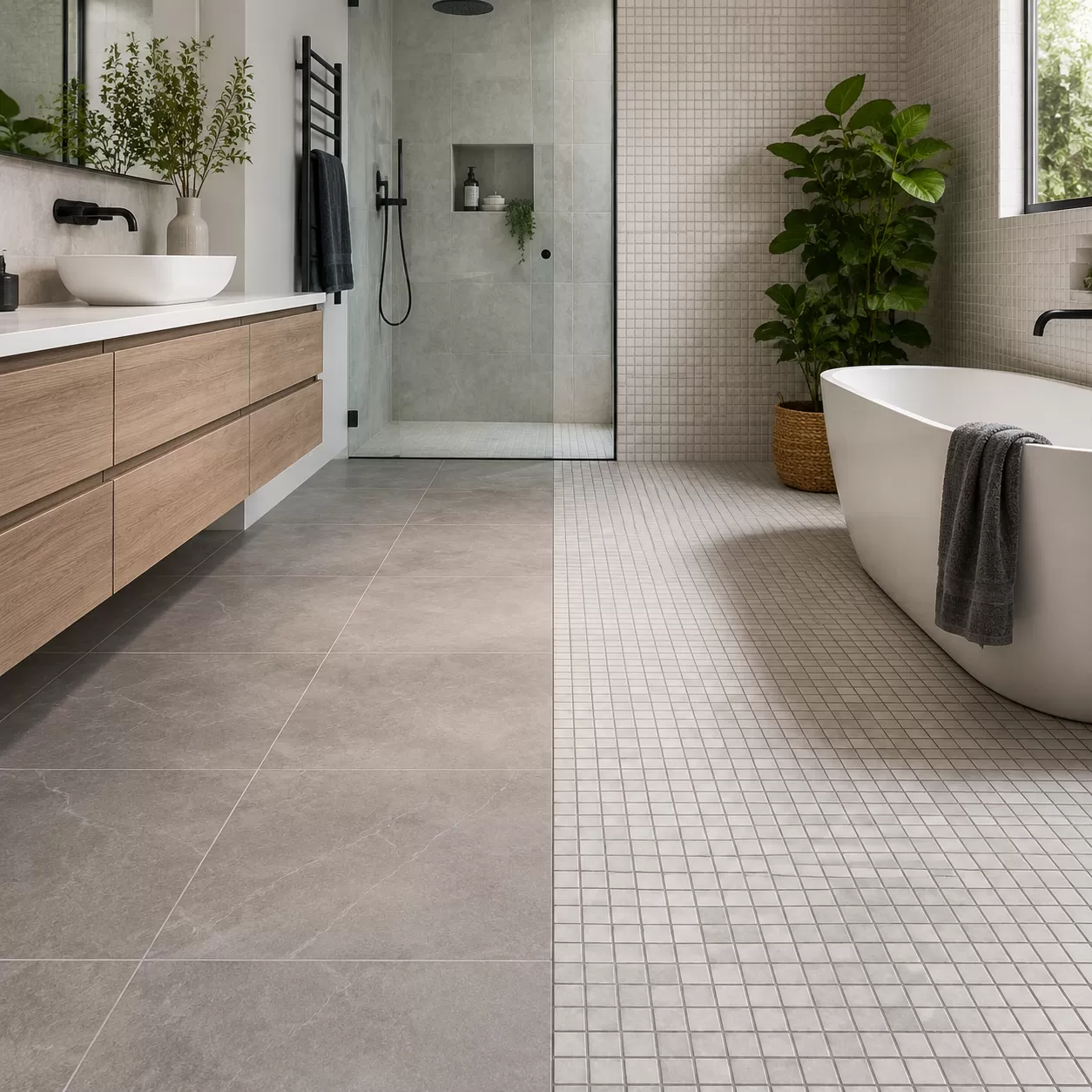
When upgrading a space, selecting the right surface material is crucial. Opting for big tiles over small ones offers distinct functional and visual advantages that instantly elevate any property.
Fewer Grout Lines for a Cleaner Aesthetic
The most immediate visual perk of big tiles is the reduction of grout lines. Fewer breaks on the floor or wall mean less visual clutter, allowing the true pattern and texture of the tile to take center stage.
Easier Maintenance and Effortless Cleaning
Grout is porous and notoriously difficult to keep clean. By choosing big tiles, you drastically cut down on the total area where dirt, mold, and stains can trap.
- Less Scrubbing: Fewer grout lines mean less time spent with a toothbrush cleaning lines.
- Wipe-and-Go: Large, smooth porcelain or ceramic surfaces clean up quickly with a simple mop or microfiber cloth.
- Hygienic Surfaces: Less grout means fewer places for moisture and bacteria to hide.
Creating the Illusion of a Larger Space
Big tiles have a unique ability to open up compact rooms. Because the human eye isn’t interrupted by a dense grid of grout lines, the floor plane feels continuous and expansive, giving small spaces a surprisingly spacious feel.
| Tile Size Choice | Visual Impact | Perceived Room Size |
|---|---|---|
| Small Tiles (Grid Pattern) | Busy, boxed-in | Feels smaller and more restricted |
| Large Tiles (Big Formats) | Fluid, open | Feels significantly larger and airier |
Achieving a High-End, Seamless Look
There is a reason high-end hotels and luxury developments favor large format options. Big tiles mimic the premium, continuous look of solid stone slabs. This layout naturally lends itself to a sleek, minimalist aesthetic that makes any standard renovation look custom-designed and expensive.
Comparing Large vs. Small Tiles: Pros and Cons
When choosing big tiles over small ones, the decision comes down to balancing visual impact against real-world installation factors. Both options offer distinct advantages depending on your project goals.
| Feature | Large Format Tiles | Small / Standard Tiles |
|---|---|---|
| Visual Clutter | Minimal; fewer breaks in the pattern | High; dense grid patterns |
| Grout Maintenance | Very low; less area to scrub | High; prone to staining and mold |
| Room Perception | Makes spaces feel larger and open | Can make rooms feel busy or cramped |
| Substrate Requirement | Must be perfectly flat and level | More forgiving on uneven surfaces |
| Installation Cost | Higher labor cost due to handling | Standard labor rates |
Visual Impact and Style Differences
Large format tiles deliver a sleek, modern, and minimalist aesthetic that small tiles simply cannot match. By reducing the number of breaks on the floor or wall, big tiles create a continuous, fluid look that amplifies the spacious feel of any room. Small tiles, while excellent for traditional or intricate mosaic designs, introduce a heavy grid of grout lines that can clutter the visual field and make a space feel enclosed.
Installation Complexity and Cost Considerations
The installation process for large tiles is more demanding and requires a higher level of expertise.
- Weight and Handling: Big tiles are heavy and often require two people or specialized suction equipment to lift and set safely.
- Surface Preparation: Your subfloor must be perfectly flat. Any slight variation or “lippage” is highly noticeable with large surfaces.
- Adhesive Requirements: Large tiles require specific medium-bed mortars to support their weight and prevent sagging.
- Cost Factor: While you buy fewer individual pieces, the labor costs and material prep for large formats are typically higher than installing standard small tiles.
Durability and Long-Term Performance
Once properly installed, large tiles offer incredible long-term durability. Because they are manufactured using advanced engineering processes, they withstand heavy foot traffic exceptionally well.
The biggest performance advantage of choosing big tiles over small ones is the reduction of grout joints. Grout is the weakest, most porous part of any tile installation. Fewer joints mean fewer areas where moisture can penetrate, less risk of grout cracking over time, and a structural surface that stays intact for decades with minimal upkeep.
Best Applications for Large Format Tiles
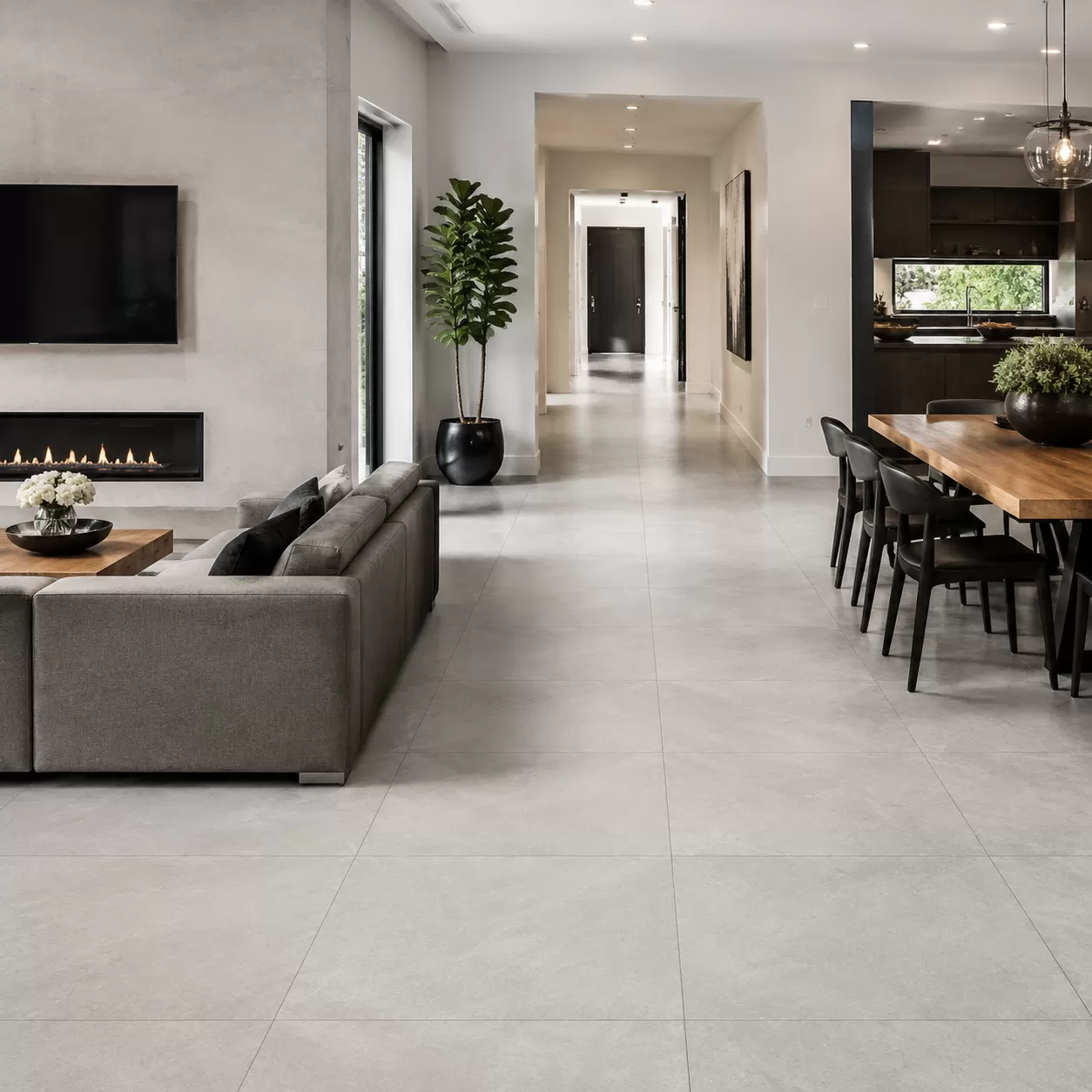
Transforming Living Room Floors
When we look at modern home layouts, the living room is the ultimate canvas for big tiles. Choosing big tiles over the small ones in high-traffic living areas instantly grounds the space. Large format tiles minimize the visual clutter that comes with endless grout lines, creating a smooth, continuous floor that makes the entire home feel connected.
- Open-Concept Flow: Perfect for connecting the living room to the dining area.
- High Durability: Handles heavy foot traffic while keeping a minimalist aesthetic.
- Premium Look: Gives standard floors an instant luxury upgrade.
Creating Seamless Kitchen Walls and Backsplashes
The kitchen is the heart of the home, but it is also prone to messes. Using larger slabs on kitchen walls and backsplashes is a game-changer. Instead of dealing with stained grout behind the stove, you get a solid, sleek surface that wipes down in seconds.
| Feature | Large Tiles on Backsplashes | Traditional Small Tiles |
|---|---|---|
| Grout Joints | Minimal to none | High density |
| Cleaning Effort | Low (wipe and go) | High (scrubbing lines) |
| Visual Style | Modern and cohesive | Busy and fragmented |
Can You Use Large Tiles in Small Bathrooms?
Yes, absolutely. A common misconception is that small spaces require small tiles, but the opposite is true. Why should I choose big tiles over the small ones in a compact bathroom? Because fewer joints break up the floor plan. Using large tiles creates a spacious feel by tricking the eye into seeing one uninterrupted surface, completely opening up tight powder rooms.
Enhancing Shower Enclosures and Bathroom Walls
We love using large format tiles in shower enclosures to mimic a high-end spa. Running large tiles from the bathroom floor straight up the shower walls creates a beautiful, unbroken flow.
- Hygiene Boost: Fewer grout lines mean less place for mold and mildew to grow.
- Waterproof Efficiency: Streamlines the installation process for waterproofing wet areas.
- Upscale Vibe: Delivers a clean, hotel-style look that stands the test of time.
How to Choose the Right Tile Size for Your Space
Choosing the perfect tile size isn’t just about what looks good in a showroom. It requires balancing the physical layout of your room with your personal style and installation reality. Here is exactly how to make the right call for your project.
Assessing Your Room Dimensions and Layout
Before buying, look at the actual footprint of your room. Why should I choose big tiles over the small ones for an average room? Large tiles have less visual clutter, which can completely transform how you perceive the room’s square footage.
- Floor Obstacles: Count the vents, corners, and drains. If your layout is highly irregular, large tiles require precise planning.
- Open Floor Plans: Large format tiles excel here, making open areas feel completely unified and expansive.
- The Grid Pattern: Measure your room width. Ideally, you want to avoid ending a row with a tiny, awkward sliver of tile.
Matching Tile Size to Your Interior Design Style
Your choice of tile directly impacts the overall vibe of your home. Large format tiles are the ultimate choice for a sleek, contemporary look, while smaller tiles tend to lean traditional or eclectic.
| Design Style | Recommended Tile Size | Visual Impact |
|---|---|---|
| Modern / Minimalist | Large Format (24″ × 24″, 24″ × 48″) | Seamless, clean, few grout lines |
| Industrial | Large Concrete-Look Slabs | Raw, uninterrupted, spacious feel |
| Classic / Traditional | Medium (12″ × 12″, 3″ × 6″ Subway) | Familiar, structured, patterns |
| Bohemian / Retro | Small Mosaics or Patterned Tiles | High texture, busy, vibrant |
Balancing Aesthetics with Installation Practicalities
While large tiles offer an incredible minimalist aesthetic, the installation process is more demanding than working with standard sizes. You must weigh the final look against the work required to get it right.
- Subfloor Prep: Large tiles have zero tolerance for uneven floors. The surface must be perfectly flat to prevent “lippage” (uneven tile edges).
- Handling & Weight: Bigger tiles are heavy and often require two people to lift and set safely, which can impact labor costs.
- Waste Material: For small spaces, you might experience more tile waste due to the large cuts needed to fit the perimeter. Always factor in an extra 10-15% for waste.
