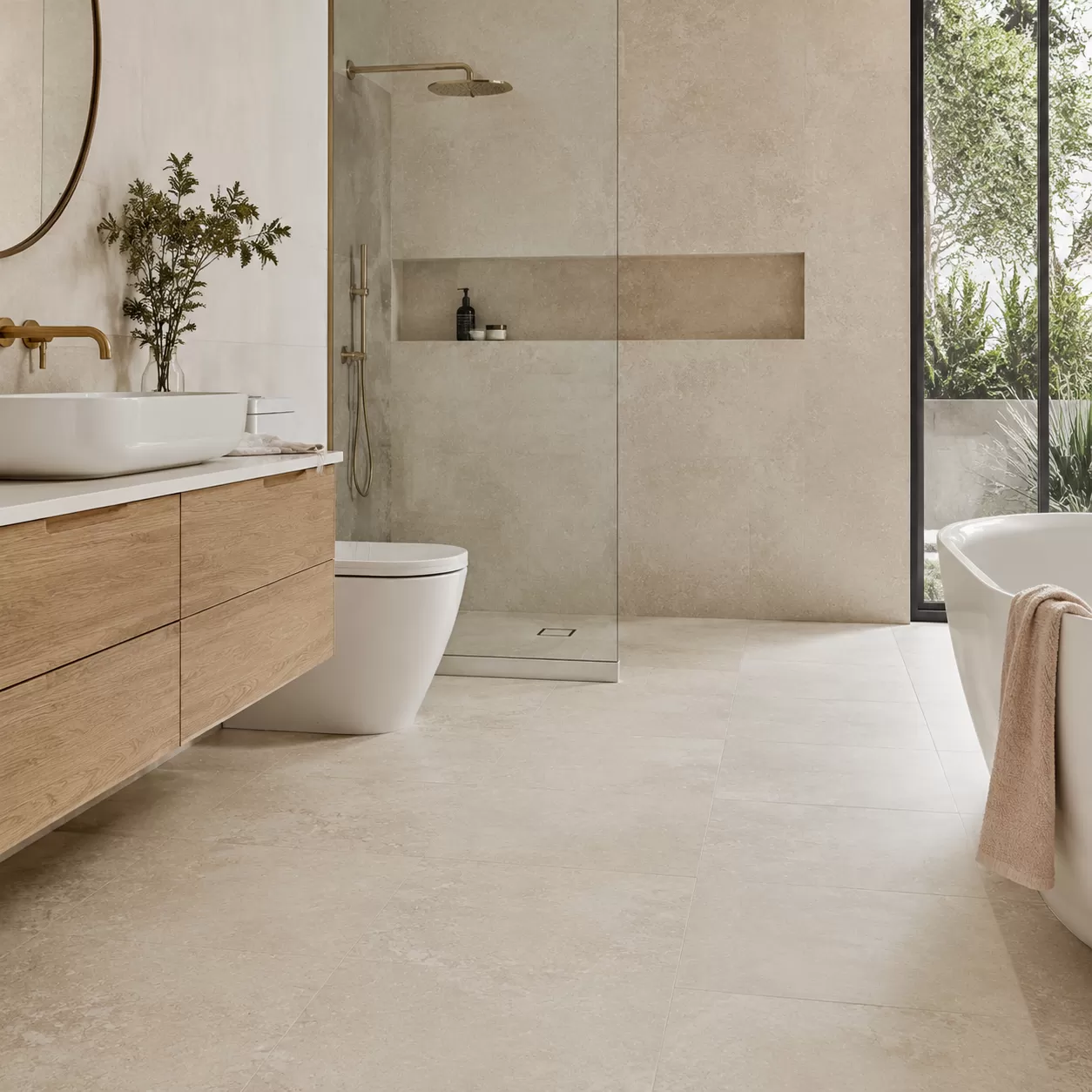
What Is Porcelain Tile and Why Choose It for Your Bathroom?
Porcelain tile represents the pinnacle of surface engineering for modern architecture. As a premier porcelain tile manufacturer and supplier, we engineer these surfaces to meet the rigorous demands of global commercial and residential projects. For high-moisture environments like bathrooms and showers, porcelain offers an unmatched combination of structural density, aesthetic versatility, and lifetime value.
Key Differences Between Porcelain and Ceramic Tile
While both options belong to the ceramic family, their performance capabilities differ significantly due to material composition and manufacturing protocols. Porcelain is crafted from highly refined clay fired at extreme temperatures, resulting in a completely vitrified, denser tile body.
| Feature | Porcelain Tile | Ceramic Tile |
|---|---|---|
| Clay Composition | Refined, dense feldspar clays | Coarser, less dense earthenware clays |
| Firing Temperature | Over 1200°C | Around 1000°C |
| Water Absorption Rate | ≤ 0.5% (Impervious) | > 0.5% (Absorbent) |
| Breaking Strength | High structural load capacity | Moderate structural load capacity |
| Application Suitability | Floors, walls, heavy wet areas | Light-traffic floors, dry walls only |
Outstanding Water and Moisture Resistance
The defining characteristic of porcelain tile is its low absorption rate. By strictly maintaining an absorption level of 0.5% or less, the tile matrix prevents water from penetrating beneath the surface. This absolute water resistance eliminates the risk of structural swelling, tile warping, and subfloor water damage. In shower enclosures and high-humidity bathrooms, this moisture barrier inhibits the growth of mold, mildew, and bacteria, ensuring a hygienic and sterile environment.
Durability and Long-Lasting Performance
Porcelain is engineered for permanent durability. Its dense composition yields a high PEI (Porcelain Enamel Institute) rating, making it highly resistant to heavy foot traffic, impacts, scratches, and chemical exposure.
- Impact Resistance: High density prevents chipping from dropped bathroom items.
- Stain & Chemical Proof: Resists discoloration from harsh cleaning agents, dyes, and cosmetics.
- Frost & Thermal Shock Resistance: Withstands rapid temperature fluctuations standard in steam showers.
- Color Fastness: UV-resistant properties ensure the tile surface never fades over decades of use.
Benefits of Porcelain Tile for Bathroom and Shower Floors
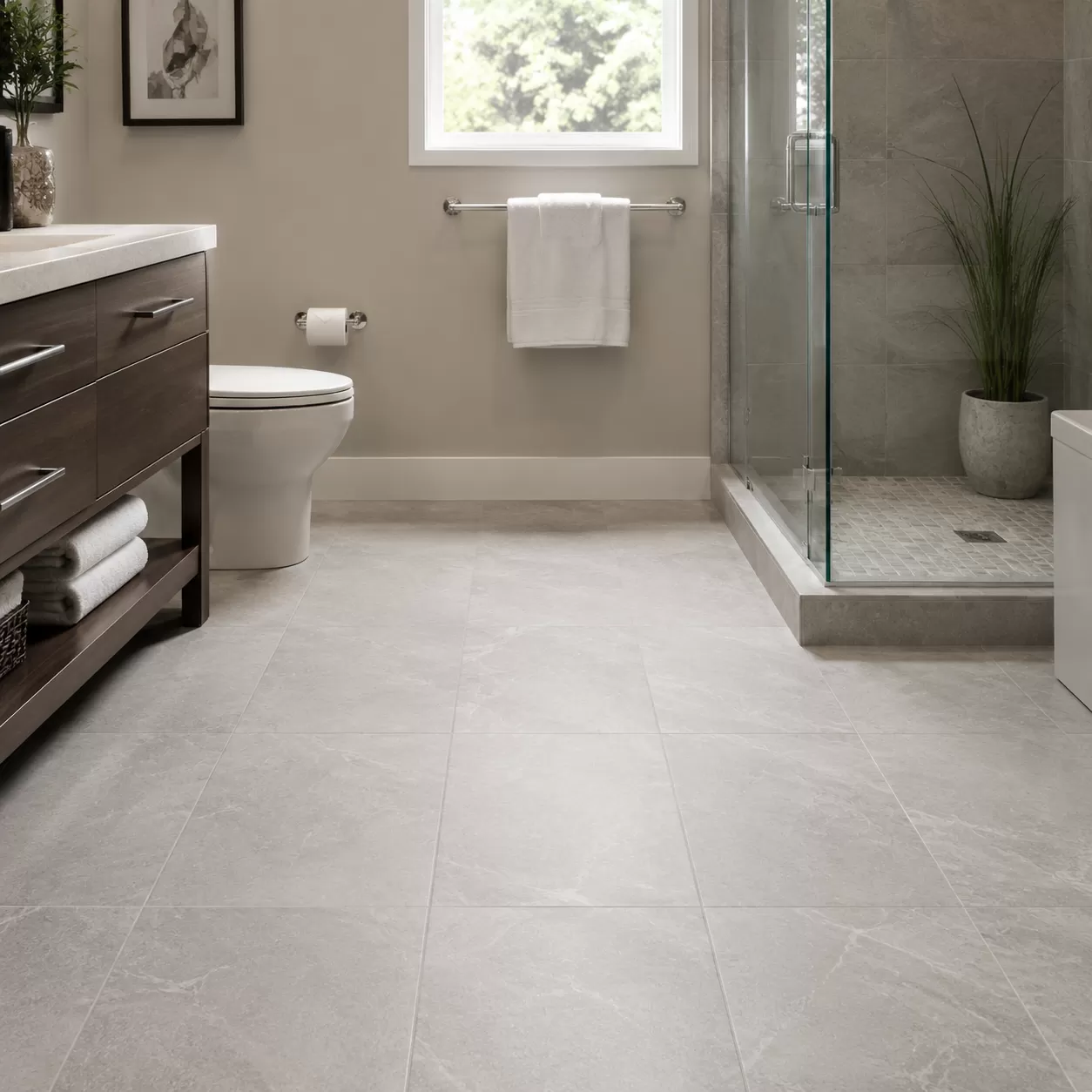
When we manufacture porcelain tile for floors, bathrooms, showers, and high-moisture zones, safety and traction are our top priorities. The right floor tile must balance beautiful aesthetics with reliable everyday performance underfoot.
Slip Resistance and DCOF Ratings Explained
To choose the safest porcelain tile for floors, bathrooms, showers, you need to look at the Dynamic Coefficient of Friction (DCOF) rating. This standard measures a tile’s slip resistance when wet.
Here is how to decode DCOF ratings for your project:
| Area | Required DCOF Rating | Safety Level |
|---|---|---|
| Bathroom Floors (General) | $ge 0.42$ | Standard safe traction for level spaces |
| Shower Floors & Ramps | $ge 0.60$ | High traction required for standing water |
| Living Rooms / Dry Areas | $< 0.42$ | Only suitable for strictly dry foot traffic |
The Importance of Traction and Texture Underfoot
Water and soap turn smooth surfaces into instant slip hazards. As a global porcelain tile manufacturer and supplier, we specialize in engineering non-slip finishes that offer enhanced water resistance and grip without feeling rough on bare feet.
- Matte Finishes: Provide natural grip and reduce the risk of slips.
- Textured Surfaces: Mimic natural stone or wood grain to create physical traction.
- Low Absorption: Porcelain features an incredibly low absorption rate, meaning water sits on top rather than soaking in, allowing textured surfaces to do their job effectively.
Why Mosaic Tiles Are Ideal for Shower Floor Grip
For the ultimate peace of mind in a wet shower pan, mosaic tiles are the industry standard. Their strength lies in their layout geometry rather than just the material itself.
- More Grout Lines: Smaller tiles mean a higher density of grout lines, which act like built-in tread for your feet.
- Contour Flexibility: Mosaics easily slope toward the shower drain for better water runoff.
- Maximum Durability: The combination of dense porcelain and supportive grout grids ensures long-lasting durability under heavy daily use.
Benefits of Porcelain Tile for Shower and Bathroom Walls
Using porcelain tile for floors, bathrooms, showers, and walls transforms a standard bathroom into a high-end, functional retreat. When applied to walls, porcelain provides an impenetrable barrier against moisture while serving as a major design focal point. As a leading manufacturer, we design our wall tiles to balance striking aesthetics with everyday practicality.
Creating a Seamless Look with Large Format Porcelain
Large format porcelain tile is redefining modern shower walls. By reducing the number of breaks on the wall surface, these oversized slabs create an uninterrupted, visually expanding effect that makes even compact bathrooms feel like a luxury spa.
| Tile Feature | Visual Impact | Best Used For |
|---|---|---|
| Large Format Slabs | Continuous, seamless look with minimal visual clutter | Full shower walls, feature backsplashes |
| Rectified Edges | Ultra-thin joints for a smooth, monolithic appearance | Contemporary and minimalist designs |
Low Maintenance and Fewer Grout Lines
The biggest benefit of larger porcelain panels on shower walls is the drastic reduction in grout lines. Grout is porous and notorious for trapping soap scum, mold, and mildew. Fewer grout lines mean less scrubbing and a much easier cleaning routine.
- Low Absorption: Porcelain’s dense body naturally resists moisture penetration.
- Easy Wipe-Downs: Smooth wall surfaces can be cleaned with a simple squeegee after showers.
- Stain Resistance: The non-porous surface prevents hard water stains from locking into the tile.
Stunning Design Versatility from Floor to Wall
Porcelain offers unmatched styling flexibility. Because we manufacture matching collections, you can run the exact same tile from the bathroom floor straight up the shower walls. This cohesive design trick elongates the room and delivers a high-end, custom-tailored aesthetic. From rich, vein-matched marble looks to industrial concrete textures, porcelain replicates luxury materials perfectly while delivering superior water resistance and lifetime durability.
Popular Trends, Styles, and Colors for Modern Bathrooms
Bathroom design moves fast, but the demand for high-end aesthetics never changes. As a leading porcelain tile manufacturer and supplier, we see firsthand how global homeowners and designers use our products to elevate their spaces. Today’s modern bathrooms prioritize a clean, upscale look that balances trend-forward styles with everyday functionality.
Wood-Look and Stone-Look Porcelain Tile
You no longer have to choose between the beauty of natural materials and the performance of tile. Advanced manufacturing allows us to replicate the exact textures of premium hardwoods and luxury marble.
- Wood-Look Planks: Bring the warmth of oak or walnut straight into the splash zone. Unlike real wood, these tiles offer total water resistance and will never warp or rot.
- Stone-Look Slabs: Get the dramatic veining of Carrara marble or the earthy vibe of travertine with a low absorption rate that resists staining and moisture damage.
Classic Subway and Contemporary Hexagon Patterns
The layout of your porcelain tile for floors, bathrooms, and showers defines the entire character of the room. Mixing shapes adds instant visual interest.
- Subway Tiles: A timeless staple. Install them in a traditional running bond, or opt for a modern vertical stack to make short ceilings feel much taller.
- Hexagon Patterns: Perfect for creating a focal point. Large hex tiles work beautifully on open bathroom floors, while smaller hex mosaics offer excellent durability and grip on shower pans.
Choosing the Right Color Palette for Your Space
The right colors can turn a cramped bathroom into a spa-like retreat.
| Vibe | Recommended Colors | Best Application |
|---|---|---|
| Bright & Airy | Crisp Whites, Soft Alabaster, Pale Gray | Small guest baths, dark shower stalls |
| Earthy & Grounded | Taupe, Warm Beige, Charcoal, Terracotta | Large master bathrooms, wet rooms |
| Bold & Modern | Matte Black, Emerald, Deep Navy | Accent walls, vanity backsplashes |
For wet areas, we always recommend pairing your color choice with our specialized non-slip finishes to keep the space safe without compromising on style.
How to Choose the Best Porcelain Tile for Floors, Bathrooms, Showers: Sizes and Finishes
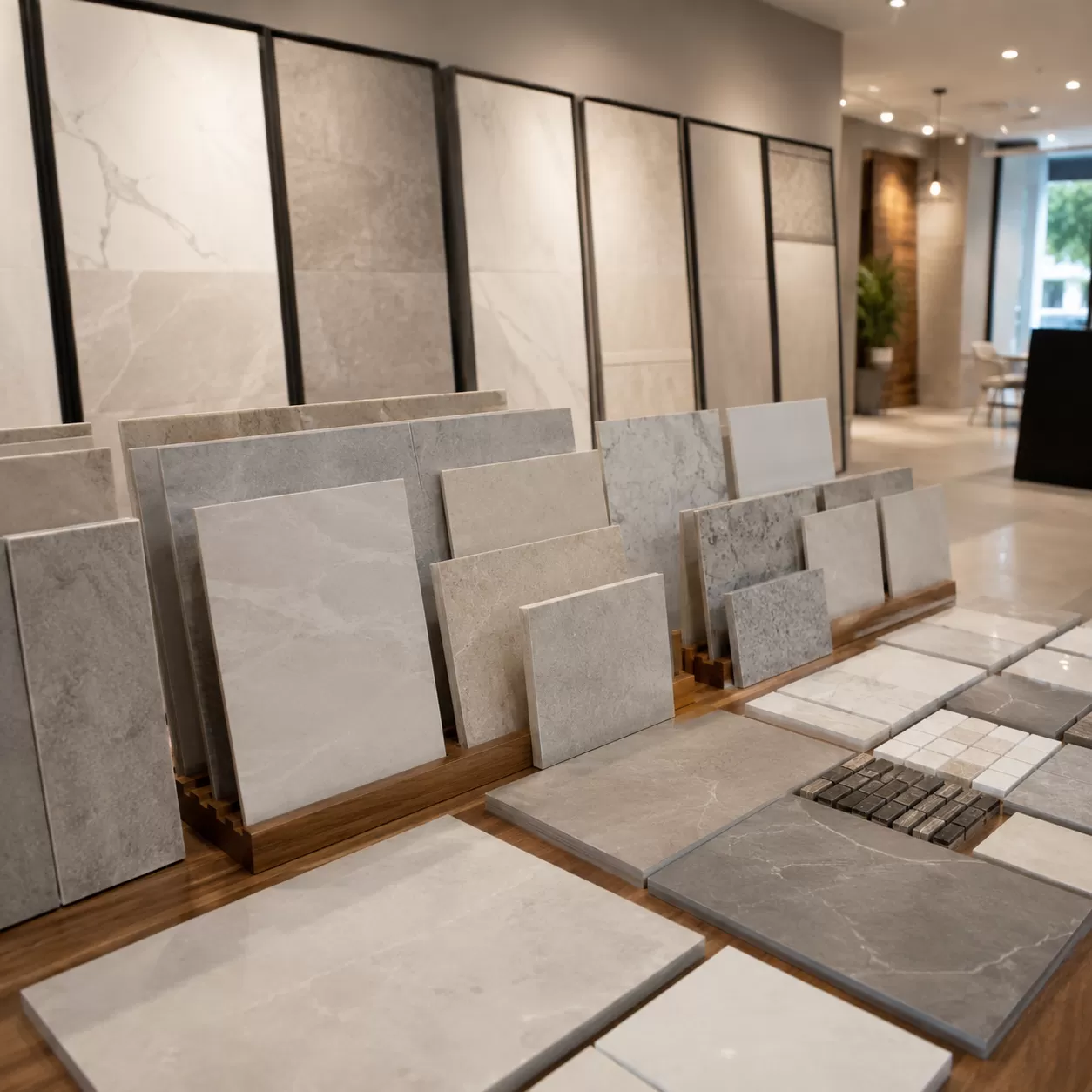
Choosing the right look and format for your project ensures both safety and style. As a porcelain tile manufacturer and supplier, we help property owners and contractors select the ideal specifications for long-term performance.
Comparing Polished vs. Matte Finishes for Wet Areas
Surface finish dictates both the look and safety of your bathroom. Matte finishes feature inherent slip resistance, making them the standard choice for shower floors and high-moisture zones. Polished finishes offer a high-end, reflective look that makes small bathrooms feel larger, but they are best reserved for walls or dry floor areas.
| Finish Type | Best Used For | Pros | Cons |
|---|---|---|---|
| Matte / Honed | Bathroom floors, shower pans, accent walls | High traction, hides water spots, low maintenance | Less reflective |
| Polished / Glossy | Shower walls, vanity backsplashes, dry floors | Brightens rooms, easy to wipe clean | Slippery when wet |
Common Tile Sizes for Floors, Walls, and Showers
Matching the tile size to the specific zone of your bathroom improves both the installation workflow and the final visual appeal.
- Shower Floors: 2×2 inch or 3×3 inch mosaics are standard. Small tiles conform easily to the slope of the shower drain and create more grout joints for better foot grip.
- Bathroom Floors: 12×24 inch or 24×24 inch tiles are the industry sweet spot. They minimize grout lines while offering excellent stability.
- Walls and Showers: 12×24 inch tiles or larger panels work best here to reduce cleaning maintenance.
Selecting the Perfect Tile Look and Layout
The layout pattern changes the perception of your bathroom’s dimensions:
- Grid Layout (Stack Bond): Clean, modern, and minimizes waste during cutting.
- Offset (Brick Joint): Traditional look that masks slight subfloor imperfections. Always use a maximum 33% offset for large format porcelain tile to prevent lippage.
- Herringbone: Adds high-end visual interest, perfect for feature walls or main bathroom floors.
Installation Guide for Porcelain Shower and Bathroom Tile
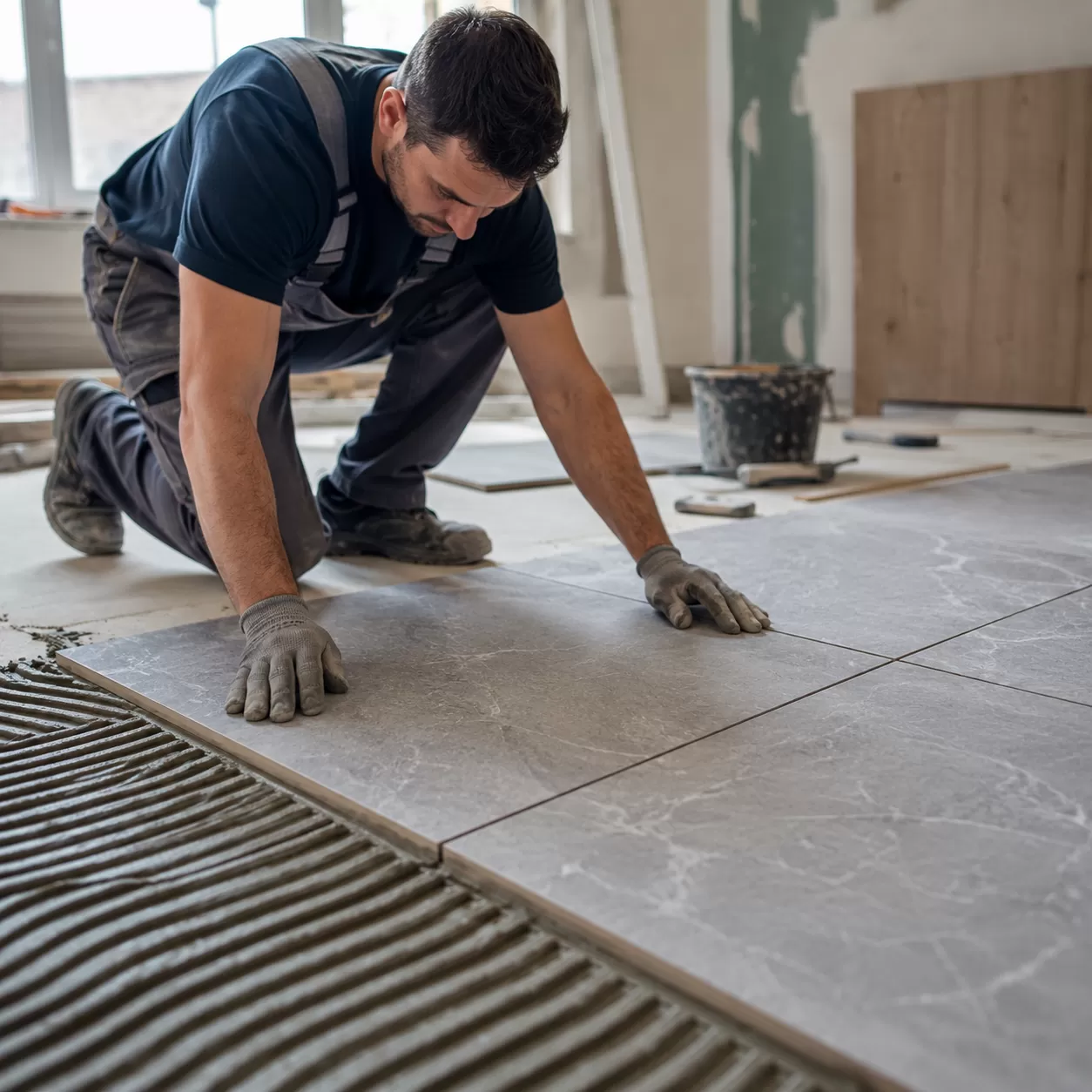
Installing porcelain tile for floors, bathrooms, and showers requires precision to ensure a lifetime of waterproof performance. As a premier porcelain tile manufacturer and supplier, we know that a flawless finish depends entirely on proper technique and high-quality materials.
Preparing a Completely Waterproof Foundation
Porcelain itself features incredible water resistance and low absorption rates, but the structure behind it is not inherently waterproof. Before a single tile is laid, the substrate must be completely sealed against moisture.
- Backer Board: Use cement board or high-density foam backer boards instead of standard drywall.
- Waterproof Membrane: Apply a liquid-applied or sheet waterproof membrane over the seams and fields to prevent mold and structural rot.
- Pre-Slope: Ensure the shower pan has a correct slope toward the drain to prevent standing water.
Choosing the Right Mortar and Grout Materials
Because porcelain is dense and non-porous, it requires specific setting materials to bond correctly. Standard mortars will not cut it.
| Material Type | Recommended Choice | Why It Matters |
|---|---|---|
| Mortar / Thinset | Polymer-modified thinset | Provides the high-bond strength needed for low-absorption porcelain. |
| Grout | Epoxy or High-Performance Cement Grout | Resists stains, cracking, and water penetration in wet environments. |
Why DIY vs. Professional Installation Matters
While tackling a tile job yourself is tempting, installing porcelain tile for floors, bathrooms, and showers comes with unique challenges.
- Specialized Cutting: Porcelain is incredibly dense. It requires a wet saw with a diamond blade to prevent chipping, especially around drains and corners.
- Substrate Flattening: Large format tiles require a perfectly flat surface to avoid lippage (uneven tile edges).
- Long-Term Warranty: Professional installation ensures that the waterproofing layers are done to code, protecting your home investment from costly leaks.
For high-traffic spaces and wet areas, investing in professional installation complements the natural durability and premium quality of the tile.
Maintenance and Care for Porcelain Tile for Floors, Bathrooms, Showers
Daily Cleaning Habits to Prevent Soap Scum
Keeping your porcelain tile for floors, bathrooms, showers looking brand new does not require hours of scrubbing. The secret is preventing buildup before it starts. Because we manufacture our tiles with an exceptionally low absorption rate, soap scum and hard water stay on the very surface, making them easy to clear away.
- Squeegee after use: Spend 30 seconds wiping down shower walls and floors after every use.
- Ventilate: Run the bathroom fan for at least 20 minutes post-shower to eliminate lingering moisture.
- Daily spray: Use a quick, eco-friendly mist of equal parts water and white vinegar to keep surfaces bright.
Deep Cleaning Tips for Porcelain Surfaces
When it is time for a deeper clean, porcelain handles the job beautifully due to its extreme durability and chemical resistance. Unlike natural stone, it won’t etch or stain easily when exposed to standard household cleaners.
| Cleaning Type | Recommended Solution | Tool to Use |
|---|---|---|
| Routine Deep Clean | Warm water mixed with a few drops of mild dish soap | Soft microfiber cloth or mop |
| Grout & Tough Stains | Baking soda and water paste | Soft-bristled nylon brush |
| Mineral/Scale Removal | Diluted commercial scale remover | Non-scratch scrubbing pad |
Pro Tip: Avoid using steel wool, hard abrasive powders, or highly concentrated ammonia, as these can dull polished surfaces over time.
Do Porcelain Tiles and Grout Lines Need Sealing?
As a leading porcelain tile manufacture and supplier, we build superior water resistance directly into the tile itself.
- The Porcelain Surface: Never needs to be sealed. The dense clay structure and firing process create a naturally impervious barrier.
- The Grout Lines: This is where you need to focus. Unless you used a premium epoxy grout during installation, standard cement-based grout is porous.
- The Verdict: Apply a high-quality penetrating grout sealer once every one to two years to protect the joints from discoloration and moisture penetration.
Frequently Asked Questions About Bathroom Porcelain Tile
Are porcelain tiles slippery when wet?
Not necessarily. While polished surfaces get slick, porcelain tile with matte, textured, or non-slip finishes provides excellent traction. For wet zones like showers, we always look at the Dynamic Coefficient of Friction (DCOF) rating. A DCOF of 0.42 or higher is the standard for slip resistance, ensuring safety underfoot even when the surface is wet.
What is the absolute best tile for a shower floor?
Porcelain mosaic tile is the top choice for shower floors. As a trusted porcelain tile manufacturer and supplier, we recommend mosaics for two main reasons:
- Superior Grip: The numerous grout lines between small tiles naturally create a high-traction grid.
- Perfect Drainage: Small tiles easily conform to the slope of the shower pan toward the drain.
Combined with porcelain’s signature low absorption rate, it delivers unmatched performance.
Can I use large format tiles in a small bathroom?
Yes, and it is highly recommended. Using large format porcelain tile in a compact bathroom reduces the number of grout lines. This lack of visual clutter tricks the eye into seeing a larger, more cohesive space. For the best result, extend the floor tiles straight up the walls to maximize the open feel.
How often should grout be sealed in a shower?
While porcelain tile itself boasts outstanding water resistance and never needs sealing, cement-based grout is porous. You should apply a high-quality grout sealer once a year in high-moisture shower areas. If you use premium epoxy grout during installation, you can skip sealing entirely, as epoxy resists stains and water naturally.
