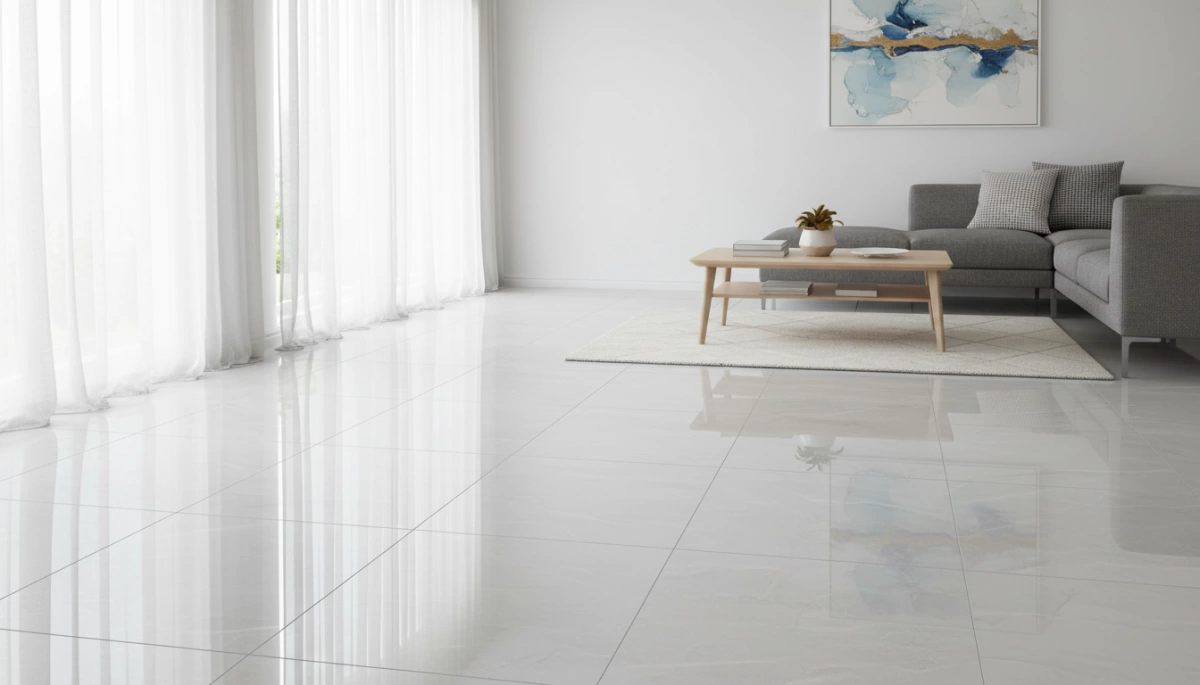
Choosing the right flooring is a high-stakes decision for any design project. You want the mirror-like elegance of polished porcelain floor tiles, but you also need superior durability that stands up to heavy foot traffic.
At YASIQI, we’ve spent years perfecting the balance between aesthetic luxury and technical performance. I’m going to share the industry insights you need to choose tiles that don’t just look expensive—they perform.
In this guide, you’ll discover the manufacturing secrets of nano-sealing technology, the reality of maintenance, and how to achieve a seamless, high-gloss finish that lasts for decades.
Let’s dive right in.
Understanding Polished Porcelain Floor Tiles
Polished porcelain floor tiles represent the pinnacle of durability and aesthetics in modern flooring. As a manufacturer, we define these tiles by their incredibly dense body and mirror-like surface. Unlike standard ceramic, polished porcelain is a vitrified material, meaning it has been fired at extreme temperatures to achieve a glass-like, non-porous structure.
The Manufacturing Process: From Raw Clay to Mechanical Polishing
Creating a high-quality polished tile requires precision at every stage. We follow a rigorous industrial process to ensure each slab meets global standards:
- Material Refining: We use high-purity kaolin clay, quartz, and feldspar, refined to remove impurities.
- High-Pressure Pressing: The raw mix is compressed under thousands of tons of pressure to reach maximum density.
- Extreme Firing: Tiles are fired in kilns at temperatures exceeding 1,200°C (2,192°F), creating a stone-hard core.
- Mechanical Polishing: Once cooled, the tile surface is treated with diamond-tipped abrasive buffers. This mechanical polishing stage grinds the surface until it achieves a natural, high-gloss shine without the need for wax.
Glazed vs. Unglazed Polished Porcelain
Choosing the right structure is vital for the longevity of your project.
- Glazed Polished Porcelain: These tiles feature a wear-resistant glaze applied before firing. This technology allows us to print high-definition marble or stone patterns onto the tile. The glaze acts as a protective barrier, making it virtually impervious to stains.
- Unglazed (Full-Body) Porcelain: The color and pattern go all the way through the tile. Because there is no top layer of glaze, these are exceptionally durable for high-traffic commercial zones. However, they often require nano-sealing to protect the microscopic pores opened during the polishing process.
High-Gloss Finish vs. Satin or Matte
The finish you choose dictates the mood and safety of the space.
- High-Gloss Finish: This is the most popular choice for luxury residential projects. It offers maximum light reflection, making small rooms feel expansive and bright.
- Satin Finish: A “middle ground” option. It provides a soft, silky glow with a subtle sheen that is less reflective than high-gloss but smoother than matte.
- Matte Finish: Non-reflective and slip-resistant. While not “polished” in the traditional sense, matte porcelain provides a contemporary, organic look suitable for wet areas or outdoor transitions.
Why Choose Polished Porcelain Floor Tiles?
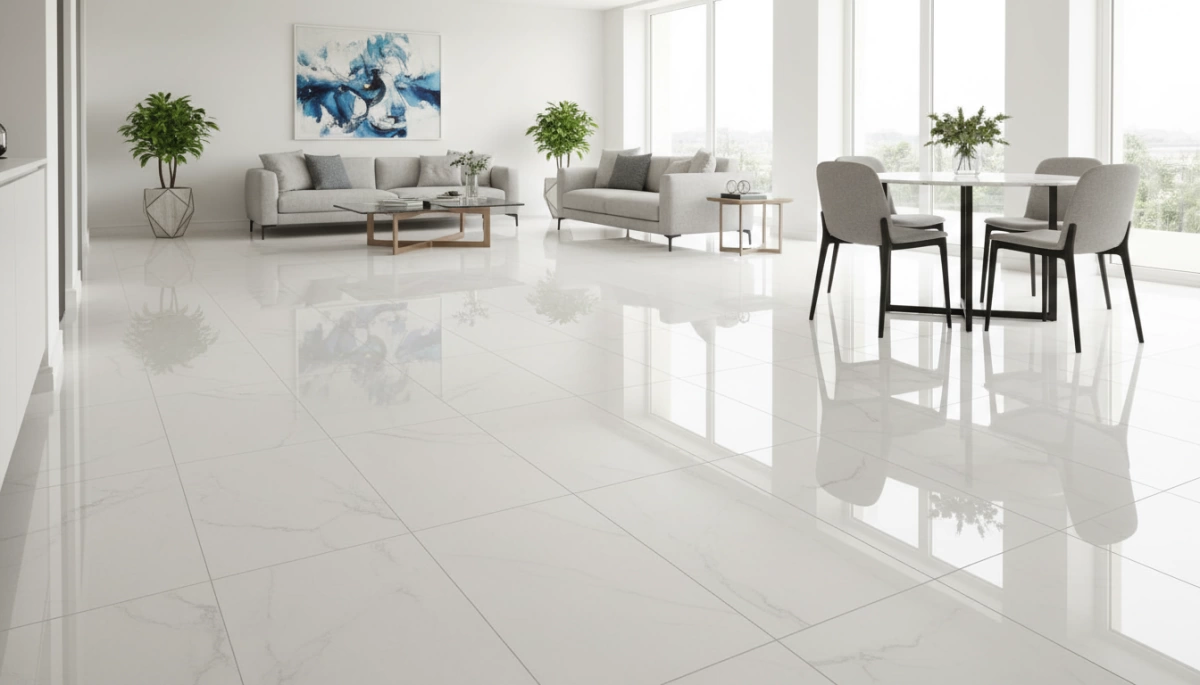
Choosing the right flooring is a balance between style and long-term performance. I recommend polished porcelain floor tiles because they offer a high-end look without the high-maintenance headaches of natural stone. They are engineered to handle the demands of both residential and commercial flooring while maintaining a flawless appearance.
Unmatched Aesthetics and Light Reflection
The most immediate benefit of a high-gloss finish is the way it interacts with light. By reflecting both natural and artificial light, these tiles make any room feel brighter and more spacious. Whether it’s a hotel lobby or a modern living room, the mirror-like surface creates an atmosphere of luxury that matte surfaces simply can’t replicate.
Superior Durability and Wear Resistance
Our tiles are essentially vitrified tiles, meaning they are fired at incredibly high temperatures to create a dense, glass-like body. This high density results in a superior wear resistance (PEI rating), making them ideal for high-traffic areas where other materials might scratch or dull over time.
| Feature | Polished Porcelain | Standard Ceramic |
|---|---|---|
| Water Absorption | < 0.5% (Impervious) | > 3.0% (Porous) |
| Durability | Extremely High | Moderate |
| Density | High (Vitrified) | Low to Medium |
| Best Use | High-traffic/Luxury | Light residential |
Low Water Absorption Rate
Porcelain is famous for its low water absorption rate. Because the material is so dense, moisture cannot easily penetrate the surface. This makes it a far better choice than ceramic for moisture-prone zones. It won’t swell, warp, or harbor mold, ensuring the structural integrity of your floor for decades.
Advanced Nano-Sealing for Stain Resistance
A common concern with polished surfaces is staining. To solve this, we utilize nano-sealing technology. This process fills the microscopic pores on the tile surface created during the mechanical polishing stage.
- Stain Protection: Spills like coffee or wine sit on the surface rather than soaking in.
- Easy Cleanup: Most messes wipe away with a simple damp cloth.
- Long-lasting Gloss: The seal helps maintain that “just installed” shine without constant buffing.
By combining these technical advantages, polished porcelain floor tiles provide a foundation that is as tough as it is beautiful. They are a smart investment for anyone looking to combine the elegance of marble with the ruggedness of modern engineering.
Comparing Finishes: Polished Porcelain Floor Tiles vs. Matte vs. High-Gloss
Choosing the right surface is about balancing style with the specific needs of your space. While polished porcelain floor tiles are a go-to for luxury, the “best” finish depends entirely on where the tile is being installed. I always suggest looking at the light levels and the foot traffic of the room before making a final call.
When to Choose a Polished Finish
I recommend a polished finish for living rooms, hallways, and hotel lobbies. These tiles undergo a mechanical polishing process that allows them to reflect light beautifully, making them the perfect choice for high-traffic social areas.
- Space Enhancement: The reflective flooring makes small rooms feel significantly larger and brighter.
- Aesthetic Appeal: It provides a crisp, sharp look that defines modern interior design.
- Daily Cleaning: Dust and debris sit on the surface, making them easy to sweep and keep tidy.
Why Matte is Better for Wet Areas
For bathrooms, kitchens, or outdoor patios, a matte finish is usually the safer, more practical play. It offers a higher slip resistance rating, providing much better grip underfoot when the floor gets wet.
- Hides Wear: Matte surfaces are more forgiving with water spots, streaks, and minor surface scratches.
- Natural Texture: It creates a grounded, organic feel that works perfectly for “spa-style” bathrooms or rustic designs.
The YASIQI High-Gloss Factor
At YASIQI, we use advanced surface technology to achieve a depth of color and clarity that standard tiles simply cannot match.
- Ultra-Reflective: This finish captures every light source, which is ideal for brightening up darker commercial spaces or luxury showrooms.
- Nano-Sealing Technology: We apply a specialized protective layer that fills microscopic pores. This makes our high-gloss tiles incredibly resistant to staining compared to traditional polished options.
| Feature | Polished | Matte | High-Gloss (YASIQI) |
|---|---|---|---|
| Light Reflection | High | Low | Maximum / Mirror-like |
| Slip Resistance | Moderate | High | Moderate |
| Maintenance | Easy | Very Easy | Easy (Stain Resistant) |
| Best For | Living Areas | Bathrooms & Outdoors | Luxury Lobbies & Features |
Making the Right Choice
In my experience, the most successful projects often mix these finishes. Using polished porcelain floor tiles in the main living areas creates a grand entrance, while transitioning to a matching matte tile in the bathroom ensures safety without breaking the design flow. Our YASIQI high-gloss options are the preferred choice for those who want that “wow factor” and a premium, high-end finish that lasts.
Safety and Suitability of Polished Porcelain Floor Tiles
The “slippery” reputation of polished porcelain floor tiles is often exaggerated. While they offer a mirror-like high-gloss finish, their performance depends heavily on environmental conditions and proper installation. In dry conditions, these tiles provide a reliable surface for both bare feet and footwear.
Understanding Slip Resistance Ratings
Don’t let the shine fool you. Most polished porcelain carries an R9 slip resistance rating, making it a standard choice for dry residential and commercial flooring such as luxury showrooms, hotel lobbies, and home living areas.
- Dry vs. Wet: Polished surfaces are perfectly safe when dry but lose traction when wet. They are best suited for areas not constantly exposed to water.
- Surface Tension: Modern mechanical polishing creates a surface that provides enough “grab” for standard walking paces.
- Application: I recommend these for “dry” zones like bedrooms, dining rooms, and hallways where aesthetics are the priority.
Best Practices for Households with Kids and Pets
If you have a busy household, you can still enjoy the luxury of polished floors without compromising safety. My best advice for families includes:
- Entryway Mats: Place quality mats at every entrance to catch moisture and grit, which preserves the scratch resistance of the tiles.
- Strategic Rug Placement: Use area rugs in high-speed “turn zones” or play areas where children and pets are most active.
- Spill Management: Since porcelain has a near-zero water absorption rate, liquids sit on the surface. Wiping up spills immediately is the best way to prevent accidents.
The Importance of a Level Subfloor
A safe floor starts with what is underneath. I cannot stress enough that the quality of the installation is just as important as the tile itself.
| Feature | Why It Matters for Safety |
|---|---|
| Level Subfloor | Prevents “lippage” (uneven tile edges) which are major trip hazards. |
| Leveling Systems | Professional installers use clips and wedges to ensure a perfectly flush surface. |
| Thin-set Coverage | Ensures the tile is fully supported, preventing cracks under heavy foot traffic. |
A professional installation ensures that your polished porcelain floor tiles look seamless and remain safe for everyone in the building. When the floor is perfectly flat, the risk of catching a toe on a tile edge is eliminated, and the high-gloss finish can reflect light uniformly across the entire room.
Maintenance & Care for Polished Porcelain Floor Tiles
Keeping your floors reflective and spotless doesn’t require heavy chemicals. In fact, less is often more when maintaining a high-gloss finish. We focus on simple, consistent routines to ensure the surface remains as brilliant as the day it was installed.
Daily Cleaning Routine
For everyday upkeep, we recommend a simple process to prevent grit from scratching the surface:
- Dry Sweep: Use a soft-bristle broom or a vacuum with a hard-floor setting to remove loose dirt and sand.
- Microfiber Mop: Use a damp microfiber mop with warm water. This is the most effective way to lift smudges without leaving streaks.
- pH-Neutral Cleaners: If you need a cleaning agent, always use a pH-neutral tile cleaner. Avoid oil-based soaps or “mop and shine” products, as they leave a waxy film that kills the shine.
What to Avoid
To protect the mechanical polishing of your tiles, stay away from these common mistakes:
- Acidic Cleaners: Vinegar and lemon juice are popular DIY tips, but they can etch the surface over time and dull the gloss.
- Abrasive Tools: Never use steel wool or scouring pads; they create micro-scratches that trap dirt and ruin the light reflection.
- Bleach and Ammonia: These chemicals are too harsh for regular use and can eventually break down the nano-sealing layer.
Long-Term Care and Grout Maintenance
While our polished porcelain floor tiles are incredibly dense with a low water absorption rate, the grout lines are the most vulnerable part of any floor.
- Resealing: Most of our premium tiles feature factory-applied nano-sealing technology. You typically won’t need to reseal the tile itself, but applying a grout sealer once a year prevents moisture and stains from penetrating the joints.
- Seamless Look: To maintain a continuous, mirror-like effect, clean grout lines with a soft brush and neutral detergent. Keeping the grout clean ensures the focus remains on the expansive beauty of the porcelain rather than the grid lines.
- Streak Removal: If you notice streaks after mopping, a quick buff with a dry microfiber cloth will restore the crystal-clear reflection immediately.
Modern Design Trends for Polished Porcelain Floor Tiles
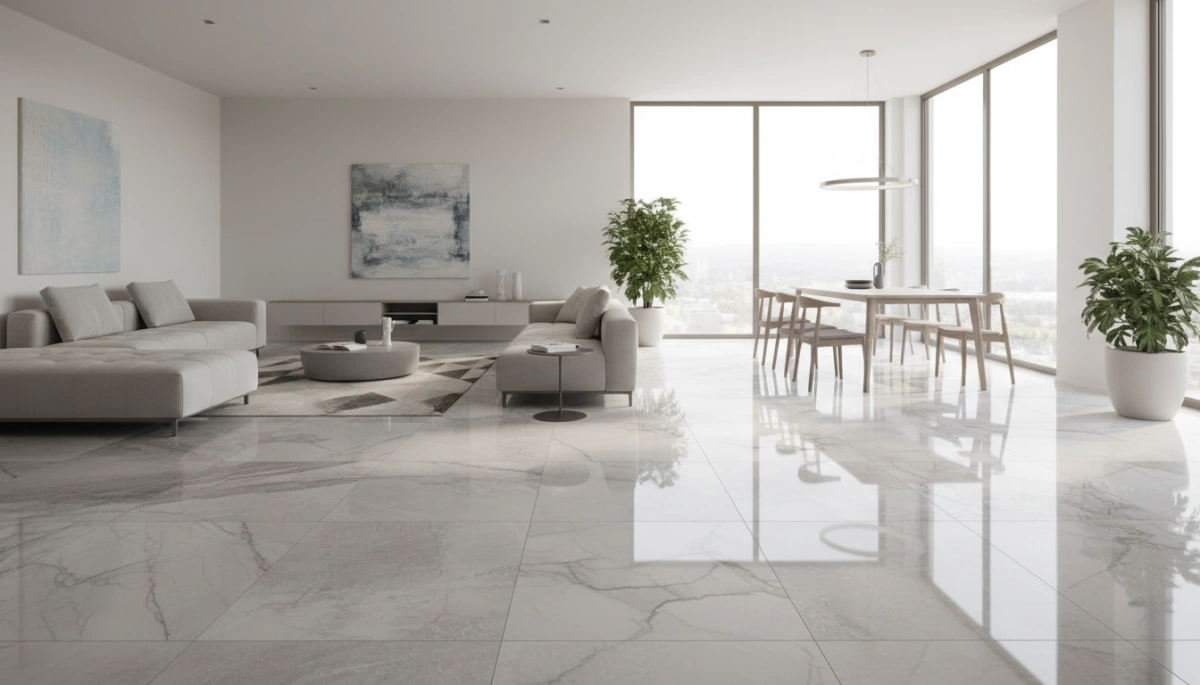
We are seeing a major shift in how homeowners and developers use polished porcelain floor tiles. The focus has moved toward creating seamless, expansive surfaces that blur the lines between different rooms. Modern manufacturing allows us to produce larger slabs with incredible detail, making these tiles the centerpiece of contemporary interior design.
The Rise of Large Format Porcelain
The most significant trend right now is the move toward large format porcelain. By using bigger tiles, we significantly reduce the number of grout lines in a room. This creates a “monolithic” look that makes even small apartments feel like high-end penthouses.
- Seamless Visuals: Fewer breaks in the pattern allow the design to flow naturally across the floor.
- Easier Upkeep: Reducing the surface area of grout makes grout joint maintenance much simpler for the end user.
- Enhanced Reflection: A larger, continuous high-gloss finish maximizes light bounce, brightening up dark hallways or lobbies.
Popular Patterns and Aesthetics
While solid colors remain a staple for minimalist projects, we are seeing high demand for specific textures that mimic natural materials with better durability.
- Calacatta and Carrara Marble Looks: These remain the gold standard. The mechanical polishing process brings out the depth of the “veins,” giving you the look of rare Italian stone with the superior wear resistance of porcelain.
- Concrete-Inspired Gloss: This trend blends industrial “cool” with a luxury shine. It’s perfect for urban lofts where you want an edgy look but still want the floor to feel polished and clean.
- Minimalist Solids: Pure white, deep charcoal, and warm greys in a full-body porcelain are trending for commercial spaces and modern residential kitchens.
Creating a Luxury Feel with Reflective Flooring
The goal of today’s design is to use reflective flooring to manipulate space. We focus on high-clarity surfaces that act almost like a mirror. When paired with marble-look tiles, the result is a sophisticated environment that stands up to heavy foot traffic while maintaining its “just installed” glow. Whether it’s a residential living room or a high-end hotel lobby, these large-scale, polished surfaces are the preferred choice for a premium finish.
Why Source Polished Porcelain Floor Tiles Directly From YASIQI?
When you source your polished porcelain floor tiles directly from our factory, you eliminate the middleman and the unnecessary markups that come with third-party distributors. We control every step of the production line, ensuring that the quality you see in a sample is exactly what arrives at your project site.
Factory-Direct Quality and Pricing
By managing our own manufacturing facility, we offer competitive pricing without compromising on material integrity. We provide a transparent supply chain where cost-efficiency meets high-end production standards.
- Strict Quality Control: Every batch undergoes rigorous testing for dimensional stability and surface clarity.
- Cost Savings: Direct sourcing allows for significant budget optimization on large-scale developments.
- Consistency: We ensure color uniformity and caliber precision across thousands of square meters.
Innovation in Tile Density and Surface Coating
We don’t just make tiles; we engineer them. Our production process focuses on achieving a high tile density that exceeds industry standards, resulting in a product that is incredibly hard-wearing and resistant to impact.
- Advanced Nano-Sealing: Our tiles feature a specialized surface coating that fills microscopic pores, enhancing stain resistance and maintaining that signature high-gloss finish.
- Superior Wear Resistance: Designed for high-traffic environments, our porcelain maintains its polish long after standard tiles begin to dull.
Global Shipping for Large-Scale Projects
We understand the logistics involved in international construction. Whether you are a developer in North America, a designer in Europe, or a contractor in the Middle East, we have the infrastructure to deliver.
- Secure Packaging: We use reinforced palletizing to ensure your polished porcelain floor tiles arrive without chips or cracks.
- Export Expertise: Our team handles all documentation and international shipping requirements, providing a seamless door-to-port or door-to-door experience.
- Scalability: From boutique residential builds to massive commercial complexes, our production capacity can meet any volume requirement on time.
Common Questions About Polished Porcelain Floor Tiles
I get asked these questions every day by homeowners and contractors looking for the best performance from their flooring. Here is the straight talk on what you need to know before installing polished porcelain floor tiles.
Are polished porcelain floor tiles too slippery for kitchens?
This is the most common concern. While a high-gloss finish is smoother than a matte surface, it is not inherently dangerous in a dry kitchen. Modern porcelain is engineered with a reliable slip resistance rating for indoor residential use. The key is maintenance:
- Wipe spills immediately: Liquid is what makes any hard surface slippery.
- Use mats: Place small rugs near the sink or dishwasher where water is likely to hit the floor.
- Keep it clean: Dust and grease buildup can reduce traction more than the polish itself.
How do I remove streaks from high-gloss tiles?
Streaks are usually caused by using too much detergent or dirty mop water. To get a crystal-clear reflection:
- Use a pH-neutral tile cleaner: Avoid harsh chemicals or “shiny” floor waxes that leave a film.
- Microfiber is key: Use a clean microfiber mop head to lift dirt rather than pushing it around.
- The Two-Bucket Method: Use one bucket for soapy water and one for rinsing.
- Dry buffing: For a perfect finish, go over the floor with a dry microfiber cloth after mopping.
Polished vs. Vitrified tiles: What is the difference?
People often mix these terms up. Vitrified tiles refer to the way the tile is made—fired at extremely high temperatures so the silica and clay melt into a glass-like, dense state. This results in a very low water absorption rate. “Polished” simply describes the surface treatment. Most of the high-end polished porcelain floor tiles I supply are vitrified tiles that have been mechanically buffed to a mirror shine.
Do polished porcelain tiles scratch easily?
Porcelain is one of the hardest flooring materials available, boasting high wear resistance (PEI rating). It is significantly harder than marble or granite.
- Daily use: It stands up perfectly to pet claws and heavy foot traffic.
- The “Sand” Factor: Fine grit or sand tracked in from outside is the main enemy of any gloss surface.
- Prevention: Use walk-off mats at every entrance and apply felt pads to the bottom of furniture legs to prevent micro-scratches over long periods.
| Feature | Polished Porcelain Reality |
|---|---|
| Scratch Resistance | Very High (Harder than natural stone) |
| Moisture Resistance | Excellent (Vitrified body prevents soaking) |
| Maintenance Level | Low (Requires simple pH-neutral cleaning) |
| Longevity | Decades (With proper installation and care) |
