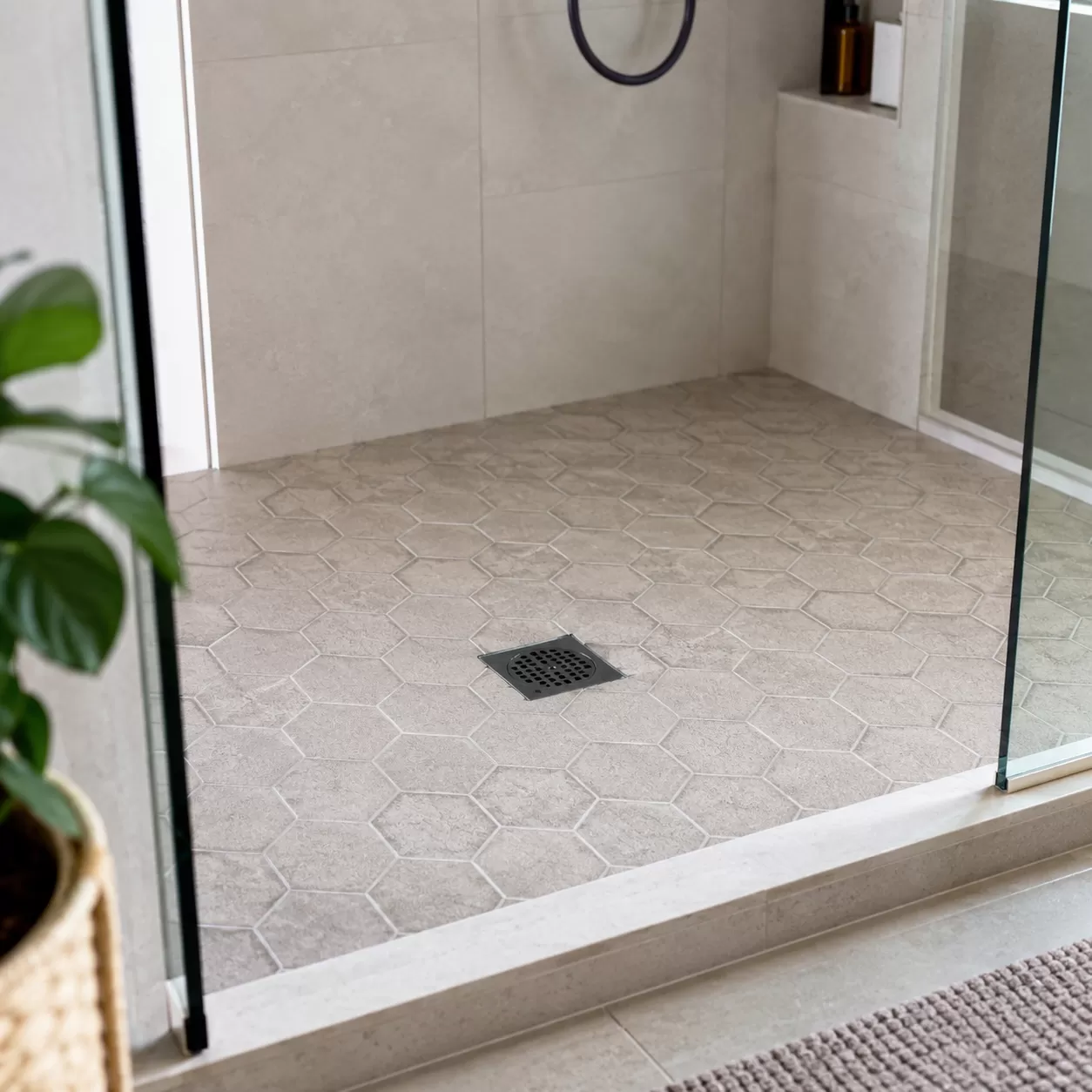
Why Porcelain is the Ideal Choice for Shower Floors
When engineering a high-performance bathroom, selecting the right foundation is critical. Porcelain shower floor tile stands out as the premier specification for residential and commercial projects globally. As a leading porcelain tile supplier and manufacturer, we engineer our products to meet rigorous standards of strength, safety, and longevity, ensuring your design remains pristine for decades.
Superior Water and Moisture Resistance
The technical defining feature of porcelain is its exceptionally low porosity.
- Impermeable Barrier: Our porcelain tiles are fired at extreme temperatures, resulting in a water absorption rate of less than 0.5%.
- Subfloor Protection: This dense composition prevents water from penetrating the tile body, safeguarding the underlying shower pan structure from rot and water damage.
- Dimensional Stability: Unlike lesser materials, porcelain will not swell, warp, or degrade when constantly subjected to standing water and high humidity.
Mold, Mildew, and Bacteria Resistance
Hygiene is paramount in wet environments. Porcelain naturally provides an inhospitable environment for microbes.
- Hypoallergenic Surface: The non-porous face of a porcelain shower floor tile prevents organic matter, soap scum, and skin oils from embedding into the material.
- Easy Sanitization: Without deep pores to harbor spores, mold and mildew cannot take root on the tile surface, making it simple to maintain a sterile, odor-free shower oasis.
Durability and Ease of Maintenance
Shower floors endure unique stresses, from heavy foot traffic to aggressive cleaning chemicals. Porcelain delivers unmatched resilience.
| Performance Metric | Porcelain Benefit |
|---|---|
| Scratch Resistance | High PEI rating; resists wear from dropped objects and grit. |
| Chemical Tolerance | Unaffected by harsh bathroom cleaners, shampoos, and dyes. |
| Lifespan | Outlasts standard ceramic options by decades without fading or wearing down. |
Choosing our expertly manufactured porcelain tiles means investing in a permanent, low-maintenance solution that effortlessly handles daily wear while retaining its premium aesthetic.
Porcelain Tile vs. Ceramic Tile for Showers
Key Differences in Composition and Performance
While they look similar on the surface, ceramic and porcelain shower floor tile are built differently. As a manufacturer, we craft porcelain using highly refined clay fired at extreme temperatures. This process makes it far denser and less porous than standard ceramic.
Here is how they stack up when exposed to daily shower moisture:
| Feature | Porcelain Tile | Ceramic Tile |
|---|---|---|
| Water Absorption Rate | Extremely low (0.5% or less) | Higher absorption |
| Density & Hardness | High density, scratch-resistant | Moderate density, prone to chipping |
| Through-Body Color | Often consistent throughout | Color is only on the surface glaze |
| Best Use Case | Heavy water exposure & high traffic | Light-duty walls and dry areas |
Why Porcelain Prevails for Shower Floor Traffic
The shower floor handles constant water weight, shifting foot traffic, and harsh cleaning chemicals. Ceramic tiles can absorb moisture over time, leading to micro-cracks or loose installations.
We engineer our porcelain shower floor tile to withstand these exact conditions. Its superior durability and water resistance ensure the tile won’t degrade under heavy daily use. For long-term performance and peace of mind, porcelain is the only choice that truly holds up against constant water pressure and traffic.
Choosing the Right Porcelain Tile for Shower Floors
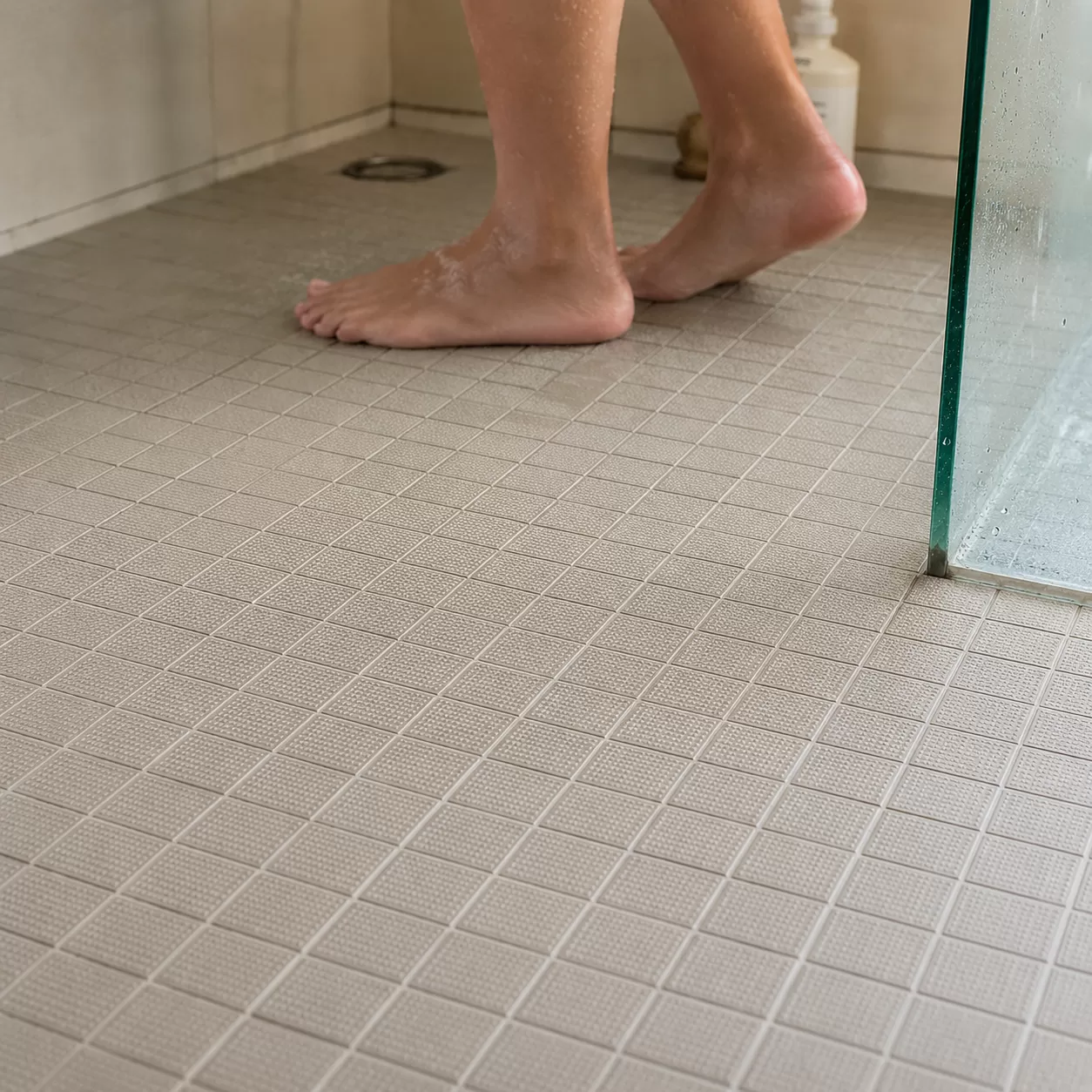
Choosing the right porcelain shower floor tile comes down to balancing style with everyday safety. Since wet surfaces are naturally prone to slips, the right material choice makes all the difference in creating a secure, functional bathroom. As a direct porcelain tile supplier and manufacturer, we focus on engineering surfaces that look premium while delivering the physical traction needed for wet environments.
The Importance of Slip Resistance and Safety
Safety is the absolute priority for any shower floor. When selecting a porcelain shower floor tile, look closely at its slip-resistance rating, specifically the DCOF (Dynamic Coefficient of Friction).
- The Safety Standard: For shower floors, a DCOF rating of 0.42 or higher is the industry standard for wet areas.
- Water Management: Proper slip resistance prevents hydroplaning when water and soap pool on the surface.
- Peace of Mind: High-traction floors protect everyone, especially children and the elderly, from accidental falls.
Mosaic Porcelain Tiles for Maximum Grip
Mosaics are the traditional go-to for shower pans for a very practical reason: grout lines.
- Built-in Traction: Small mosaic tiles mean more grout joints per square foot. These joints act like a built-in grid that catches your feet and prevents slipping.
- Flexibility: Small formats easily contour to the slope of your shower drain, ensuring efficient water runoff.
- Popular Styles: 2×2 inch squares, penny rounds, and small hexagons offer the perfect mix of high slip resistance and classic design.
Matte vs. Textured Finishes for Traction
If you want a modern look without relying entirely on mosaic grout lines, the finish of your porcelain shower floor tile is critical.
| Finish Type | Traction Level | Best Used For | Maintenance |
|---|---|---|---|
| Matte | Medium-High | Clean, modern looks with natural slip resistance. | Very easy to wipe clean. |
| Textured / R11 | High | Maximum grip, replicating natural stone or slate. | Requires a bit more scrubbing to clear soap scum. |
| Polished | None | Walls and dry bathroom floors only. | Avoid completely on shower floors. |
What Tile Formats and Finishes to Avoid
To keep your shower safe and durable, stay away from specific formats that compromise safety:
- Polished and High-Gloss Finishes: These become incredibly slick when mixed with water and shampoo.
- Oversized Large Format Tiles (Without Texture): Large, smooth tiles create a massive, slippery surface with zero grout lines for grip, and they make sloping the floor toward the drain incredibly difficult.
- Poorly Rated Ceramic: Standard ceramic tiles lack the density and water resistance of true porcelain, leading to moisture absorption issues over time.
Popular Sizes, Shapes, and Design Ideas
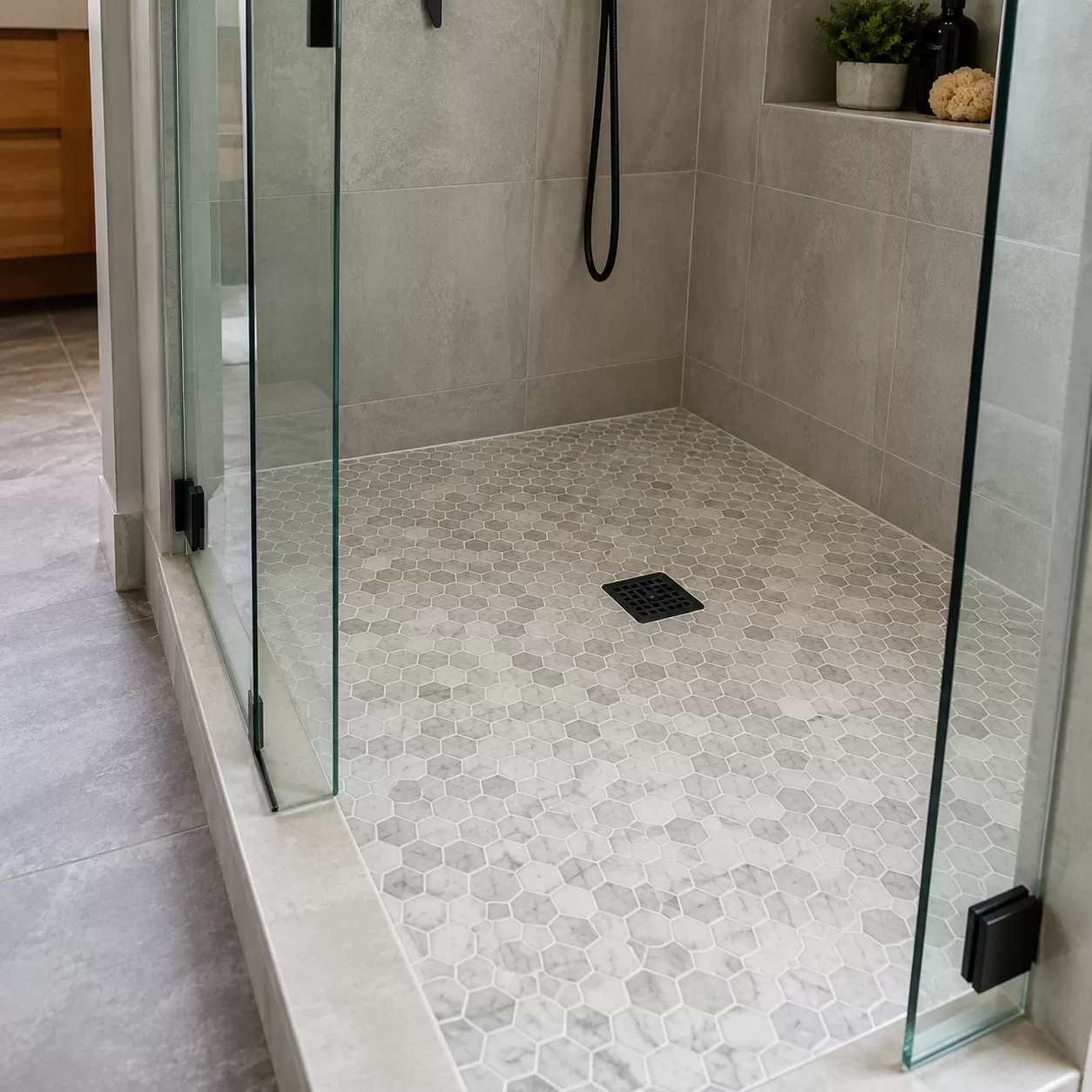
Choosing the right look for your porcelain shower floor tile project comes down to balancing style with everyday functionality. As a direct porcelain tile supplier and manufacturer, we see firsthand how the right mix of dimensions and textures transforms a standard bathroom into a high-end space.
Small Format and Hexagon Mosaic Accents
Small format tiles are the go-to choice for classic shower pans.
- Hexagon Mosaics: 2-inch or 3-inch hex tiles offer timeless appeal and easily contour to the slope of a shower drain.
- Grout Line Benefits: More grout lines mean enhanced slip resistance, making small mosaics both a stylish and inherently safe option.
- Design Accents: Perfect for creating borders, central features, or a continuous look from the floor up the shower niche.
Modern Large Format Designs
Large format tiles are no longer just for walls; they are a major trend for modern, minimalist shower floors.
- Seamless Look: Using sizes like 12×24 or 24×24 inches reduces grout lines to a minimum, creating an expansive, clean aesthetic.
- Linear Drains: These large tiles require a linear drain system to ensure proper water slope and drainage.
- Low Maintenance: Fewer grout lines mean less scrubbing and an easier daily cleaning routine.
Stone-Look and Wood-Grain Porcelain Styles
Get the exact look of natural materials without the high-maintenance headaches.
- Stone-Look Porcelain: Mimics marble, slate, or travertine. You get the luxury look of natural stone with superior water resistance and zero need for constant sealing.
- Wood-Grain Planks: Brings the warmth of hardwood into the wettest zone of the house. These textured planks offer great traction and a spa-like, rustic feel.
Choosing Colors and Complementing Grout Lines
The right color combination ensures your design stands the test of time while hiding daily wear.
| Tile Color | Best Grout Companion | Design Effect |
|---|---|---|
| Bright White / Marble | Light Gray or Silver | Soft, seamless, and hides water spots well. |
| Charcoal / Dark Gray | Charcoal or Black | Striking, modern, and excellent for concealing dirt. |
| Beige / Warm Tones | Tan or Dark Beige | Cozy, organic feel that masks mineral buildup. |
Pro Tip: Always choose high-quality performance grout. Matching the grout color closely to your porcelain tile creates a flawless, unified surface, while contrasting grout makes geometric layouts pop.
Installation Requirements for Porcelain Shower Floor Tile
Getting a porcelain shower floor tile installation right starts long before the first piece of tile is laid. Because showers are high-moisture zones, the prep work under the surface is what determines if your floor lasts ten years or two.
Building a Reliable Waterproof Foundation
The most common cause of shower failure isn’t the tile; it’s the moisture getting underneath it. You must establish a 100% watertight seal using a high-quality liner or a liquid-applied waterproofing membrane.
- Pre-Slope: The subfloor must be sloped toward the drain before the membrane is installed.
- Flood Testing: Always perform a 24-hour flood test to ensure there are zero leaks in the pan.
- Curb Integrity: Ensure the shower curb is fully wrapped and sealed to prevent water “wicking” into the bathroom floor.
Using the Right Mortar and Setting Materials
Since porcelain is dense and has a near-zero absorption rate, you cannot use standard mortar. You need a polymer-modified thin-set specifically designed for porcelain to ensure a permanent bond in wet environments.
| Material Type | Purpose | Why It Matters |
|---|---|---|
| Modified Thin-set | Bonding Agent | Provides the high-strength grip porcelain needs. |
| Epoxy Grout | Joint Filler | 100% waterproof, stain-resistant, and won’t crack. |
| Silicone Caulk | Movement Joints | Handles expansion at the wall-to-floor transitions. |
The Importance of Professional Precision
While DIY is popular, shower floors require a level of precision that is hard to mimic. A professional ensures the porcelain shower floor tile is perfectly pitched so water doesn’t pool in corners.
- Substrate Flatness: Any bumps in the floor will cause “lippage,” which is a tripping hazard and looks sloppy.
- Drain Integration: The tile must sit flush with the drain grate to allow for seamless water exit.
- Coverage: We ensure at least 95% mortar coverage on the back of each tile to prevent hollow spots that can crack under weight.
Care, Maintenance, and Sealing of Your Porcelain Shower Floor Tile
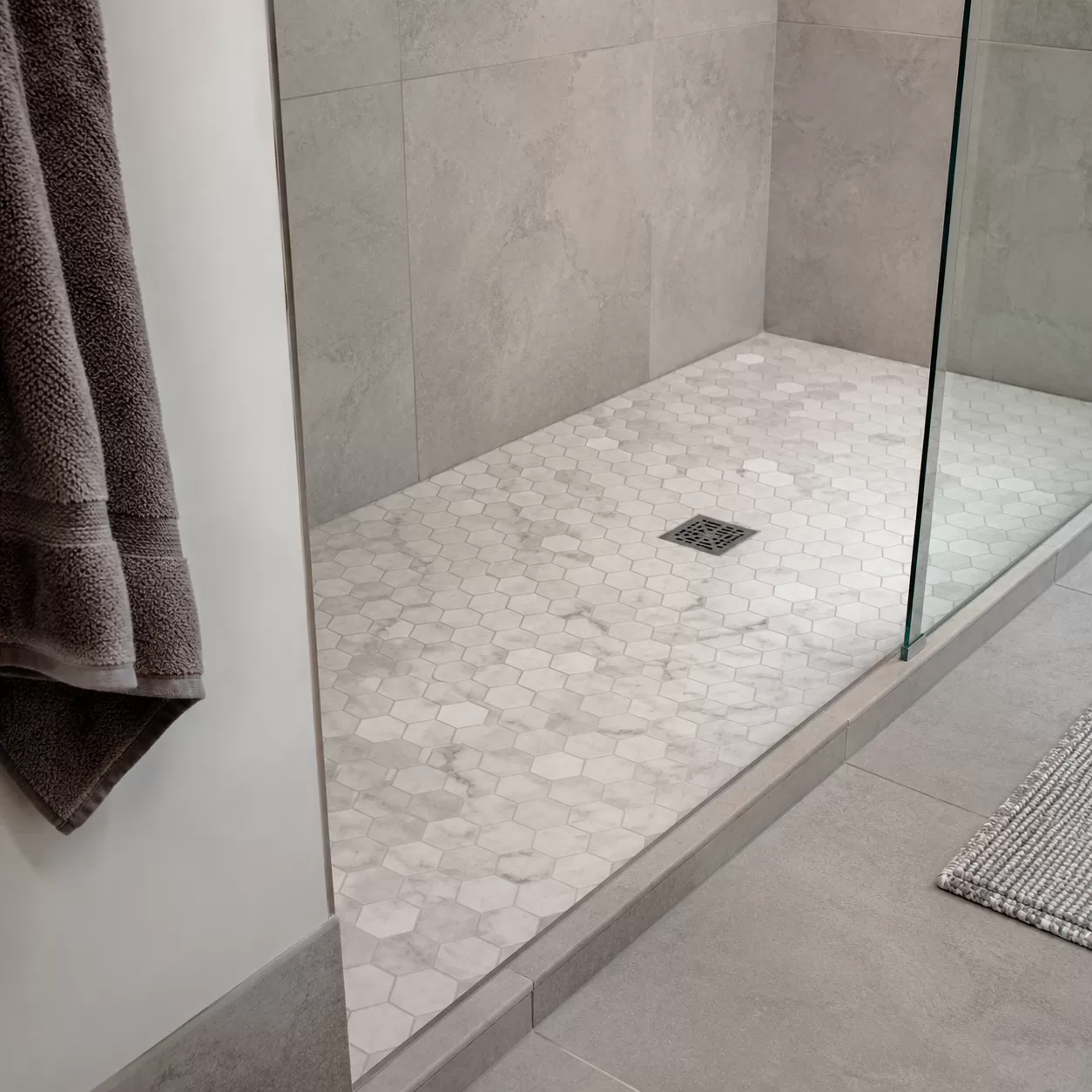
Keeping your porcelain shower floor tile looking brand new doesn’t require hours of scrubbing or harsh chemicals. Because we manufacture our porcelain tile with an exceptionally dense structure, it naturally resists stains and grime. However, a simple care routine will keep your shower pristine and safe for years.
Daily Cleaning Practices for Shower Floors
The best way to prevent soap scum and hard water buildup is to tackle it daily with minimal effort.
- Squeegee after use: Take 30 seconds to wipe down the floor after your last shower of the day.
- Rinse thoroughly: Wash away leftover soap and shampoo suds that can leave a dull film.
- Ventilate: Run the bathroom fan to dry out the space and prevent moisture buildup.
Deep Cleaning Methods to Avoid Damage
When it’s time for a deeper clean, avoid harsh abrasives that can ruin the slip-resistant texture or erode your grout lines.
| What to Use | What to Avoid |
|---|---|
| Mild, pH-neutral cleaners | Harsh acids (like hydrochloric acid) |
| Warm water and vinegar mix | Steel wool or heavy scouring pads |
| Soft-bristled nylon brushes | Bleach-heavy formulas on colored grout |
Simply spray your neutral cleaner, let it sit for five minutes, gently scrub with a nylon brush, and rinse with clean water.
Does Porcelain Tile and Grout Need Sealing?
As a direct porcelain tile supplier and manufacturer, we build our porcelain tiles to be virtually impervious to water, meaning the tile itself never needs to be sealed.
However, the grout lines between the tiles are a different story:
- Porcelain surface: Needs zero sealant. Sealing it will only leave a sticky, cloudy film on top.
- Standard cement grout: Highly porous and must be sealed upon installation, and reapplied every 1 to 2 years to prevent water penetration and staining.
- Epoxy grout option: If you use epoxy grout during installation, you can skip sealing entirely, as it is completely waterproof.
Frequently Asked Questions
Is porcelain tile slippery when wet on a shower floor?
Not if you choose the right finish. While polished porcelain can be slick, slip-resistant porcelain shower floor tile is specifically designed for wet areas. As a porcelain tile supplier and manufacturer, we always recommend matte, textured, or mosaic options for safety. Small mosaic tiles are especially safe because the dense network of grout lines acts like built-in traction for your feet.
What is the best tile size to use on a shower floor?
| Tile Size | Best Used For | Why It Works |
|---|---|---|
| Mosaics (1×1 to 2×2 inches) | Standard & sloped shower floors | Excellent slip resistance and easily contours to the shower drain slope. |
| Linear / Hexagon (3 to 4 inches) | Modern shower pans | Offers a clean look with enough grout joints for reliable traction. |
| Large Format (12×24 inches or larger) | Linear drain systems | Creates a seamless, high-end look but requires a single-slope floor plane. |
How often should you seal grout lines in a shower?
You should seal your shower grout once a year. While the porcelain tile itself offers supreme water resistance and durability with zero maintenance, the cement-based grout between the tiles is porous. Applying a high-quality sealer annually prevents water, mold, and stains from penetrating the joints, keeping your shower floor clean and structurally sound.
