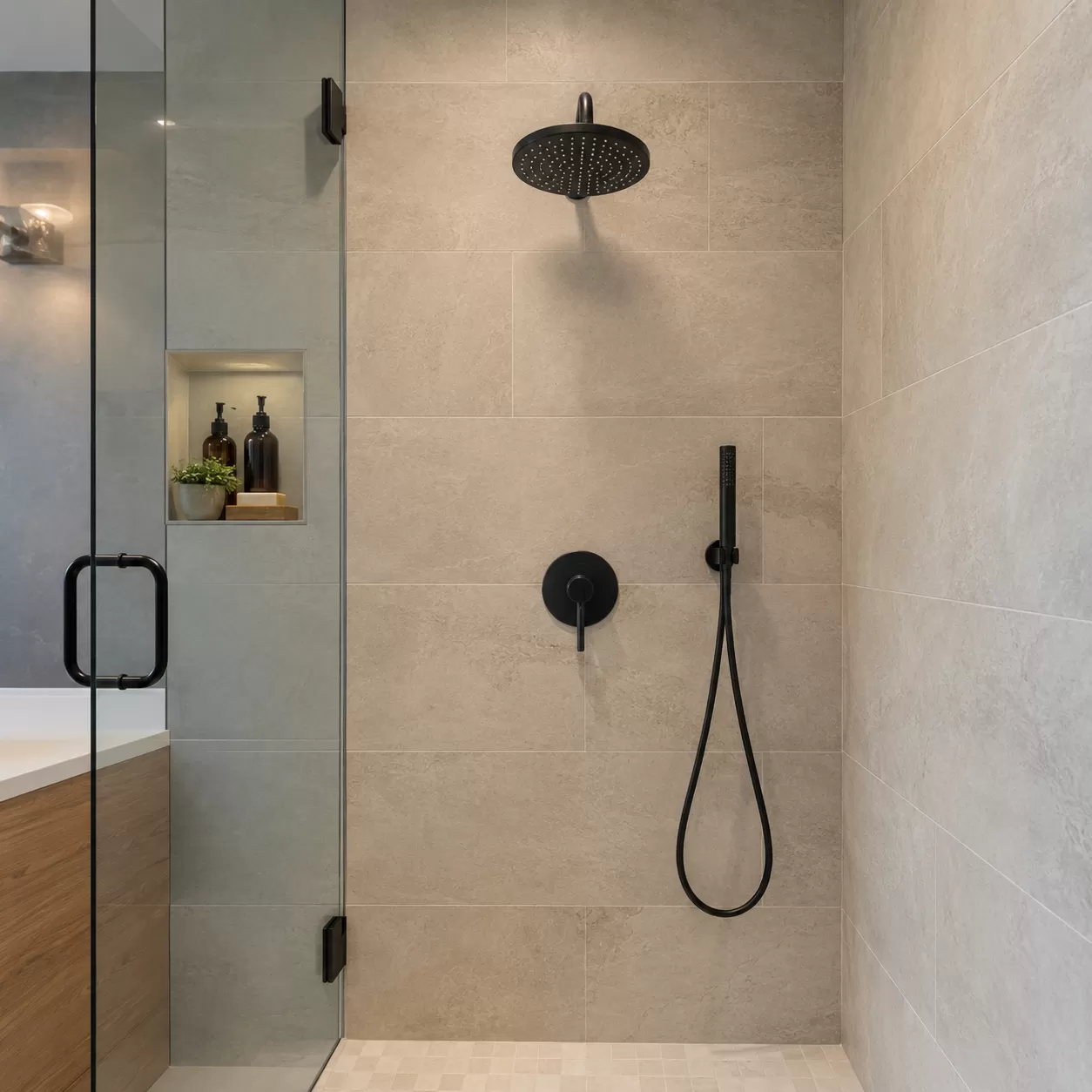
What Is Porcelain Shower Tile and Why Choose It?
Porcelain shower tile is the premium standard for modern bathroom design. Engineered from highly refined clay and fired at extreme temperatures, it offers a dense, nearly impenetrable surface. As a leading porcelain tile supplier and manufacturer, we recommend this material for its unmatched durability and long-term value in high-moisture zones.
The Difference Between Porcelain and Ceramic Shower Tile
While often confused, porcelain and ceramic have distinct performance profiles. Porcelain is a specialized subtype of ceramic that is denser and less porous.
| Feature | Porcelain Tile | Ceramic Tile |
|---|---|---|
| Water Absorption | < 0.5% (Impermeable) | Higher (> 3%) |
| Durability | High; chip-resistant | Moderate; softer body |
| Density | Extremely dense | Less dense |
| Best Use | Heavy moisture / High traffic | Light use / Backsplashes |
Key Benefits of Porcelain in Wet Environments
Choosing porcelain shower tile ensures your bathroom walls and floors remain pristine for decades. Its manufacturing process results in a material that is:
- Water-Resistant: The low absorption rate prevents structural damage and warping.
- Stain-Proof: Resistant to soap scum, dyes, and hard water minerals.
- Hard-Wearing: Maintains its finish even with frequent chemical cleaning.
Water, Mold, and Mildew Resistance
In the humid micro-climate of a shower, hygiene is paramount. Because porcelain is virtually non-porous, it denies mold and mildew the organic “pockets” they need to grow.
- Non-Porous Surface: Stops water from seeping into the tile body.
- Hygienic Finish: Easy to sanitize, ensuring a healthier breathing environment.
- Longevity: Prevents the “musty” smell associated with porous materials that trap moisture.
Popular Styles and Design Ideas for Porcelain Showers
When we design bathroom walls and floors, we look for a balance between stunning visuals and daily durability. As a premier porcelain tile supplier and manufacturer, we see firsthand how homeowners and designers use porcelain shower tile to transform standard bathrooms into spa-like retreats.
Classic and Modern Subway Tiles
Subway tile remains a top choice for a reason. It is timeless, highly water-resistant, and fits almost any aesthetic.
- Classic Look: Traditional bright white running bond with dark grout for contrast.
- Modern Twist: Vertical stacking or herringbone patterns using elongated dimensions to make ceilings feel higher.
Natural Stone-Look Porcelain for a Timeless Appeal
Get the luxury of marble, travertine, or slate without the high-maintenance headache. Our stone-look porcelain shower tile captures the realistic veining and texture of natural stone but won’t absorb water, discolor, or require annual sealing. It gives you an upscale look that lasts a lifetime.
Wood-Grain Porcelain for Warmth and Texture
| Feature | Natural Wood | Wood-Grain Porcelain |
|---|---|---|
| Water Resistance | Warps and rots in wet areas | 100% waterproof and highly stable |
| Maintenance | Requires constant sealing | Simple wipe-down cleaning |
| Texture | Warm and organic | Emulated grain for excellent slip resistance |
Bringing wood-look planks into the shower introduces an organic, cozy warmth that was once impossible in wet environments. It is perfect for modern rustic or coastal bathroom designs.
Bold Colors, Patterns, and Shapes
If you want your shower to be a focal point, step away from neutrals. We manufacture a wide range of bold options to express your personal style:
- Hexagons and Scallops: Geometric shapes that add instant architectural interest.
- Moroccan and Artisan Patterns: Intricate prints that work beautifully on accent walls or recessed niches.
- Matte Deep Tones: Rich forest greens, navy blues, and charcoal blacks for a moody, high-end feel.
Choosing the Right Porcelain Tile Format for Shower Walls
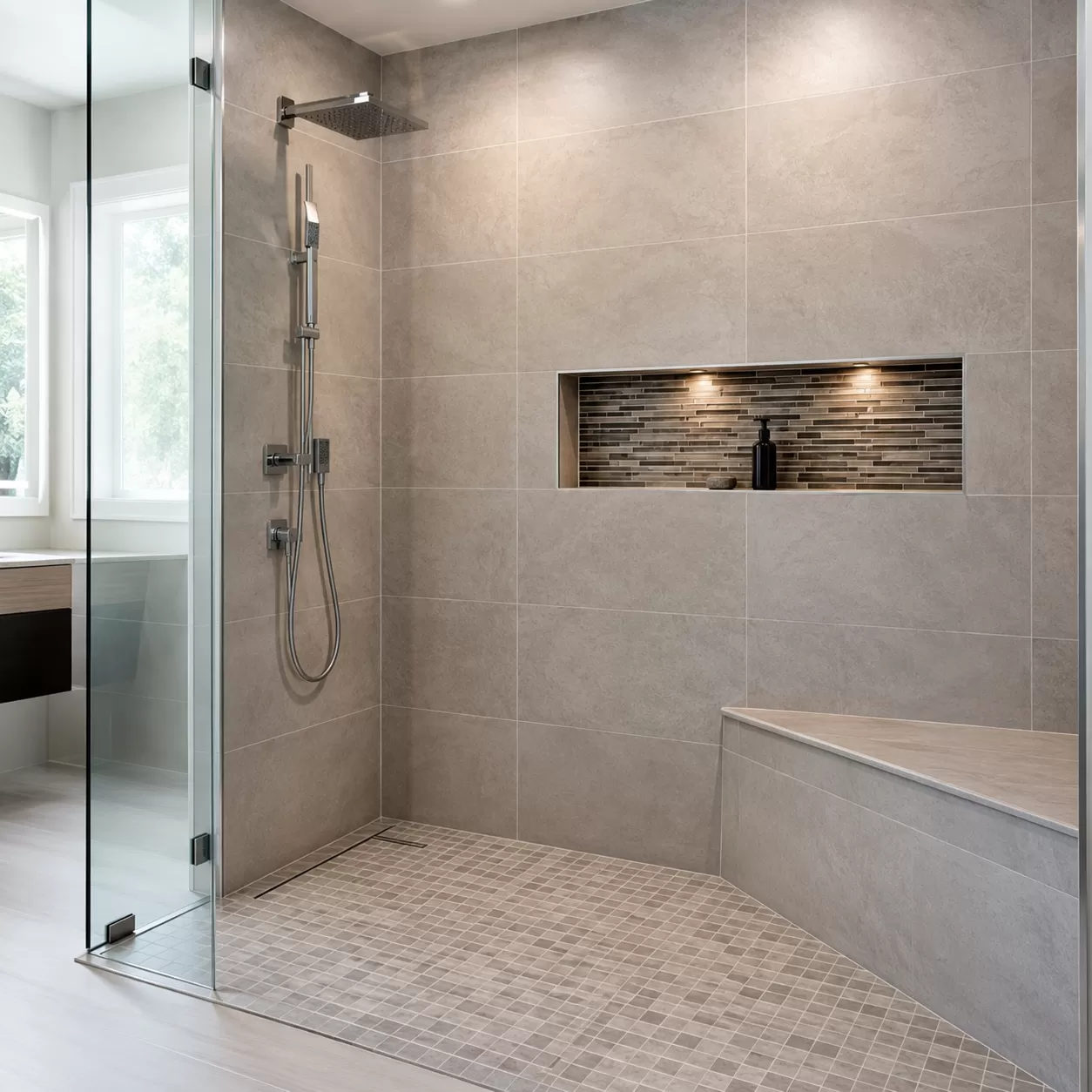
Selecting the right size for your porcelain shower tile layout drastically changes both the look and performance of your bathroom walls. As a leading porcelain tile supplier and manufacturer, we see firsthand how format choice impacts installation and long-term satisfaction.
Large-Format Porcelain Tiles for a Seamless Look
Large-format tiles completely transform bathroom walls by creating a sleek, continuous surface. Because these panels cover massive areas with a single piece, they minimize visual interruptions. This clean aesthetic makes even compact residential showers feel significantly more spacious and upscale.
Low-Maintenance Benefits of Large-Format Tiles
The biggest advantage of oversized porcelain shower tile is the elimination of tedious upkeep.
- Fewer Grout Lines: Less grout means fewer places for soap scum, grime, and mold to hide.
- Effortless Cleaning: Wipe-down times are cut in half because the surface is mostly smooth, non-porous porcelain.
- Enhanced Durability: Fewer joints mean fewer weak points where water-resistant seals could fail over time.
Comparing Large vs. Small Format Wall Tiles
To help you choose the best fit for your project, here is a direct comparison of how different tile sizes perform on bathroom walls.
| Feature | Large-Format Tiles (e.g., 24×48 or larger) | Small-Format Tiles (e.g., Mosaics, Subway) |
|---|---|---|
| Grout Line Density | Minimal (Sleek, uninterrupted look) | High (Visible grid pattern) |
| Cleaning Effort | Very low | High (Requires regular scrubbing) |
| Visual Effect | Makes small showers look larger | Adds texture and classic detail |
| Installation Focus | Requires a perfectly flat wall substrate | Easier to install on slightly uneven walls |
| Design Style | Modern, seamless, and luxury-tier | Traditional, rustic, or intricate |
Selecting Safe and Practical Porcelain Tile for Shower Floors
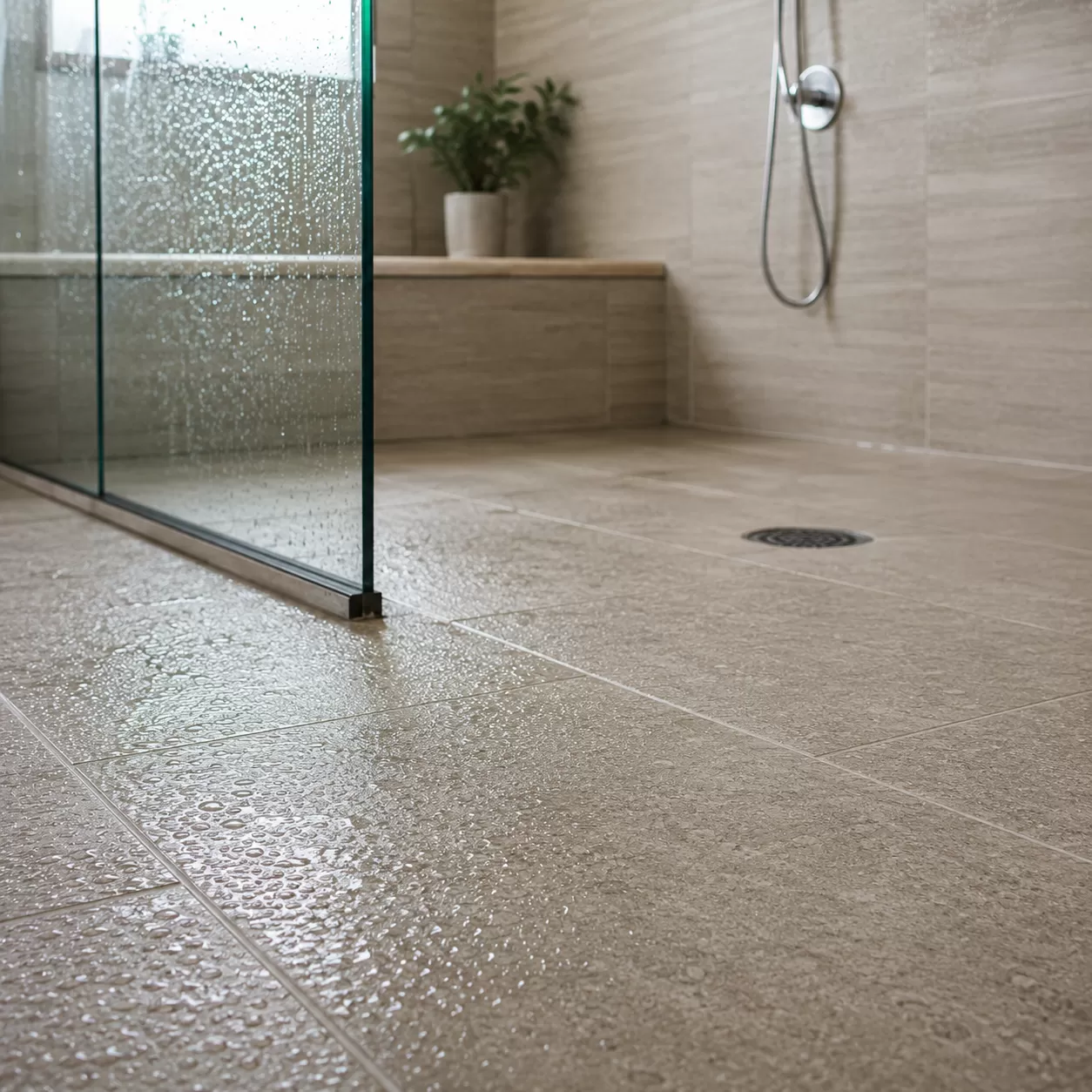
Choosing the right porcelain shower tile for your floor comes down to two major things: safety and durability. As a long-time supplier and manufacturer, we always tell clients that floor tiles have to work harder than wall tiles. You need a surface that handles constant water flow without becoming a slipping hazard.
Mosaic Porcelain Tiles for Maximum Grip and Traction
For the ultimate slip resistance, mosaic porcelain tiles are the industry standard. Because these tiles are small, they require a high density of grout lines.
- Built-In Traction: The network of grout lines acts like built-in tread, creating a high-friction surface underfoot.
- Better Slope Matching: Smaller tiles easily contour to the slope of your shower pan for perfect water drainage.
- Design Flexibility: Mosaics offer a classic, high-end look while delivering maximum safety.
Matte vs. Polished Porcelain for Wet Areas
When it comes to the finish of your porcelain shower tile, the choice between matte and polished is clear.
| Finish Type | Slip Resistance | Best Use Case | Maintenance |
|---|---|---|---|
| Matte Porcelain | High (Excellent grip when wet) | Shower Floors & Bathroom Floors | Easy; masks water spots well |
| Polished Porcelain | Low (Extremely slick when wet) | Shower Walls & Accents | High; shows streaks and water marks |
We highly recommend textured or matte porcelain for any wet floor application to ensure a safe, slip-resistant surface.
What Tile Features to Avoid on Shower Floors
To keep your shower safe and functional, avoid these common floor tile mistakes:
- Large, Smooth Tiles: Any tile larger than 4×4 inches with a smooth finish limits grout lines and increases slip risks.
- Polished/Glossy Glazes: These finishes turn into ice rinks the moment water and soap hit them.
- Highly Porous Natural Accents: Stick to durable, water-resistant porcelain rather than porous stones that trap soap scum and grime.
Installation Essentials for Porcelain Showers
Getting a flawless look with your porcelain shower tile requires focusing on what goes behind the wall. As a leading porcelain tile supplier and manufacturer, we know that the longevity of your bathroom walls depends entirely on proper installation techniques.
Building a Waterproof Foundation
A beautiful shower means nothing if water seeps into the drywall. Before the first porcelain shower tile is set, you must build an airtight, water-resistant barrier.
- Cement Backer Boards: Use these instead of standard drywall to prevent warping.
- Waterproofing Membranes: Apply a liquid or sheet membrane to seal all joints and corners.
- Pre-Sloped Pans: Ensure the subfloor slopes correctly toward the drain to prevent pooling water.
Choosing the Right Mortar and Materials
Porcelain is incredibly dense and heavy, meaning it requires specialized adhesives to stay locked in place on bathroom walls.
| Material Type | Best Used For | Why It Matters |
|---|---|---|
| Thinset Mortar (Polymer-Modified) | Large format and standard porcelain | Offers the high strength and flexibility needed to bond dense porcelain. |
| Epoxy Grout | Shower floors and high-moisture joints | Completely waterproof, stain-resistant, and won’t crack under pressure. |
| Siliconized Acrylic Caulk | Change-of-plane joints (corners) | Allows for natural expansion and contraction without leaking. |
The Importance of Professional Tile Installation
While DIY projects are popular, installing heavy porcelain shower tile demands precision. Hiring a professional installer saves you from costly future repairs.
Professionals ensure large format tiles are perfectly leveled without “lippage” (uneven edges). They possess the specialized diamond-blade saws required to cut dense porcelain cleanly without chipping. Most importantly, experienced installers guarantee that the waterproofing layers are flawless, protecting your home’s structure and maximizing the overall durability of your shower investment.
Maintenance, Cleaning, and Sealing Guide
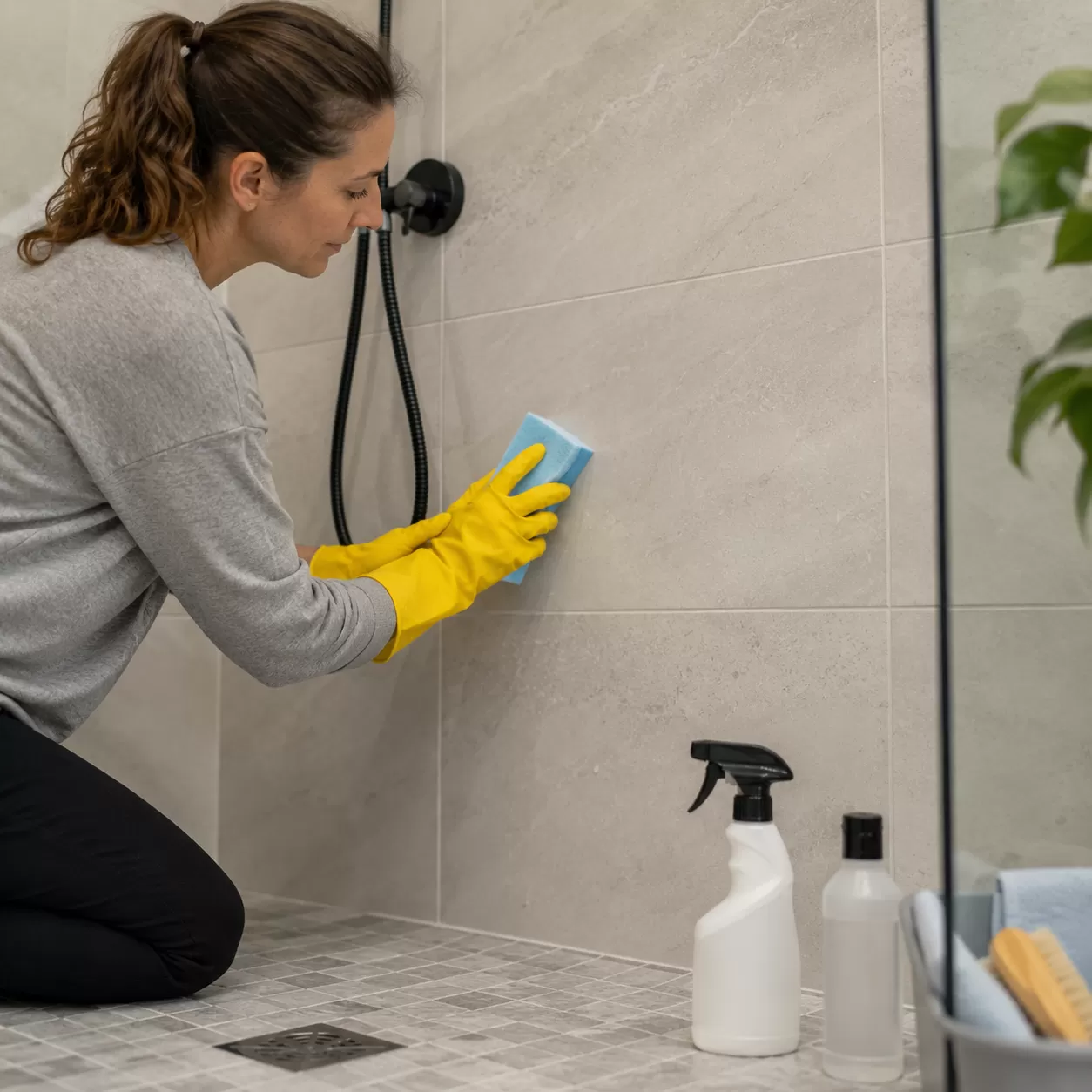
Keeping your porcelain shower tile looking like it did on day one isn’t a massive chore, but it does require the right routine. Because we are a porcelain tile supplier and manufacture team, we know exactly what these surfaces can handle and how to keep them pristine for years.
Do Porcelain Tiles and Grout Need Sealing?
One of the best things about porcelain is that the tile itself is nearly impervious. However, the system as a whole still needs attention:
- The Tile: High-quality porcelain is dense and water-resistant, meaning it never needs to be sealed.
- Polished Finishes: Some polished porcelain has microscopic pores from the grinding process; a specialized sealer can help prevent staining here.
- The Grout: Unless you used epoxy grout, your grout lines are porous. Sealing your grout once or twice a year is the best way to prevent mold and deep stains.
Daily Care and Deep Cleaning Best Practices
Maintenance is all about preventing buildup before it hardens.
| Task | Frequency | Recommended Method |
|---|---|---|
| Squeegee | After every shower | Remove excess water to prevent soap scum and hard water spots. |
| Light Wipe | Weekly | Use a pH-neutral cleaner or a simple mix of warm water and a drop of dish soap. |
| Deep Clean | Monthly | Use a dedicated tile cleaner and a soft-bristled brush for the grout lines. |
Cleaning Products and Tools to Avoid
Even though porcelain is famous for its durability, you can still damage the finish or the surrounding grout with the wrong chemicals. Stay away from:
- Steel Wool or Scouring Pads: These can leave metal marks or dull the surface of the tile.
- Bleach and Ammonia: While they kill mold, they can weaken grout over time and strip away sealers.
- Oil-Based Cleaners: These leave a slippery film on bathroom walls and floors that attracts dirt.
- Acidic Cleaners: Avoid high-acid solutions (like heavy vinegar use) on certain finishes as they can etch the surface over time.
Frequently Asked Questions About Porcelain Shower Tiles
Is Porcelain Tile Good for Both Shower Floors and Walls?
Yes, porcelain shower tile is one of the absolute best choices for both surfaces, but you have to use the right type for each area.
- For Bathroom Walls: You can use almost any porcelain tile, including beautiful large format slabs that minimize grout lines for a sleek look.
- For Shower Floors: Safety is the priority. You need smaller tiles, like mosaics, or tiles with a textured, slip-resistant finish to ensure proper traction when wet.
As a porcelain tile supplier and manufacture, we build these tiles to handle constant water exposure, making them ideal for full-room integration.
How Often Should Shower Grout Lines Be Sealed?
While the porcelain tile itself is completely water-resistant and never needs sealing, the cement-based grout between the tiles is porous.
- Standard Grout: Should be sealed once a year to block out moisture, dirt, and soap scum.
- High-Traffic Showers: May require sealing every six months.
- Epoxy Grout: If you used epoxy grout during installation, you can skip sealing entirely, as it is naturally waterproof.
Keeping up with this quick maintenance routine protects the integrity of your bathroom walls and subfloors from hidden water damage.
Are Non-Slip Porcelain Tiles Available for Showers?
Absolutely. Porcelain is incredibly versatile, and we manufacture specific finishes designed safely for wet environments.
When shopping for shower floor tile, look for these two main safety markers:
| Tile Feature | What to Look For | Why It Matters |
|---|---|---|
| Matte Finish | Unpolished, slightly textured surface | Provides natural grip even when covered in soap and water. |
| COF Rating | Coefficient of Friction of 0.42 or higher | This is the standard rating for slip resistance in wet areas. |
| Mosaic Formats | Small tiles (2×2 inches or smaller) | Creates a high density of grout lines, which act as built-in traction for your feet. |
Choosing a certified non-slip porcelain tile gives you the perfect balance of high durability and everyday safety.
